


Data-driven DAI: making diversity and inclusion measurable

Diversity and inclusion are not just about who works there, but above all about who feels seen, heard and taken seriously. Deepler’s DAI module allows you to measure how employees actually experience the culture, collaboration, safety and equality within the organisation. This helps you identify where inclusion is already working well, where barriers arise, and what steps are needed to build a working environment in which everyone can contribute.

  • Equal opportunities and career progression
  • Psychological safety and room for diversity
  • Inclusive decision-making and public participation
  • Experiences of discrimination and exclusion
  • Appreciation of diverse perspectives
Een team van acht personen kijkt samen aandachtig naar een laptop tijdens een meeting.

What is data-driven DAI?

Data-driven DAI means that you measure diversity and inclusion not only on the basis of demographic figures, but above all on the basis of employees’ experiences. It is about whether people feel safe to be themselves, whether they have equal access to development and decision-making, and whether differences are valued or, conversely, perceived as a barrier.

A diversity and inclusion survey allows you to assess where the organisation stands on issues such as equality, psychological safety, career opportunities, bias and a culture of open dialogue. You are not just measuring whether policies exist, but whether employees feel that they matter in their day-to-day work.

This makes DEI tangible, open to discussion and capable of improvement – not based on assumptions, but on what employees themselves experience.

How does the module help to measure and improve DAI?

From feeling to insight

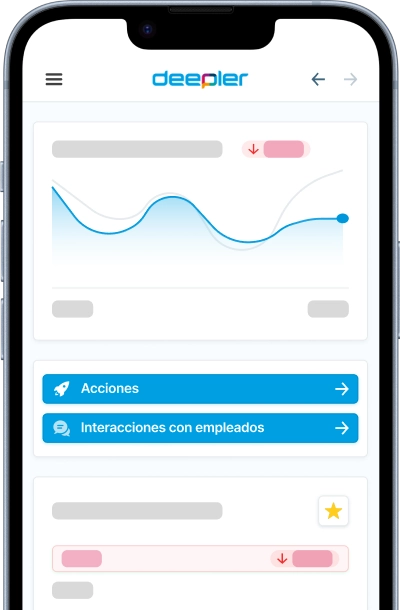
The module assesses how inclusion is experienced across themes such as equality, safety, growth and respect. You can see, for each department, team or job category, where barriers lie and where people do feel valued.
Targeted actions by theme

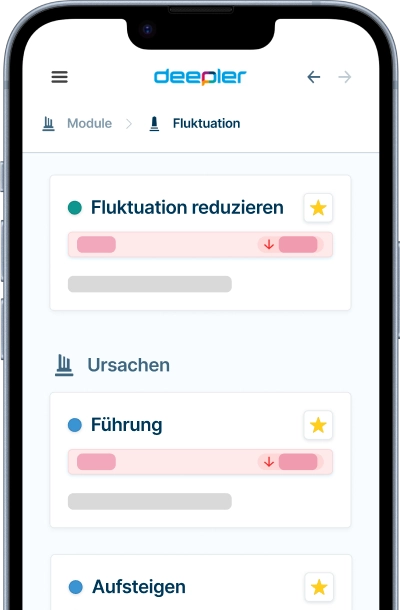
Based on the findings, you select specific actions: from leadership development to changes to recruitment processes, from team discussions to structural changes to decision-making. These are always based on employees’ experiences.
Making progress visible

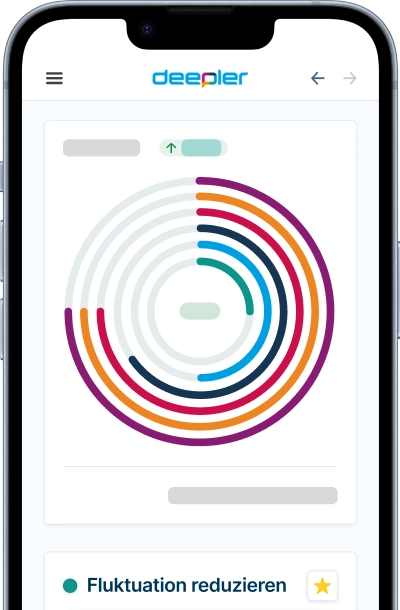
By carrying out regular measurements, you can see whether interventions are having an effect. Inclusion is not a campaign, but an ongoing process. Data helps you to make adjustments and to account for what is working and where extra attention is needed.

What are diversity and inclusion?

Diversity is about the differences between people: background, age, gender, education, neurodiversity, culture, disability or beliefs. Inclusion is about whether those differences are welcomed in day-to-day work. Are people taken seriously? Are they given the same opportunities? Can they share their perspectives without having to conform? A DAI survey measures not only who works there, but above all how employees experience the working environment.

Why are diversity and inclusion important?

Organisations function more effectively when people with different perspectives are able to contribute. But this does not happen automatically. Without inclusion, diverse employees remain invisible, opportunities are distributed unevenly, and valuable insights go untapped. This affects innovation, decision-making, engagement, staff turnover and the organisation’s reputation as an employer. Measuring DAI helps to move from intention to impact.


Improving diversity and inclusion

Improving DAI starts with awareness and data. Measure how employees experience the working environment and involve them in deciding on the actions to be taken. Consider awareness-raising training, adjustments to HR processes, leadership that values diversity, team discussions on collaboration and safety, and a systematic focus on equal opportunities. Small, consistent steps are more effective than one-off interventions.

Can you measure diversity and inclusion?

Yes, inclusion can be effectively measured using targeted questionnaires and analysis. With Deepler’s DAI module, you can measure not only demographic diversity, but above all the experiences of employees: do they feel heard, are they given equal opportunities, do they encounter prejudice, and is there room for diversity? This gives you a clear picture for each team or department, enabling you to take targeted action to drive improvement.

How to promote diversity and inclusion in practice

Ensuring equal opportunities

Ensure that career progression, development and visibility are accessible to everyone, not just those who conform most closely to the norm.

Creating space for diversity

Actively value diverse perspectives in decision-making, collaboration and innovation. Diversity is not an obstacle, but a source of value.

Discussing unconscious biases

Encourage open discussion about bias and train managers and teams to recognise patterns that contribute to exclusion or inequality.

Ensuring safety and respect

Make sure people feel safe to be themselves, to report inappropriate behaviour and to grow without feeling pressured to conform.

The approach of Deepler

This module sets out how employees perceive the organisation in terms of DAI, across three main themes. Click on a theme to view the sub-themes. Some sub-themes go one level deeper.

Data Gedreven DEI
Module Data-driven DAI
Diversity, Equality and Inclusion

The Diversity, Equality and Inclusion module measures how employees perceive the organisation in terms of DAI. It assesses, across three themes, how diverse the organisation is, the extent to which people are given equal opportunities, and how inclusive the culture is. Equality is at the heart of this: everyone counts and belongs.


Diversity
3 Sub-themes
  • Representation
  • Recruitment and selection
  • Staff retention
Equality
3 Sub-themes
  • Equal opportunities
  • Fair pay
  • Access to growth
Inclusion
3 Sub-themes
  • A sense of belonging
  • Psychological safety
  • Visibility and a voiceRoom for questions
Social impact
3 Sub-themes
  • External DAI communication
  • Social engagement
  • Inclusive leadership

Find out how to use data to facilitate discussions on DAI

In this video, discover how organisations are making diversity and inclusion measurable and open to discussion using Deepler’s DAI module. From measurement to concrete team discussions and action plans, see how it works in practice.

Background-circles-Deepler

Combine with other research topics

Diversity and inclusion rarely stand alone. Issues such as psychological safety, leadership, engagement and workload constantly influence one another. Combine this module with other Deepler modules to gain a more complete picture of what is really going on in the workplace, and to focus your efforts more effectively on the areas that will have the greatest impact.

Trusted by young and old

Experiences of customers who make a difference with us.

  • Portrait of a smiling man in a suit in front of an orange background, titled "Review-image-Larren (1)."

    Larren

    Recruitment Lead, 

    De Selectie

    Icon Review Stars

    “Recently, I used Deepler to arrive at an EVP. Great what they were able to achieve in a short time! In a period of two weeks, we collected information and were able to continue with our AMC plan. In any other situation, it takes weeks, if not months, to get this done. Contact is good, friendly and constructive. Very nice club to work with.”

  • Portrait of a smiling man named Douwe with a bald head and light eyes, against a turquoise background.

    Douwe

    Recruiter, 

    Securitas

    Icon Review Stars

    “Ideal tool and company to gain more and better insight into the organization and employees as an organization! And especially with speed! For us, it was also the need to get tools for the topics of retention, to prevent future absenteeism or turnover. I also have experience with other parties and I sincerely value the speed of switching, follow-up and personal contact with Deepler. Absolutely recommended.”

  • Portrait of Jolanda with long blonde hair, wearing a black lace top, set against a purple background.

    Jolanda

    HR Business Partner, 

    Nedcargo

    Icon Review Stars

    “Deepler is a great tool for continuously collecting feedback from our employees. This input is then centrally available for us as management, but also for managers who benefit from it.”

  • Portrait of Jonathan in a blue suit and tie, smiling in front of a blue background.

    Jonathan

    Manager, 

    UWV

    Icon Review Stars

    “What makes Deepler special is that it doesn’t get stuck in numbers. It helps you immediately understand where it is and what teams need. For us, this ensured that employees themselves came up with areas for improvement and took responsibility for them. The insights were sharp and useful, but most importantly: the conversation that started afterwards made the difference. Thanks to Deepler, we didn’t get a paper plan, but change that was supported by the people themselves.”

  • Vector

    Amadeus

    COO, 

    OSRE

    Icon Review Stars

    “The software has a positive impact on us as a rapidly growing organization. By better understanding what is going on in the workplace and what people offer as solutions for improvements, we can make more effective decisions. The platform helps us to gain real-time insight and to respond directly to it via the tool.”

Ready to put diversity and inclusion into practice?

Book a no-obligation demo and discover how Deepler can help your organisation measure and improve diversity and inclusion. Our consultants would be happy to work with you to develop an approach that suits your organisation.

Aantal stemmen voor het idee 'Gezondere lunch', toegevoegd door Leon, met een score van +36.
Dashboardkaart met de titel 'Inwerken van collega’s', een 14-dagen streak en 10 van de 12 taken voltooid.
Background-circles-Deepler

Frequently asked questions about data-driven DAI

Diversity is about the differences between people: who works there. Inclusion is about whether those differences are welcomed in day-to-day work: how people are treated, whether they are given equal opportunities, and whether they feel safe to be themselves. A diverse organisation is not automatically an inclusive one.