












The employee journey that measures itself
Deepler Journeys attaches a trigger to every touchpoint. It starts the actions that need to happen and the measurement that goes with them. Your insight builds up while the journey runs, from preboarding to farewell.
- Triggers start actions and measurements at the moment itself
- No separate questionnaire: the measurement sits inside the process
- Visible per phase and per touchpoint where the experience stalls
Triggers in the journey
Example of a configured journey. The pink labels mark the moments where measurement happens automatically.
You set the trigger up once. After that your analytics fill themselves, phase by phase and touchpoint by touchpoint.
Our trusted clients & partners
Measuring at the moment itself, not months later
Every employee travels the same journey: preboarding, onboarding, development, internal mobility and offboarding.
Deepler Journeys captures that journey in phases and touchpoints, and attaches triggers to it. A trigger arranges what needs to happen and asks about the experience at the moment itself.
You set that trigger in Journeys itself, or it comes from your own HR system: when someone joins or leaves there, the integration starts the survey automatically (in the Enterprise package). The result is continuous insight instead of one snapshot a year.
You only hear about it once it has already happened
By the time the results are in, the moment that went wrong is long gone.
Reconstructing after the fact
Six months after onboarding you are asking about a memory, not an experience. The moment itself can no longer be recovered.
The measurement sits apart from the work
A questionnaire alongside the process costs time, gets a low response rate and misses the context of the moment itself.
An average points at nothing
A single score for the whole organisation does not tell you which moment in the journey pinches, and so it does not tell you what to change either.
Three layers
Without structure there is nothing to execute. Without execution there is nothing to improve.
Most organisations get stuck at layer one: a nicely documented process that nobody actually follows. Journeys covers all three.
Every trigger delivers an action and a measurement
Journeys works in three layers. The first two make sure the journey exists and runs; the third turns it into analytics. Because the measurement sits inside the process, there is nothing to organise.
- Structure: phases and touchpoints captured in one process
- Execute: triggers start actions, checklists and owners
- Improve: the same triggers collect data, per touchpoint
Who does what in Deepler Journeys
You in HR
- Designs the journey and its touchpoints
- Decides where a measurement belongs
- Reads per touchpoint where things stall
The manager
- Receives their tasks on time
- Has nothing to remember or look up
- Has the conversation that matters
Deepler Journeys
- Starts triggers for every new arrival
- Guards deadlines and sends reminders
- Collects the measurement at the moment itself
From blueprint to continuous insight
Set it up once. After that the journey runs along with everyone joining, moving and leaving, and measures itself on the way.
Map the journey
You capture the phases and name the touchpoints that really matter in each one. That gives you one shared process.
Set the triggers
For each touchpoint you decide what happens and when: a task, a checklist, information, and the measurement that goes with it. You set the trigger in Journeys itself, or let it fire on an event in your HR system (Enterprise).
Let it run
The journey starts by itself for every new employee. Everyone gets their task, and the measurements go out automatically.
Read the analytics
You see how the experience scores per phase and per touchpoint. Whatever stalls, you adjust in the journey itself.
Trigger · first working day
Example · fictional data. Fired one week before the start date.
The last line is not a task but a measurement. That is how the journey fills your analytics while it runs.
The trigger starts the action and the measurement
Take the first working day. A week before, the trigger fires: IT arranges the laptop, the manager schedules a welcome meeting, the employee receives their information. Seven days later the same journey fires the first measurement.
- Tasks with an owner, a deadline and a checklist
- Triggers on day −7, day 1 and after 7, 30 and 90 days
- Triggers from the platform itself or from your HR system, through an integration (Enterprise)
- Every trigger that starts a measurement fills your analytics
Analytics per measurement
Example · fictional data. Measured through the triggers on day 7, 30 and 90.
The laptop was ready, but a month in this group still does not really know what is expected of them. You now know which touchpoint to change, and which one to leave alone.
Analytics that build up while the journey runs
Onboarding can run flawlessly on paper while new people still do not know what is expected of them a month later. Because every measurement hangs on a touchpoint, you see exactly which part to change, and which part to leave alone.
Insight that arrives without you having to ask for it
No survey round to organise, no response rate to chase. The measurements sit inside the journey and fill up as people travel through it.
From preboarding to offboarding, with the touchpoints that matter in each phase and the measurements attached to them.
The same trigger handles the action and starts the measurement. You set it up once, not twice.
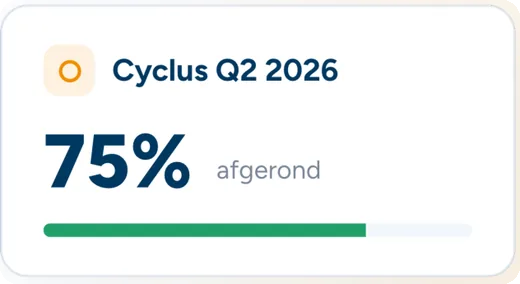
Fixed measurement points in the first quarter, fired automatically from the journey.
Deepler Journeys stands on its own. In combination it gets stronger.
Each suite works on its own. Together they tell the same story from several angles.
With Deepler Research
Deepler Research explores the strategic themes and the direction across the whole organisation. Journeys shows at which touchpoints in the journey that becomes concrete. Read more about Deepler Research.
With Deepler 360
Journeys marks the development moments in the journey. Deepler 360 collects concrete feedback there, so the conversation is about behaviour. Read more about Deepler 360.
With Deepler Culture
Culture defines which culture your journey should radiate. Journeys shows at the touchpoints whether that works in practice. Read more about Deepler Culture.
What clients say about Deepler
Organisations working with Deepler on the research, the guidance and what it delivers.
-
Larren
Recruitment Lead,
De Selectie

“Recently, I used Deepler to arrive at an EVP. Great what they were able to achieve in a short time! In a period of two weeks, we collected information and were able to continue with our AMC plan. In any other situation, it takes weeks, if not months, to get this done. Contact is good, friendly and constructive. Very nice club to work with.”
-

Douwe
Recruiter,
Securitas
“Ideal tool and company to gain more and better insight into the organization and employees as an organization! And especially with speed! For us, it was also the need to get tools for the topics of retention, to prevent future absenteeism or turnover. I also have experience with other parties and I sincerely value the speed of switching, follow-up and personal contact with Deepler. Absolutely recommended.”
-

Jolanda
HR Business Partner,
Nedcargo
“Deepler is a great tool for continuously collecting feedback from our employees. This input is then centrally available for us as management, but also for managers who benefit from it.”
-

Jonathan
Manager,
UWV
“What makes Deepler special is that it doesn’t get stuck in numbers. It helps you immediately understand where it is and what teams need. For us, this ensured that employees themselves came up with areas for improvement and took responsibility for them. The insights were sharp and useful, but most importantly: the conversation that started afterwards made the difference. Thanks to Deepler, we didn’t get a paper plan, but change that was supported by the people themselves.”
-
Amadeus
COO,
OSRE
“The software has a positive impact on us as a rapidly growing organization. By better understanding what is going on in the workplace and what people offer as solutions for improvements, we can make more effective decisions. The platform helps us to gain real-time insight and to respond directly to it via the tool.”

Frequently asked questions about employee journey software
Wondering whether this fits the way you work? These are the questions we hear most often from HR.
What exactly is an employee journey?
The employee journey is the whole journey someone travels at your organisation: preboarding, onboarding, development, internal mobility and offboarding. Every phase has moments that decide how that journey feels. Deepler Journeys makes those moments explicit and attaches actions and measurements to them.
What is trigger-based analytics?
Trigger-based analytics means the measurement hangs on an event in the process, not on a date in the HR calendar. When the trigger fires (a week before the first working day, or 30 days after it), it starts the actions and the question of how it went. Your insight builds up while the journey runs, per touchpoint and per phase.
Can the trigger also come from our HR system?
Yes. You set triggers in Journeys itself, but you can also let them fire on an event in your HR system. When a new employee is created there, a contract is changed or a departure is recorded, Journeys automatically starts the matching actions and the survey through the integration. Your HR system stays the source, so you never maintain anything twice. The integration with your HR system is part of the Enterprise package.
How is this different from an onboarding tool?
An onboarding tool covers the first few weeks and stops once the tasks are ticked off. Journeys covers the whole career at your organisation, and measures along the way. Every trigger that starts an action can start a measurement too. So you know not only that something happened, but how it was experienced.
Which phases can we set up?
By default you work with five phases: preboarding, onboarding, development, internal mobility and offboarding. In each phase you decide which touchpoints matter and where a measurement belongs. You do not have to set everything up at once: many organisations start with onboarding and expand from there.
How much work is it to set the journey up?
Designing the journey is a one-off job. After that it runs along with everyone joining, moving and leaving, measurements included. Change something in the journey and it applies immediately to everyone who travels through it afterwards.
Can we create a separate journey per department or role?
Yes. You can create variants per department, job family or location. The phases stay the same; the touchpoints, triggers and measurements differ where they need to.
Is our data secure and GDPR-compliant?
Yes. All processing takes place within the European Economic Area and in line with the GDPR. Employees complete a measurement moment through an encrypted link, and reporting happens at team and organisation level, so individual answers cannot be traced back to one person. Our privacy statement sets out exactly which data we process and how long we keep it.
How does Deepler Journeys relate to Research, 360 and Culture?
Journeys measures touchpoints: per moment in the employee journey, at the moment itself. Deepler Research works a level up, with an organisation-wide flow along the strategic themes that set the course. Deepler 360 handles development feedback at individual level and Deepler Culture maps the culture. They work separately and reinforce each other when you combine them.
Book a demo of Deepler Journeys
Curious what the employee journey looks like in your organisation? In a short demo we show how you set up phases, touchpoints and actions, and how you see where things stall.
- A look inside a configured journey
- Advice on the touchpoints that count for you
- A no-obligation conversation for all your questions