


Verbeter prestatiebeheer met real-time feedback en data
Verbeter prestatiebeheer met real-time feedback en data De jaarlijkse functioneringscyclus staat ond...
Psychological safety determines whether employees dare to say what they think, see and need. With Deepler’s Psychological safety module, you measure per team where people feel free to speak up, where the barriers are and which teams need extra attention. This way you don’t manage isolated incidents, but the patterns that determine whether people work together safely, honestly and effectively.
Psychological safety in the workplace means that employees feel safe enough to speak up without fear of negative consequences: asking questions, pointing out mistakes, sharing dissenting opinions and setting boundaries.
The term was introduced by Harvard professor Amy Edmondson, who demonstrated that teams perform better when people dare to take interpersonal risks. Social safety is closely related and refers more broadly to a work environment in which people treat each other respectfully and are protected against unwanted behaviour.
It’s not about a team without friction, but about the space to discuss difficult topics without it being about the person. That space leads to better decisions, more innovation and stronger collaboration.
The module measures where psychological safety within teams is under pressure and asks employees themselves to provide solutions. This way you see not only that there is friction, but also where and why.
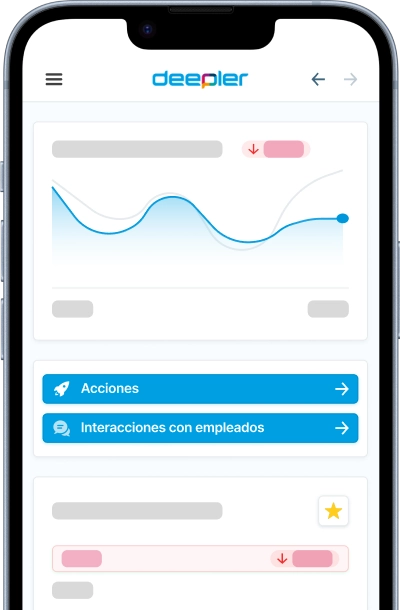
Per theme, teams engage in conversation and choose concrete actions that fit their situation. Safety varies greatly per team, so you direct strategically rather than organisation-wide.
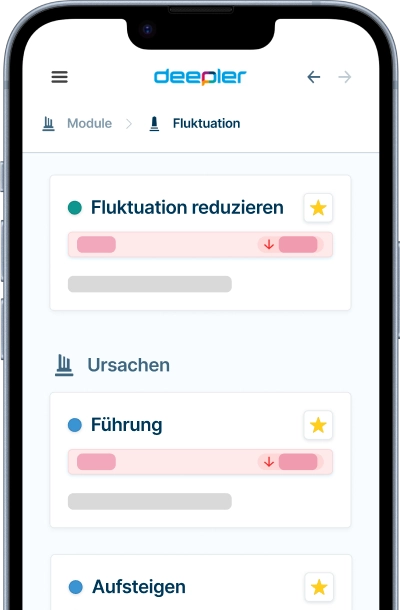
By measuring and analysing regularly, you see whether improvement actions have an effect and whether signals in certain teams increase or decrease. This way safety becomes a recurring part of culture development, not a separate campaign.
Psychological safety means that employees dare to share their ideas, mistakes and questions without fear of negative consequences. This promotes open communication, innovation and collaboration. Everyone feels heard and contributes more freely to the organization’s growth.
When psychological safety is lacking, signals go unheard. Employees don’t discuss mistakes, share ideas less readily and don’t report unwanted behavior. On the surface it seems quiet, while underlying tension increases. This affects well-being, quality, innovation and trust in leadership, and often leads to higher turnover and absence.
Improving psychological safety starts with leadership. Leaders who acknowledge their own mistakes, listen actively and invite feedback create a culture of openness. Targeted team conversations, short check-ins and a safe feedback structure help teams gradually develop more openness. Small, consistent actions have more impact than one-off interventions.
Yes, psychological safety is well measurable through targeted questionnaires and data analysis. With Deepler’s module, you measure not only whether people feel safe, but also which topics this applies to, such as giving feedback, reporting mistakes or sharing ideas. This gives you a concrete picture per team and allows you to steer targeted improvements.
Encourage learning from mistakes rather than punishing them. In a safe culture, mistakes are discussed sooner, which prevents repetition.
Ensure that everyone dares to share ideas and concerns, even if they differ from the majority.
Show that all perspectives are welcome and that dissenting voices are taken seriously.
Respond with understanding and without judgment to questions and suggestions, so employees feel supported.
This module maps how safe employees feel to speak up, across four main themes. Click a theme to see the underlying subthemes: this is the depth with which we make each theme concrete.
The Psychological Safety module measures the extent to which employees feel safe sharing ideas, questions and mistakes without fear of negative consequences. Across four themes, it maps how openness, dealing with mistakes, mutual trust and support are experienced. The focus is on social safety: being able to contribute without risk.

Discover in this video how organizations make psychological safety discussable with Deepler’s module. From measurement to concrete team conversations, see how it works in practice.
Psychological safety rarely stands alone. Topics such as work pressure, leadership, engagement and collaboration continuously influence each other. Combine this module with other Deepler modules to get a more complete picture of what is really happening on the work floor, and to steer more effectively toward the topics that have the most impact.
Experiences of customers who make a difference with us.
Larren
Recruitment Lead,
De Selectie

“Recently, I used Deepler to arrive at an EVP. Great what they were able to achieve in a short time! In a period of two weeks, we collected information and were able to continue with our AMC plan. In any other situation, it takes weeks, if not months, to get this done. Contact is good, friendly and constructive. Very nice club to work with.”

Douwe
Recruiter,
Securitas
“Ideal tool and company to gain more and better insight into the organization and employees as an organization! And especially with speed! For us, it was also the need to get tools for the topics of retention, to prevent future absenteeism or turnover. I also have experience with other parties and I sincerely value the speed of switching, follow-up and personal contact with Deepler. Absolutely recommended.”

Jolanda
HR Business Partner,
Nedcargo
“Deepler is a great tool for continuously collecting feedback from our employees. This input is then centrally available for us as management, but also for managers who benefit from it.”

Jonathan
Manager,
UWV
“What makes Deepler special is that it doesn’t get stuck in numbers. It helps you immediately understand where it is and what teams need. For us, this ensured that employees themselves came up with areas for improvement and took responsibility for them. The insights were sharp and useful, but most importantly: the conversation that started afterwards made the difference. Thanks to Deepler, we didn’t get a paper plan, but change that was supported by the people themselves.”
Amadeus
COO,
OSRE
“The software has a positive impact on us as a rapidly growing organization. By better understanding what is going on in the workplace and what people offer as solutions for improvements, we can make more effective decisions. The platform helps us to gain real-time insight and to respond directly to it via the tool.”

Schedule a free demo and discover how Deepler helps your organization measure and improve psychological safety. Our advisors are happy to think along with you.
Social safety broadly concerns a work environment free from unwanted behavior, exclusion or intimidation. Psychological safety is mainly about the space to speak up, discuss mistakes and ask questions. In practice, both are closely intertwined.
With short, concrete and neutral questions, supplemented with data analysis. You measure themes such as trust, speaking up culture, willingness to report and learning from mistakes. Broad questions like ‘do you feel safe?’ provide less useful answers than targeted statements about daily work.
That depends on the situation. Start with a broad baseline measurement and then follow up periodically. During incidents, reorganizations or leadership programs, an additional pulse measurement helps to identify effects and risks more quickly.
Yes. For sensitive topics, anonymity is essential. Deepler reports at group level and uses thresholds, so individual responses cannot be traced back. This increases the likelihood that employees answer honestly.
Including trust in the team, space to speak up, handling of mistakes, speaking up culture, respectful collaboration, leadership, willingness to report, inclusion and awareness of reporting channels.
By using results as a starting point for a safe conversation at the right level. Allow room for recognition and examples, address behavior rather than individuals and visibly communicate back which actions will be taken.
Start by interpreting patterns and discuss the results at the right level. Then choose concrete actions, such as team conversations, leadership support or improved reporting channels, and measure again later to see if the experience improves.
There is no separate legal requirement for one specific survey, but employers must ensure a safe and healthy work environment. A survey helps to practically substantiate that responsibility with insight into employees’ experiences.
Experiences of customers who make a difference with us.