


























Drie lachende mensen tegen gekleurde achtergronden, als visueel element voor werkgevers.
Icon Review Stars

4,9/5 reviews

Customer satisfaction survey: Everything you want to know

A customer satisfaction survey, often abbreviated as CSAT, is a study that organizations use to measure how customers experience their products, services, and touchpoints. The goal of a customer satisfaction survey is not only to measure satisfaction, but also to gain insight into what customers truly value and where opportunities for improvement lie.

Screenshot van het Deeper-dashboard (Dashboard-Home-MTO-Page-NE) met organisatiegegevens, trendanalyse en prestatie-indicatoren per pijler.

Table of contents

What is a customer satisfaction survey (CSAT)?

A customer satisfaction survey (CSAT) is a structured method that organizations use to measure how customers experience their products, services, and touchpoints. The goal is not only to assess satisfaction, but also to gain insight into customer expectations and identify areas for improvement.

A good CSAT focuses on themes such as product experience, service quality, communication, loyalty, and overall customer experience.

The objective is to understand how customers perceive your organization and which factors contribute to their satisfaction and likelihood to return.

Short and targeted questionnaires

An effective customer satisfaction survey consists of concise and focused questions that target specific aspects of the customer experience, such as product experience, service quality, and touchpoints. This increases response rates and provides reliable, actionable insights. Are you curious about example questions for your CSAT questionnaire?

Man met het hoofd op het toetsenbord zittend aan een bureau, ogenschijnlijk teneergeslagen of uitgeput.

Why is a customer satisfaction survey important?

A customer satisfaction survey (CSAT) helps organizations gain insight into how customers experience their products, services, and touchpoints. By collecting customer feedback in a structured way, companies can better understand what is working well and where improvements are needed.

Conducting a CSAT provides organizations with valuable insights.

Customer satisfaction is determined by a combination of factors that together shape the overall customer experience and influence loyalty. A positive product experience and good service often form the foundation, but communication, responsiveness, and problem-solving ability also play an important role.

Insight into what customers really think

A customer satisfaction survey provides a clear picture of how customers experience your products and services. It shows which aspects perform well and where pain points exist, for example in service quality, communication, or delivery time.

Improving customer loyalty and repeat purchases

Satisfied customers are more loyal and are more likely to recommend your organization. When customers feel heard and see that their feedback is taken seriously, loyalty increases and the risk of churn decreases.

Better business results

Customer satisfaction and business performance are closely linked. Organizations with satisfied customers often see higher revenue, more repeat purchases, and lower acquisition costs thanks to word-of-mouth.

By understanding what influences the customer experience, companies can invest more effectively in improvements that also strengthen financial results.

Identifying problems and opportunities for improvement

A CSAT makes it visible where customer dissatisfaction arises. Think of poor complaint handling, slow communication, or inconsistent product quality.

By recognizing these signals early, organizations can take action quickly and prevent customer churn.

Encouraging a customer-centric culture

A customer satisfaction survey creates a structured moment for customers to share their opinions. This encourages a culture within the organization where customer feedback is the norm and teams are actively involved in improvements. When organizations translate this feedback into concrete actions, it strengthens customer trust in the organization.

Conduct your customer satisfaction survey (CSAT) with the software from Deepler

With Deepler’s customer satisfaction module, you can discover within just two minutes how your organization performs on key themes such as product experience, service quality, and loyalty. The user-friendly software makes it easy to collect, analyze, and compare customer feedback with previous measurements or industry benchmarks. This not only gives you insight into current satisfaction levels, but also into trends and underlying causes.

The results are clearly presented in an intuitive dashboard, allowing you to immediately see where your organization’s strengths lie and which areas need improvement. Thanks to Deepler’s smart analytics tools, you can also initiate and track targeted actions, turning your CSAT into a powerful tool for continuously improving the customer experience.

Twee personen bespreken werk terwijl ze samen naar een tablet kijken.

Our happy customers

  • Logo-ABNAmro
  • Logo-Comtest
  • Logo of D&B The Facility Group in white text on a dark blue background with rounded squares.
  • Logo of "deSelectie" with the tagline "jouw recruitment marketing team" in bold, modern typography.
  • Logo-eviden
  • GestioNet logo with blue circular icons and the tagline "Play Think Learn".
  • Logo-Gomes 1
  • Logo-headfirst
  • Logo of Hendriks with a blue and orange icon and the Dutch slogan "Bedenkt, bouwt, beheert".
  • Truckland logo with blue and white text and an orange circle featuring horizontal white lines.
  • Logo-Site
  • Logo-Recruitment
  • Logo of Management Drives with bold "MD" initials and a colorful horizontal line beneath.
  • Logo-mateboer
  • Logo of Van der Valk featuring a stylized toucan with a yellow beak and red accents.
  • Logo-uwv
Dashboardweergave van het MTO-systeem met organisatieprestatie op 68% en trends per pijler.

Why do you conduct a customer satisfaction survey?

A customer satisfaction survey (CSAT) provides insight into how customers experience your products or services, what they are satisfied with, and where improvements are needed. The goal is not only to measure satisfaction, but especially to understand what customers need in order to remain loyal and recommend your organization to others.
Jonge man werkt geconcentreerd aan een bureau met een tablet, laptop en notitieblok.

A powerful tool

Conducting a customer satisfaction survey also helps to identify dissatisfaction at an early stage. You can quickly see when customers start to drop off, allowing you to take targeted action. It also gives customers the feeling that their opinion matters, which in itself contributes to a stronger customer relationship.

It is important that a CSAT is not used as a one-off project. A single survey mainly provides a snapshot in time. Only when you collect customer feedback continuously and structurally do you gain a complete picture. This allows you to identify trends, track improvements, and engage your teams in meaningful discussions about what truly matters. In short, a customer satisfaction survey is a powerful tool to understand your customers, improve your organization, and sustainably increase customer satisfaction.

Drie collega’s zitten samen aan een bureau en bespreken werkdocumenten.

What are the benefits of a customer satisfaction survey?

A customer satisfaction survey (CSAT) provides organizations with valuable insights into how customers experience products, services, and touchpoints. By collecting this feedback in a structured way, you can make more targeted improvements and better respond to customer needs. Broadly speaking, three key benefits can be identified: higher customer satisfaction, stronger customer loyalty, and better business results.

Trusted by young and old alike

Experiences of customers who make a difference with us.

  • Portrait of a smiling man in a suit in front of an orange background, titled "Review-image-Larren (1)."

    Larren

    Recruitment Lead, 

    De Selectie

    Icon Review Stars

    “Recently, I used Deepler to arrive at an EVP. Great what they were able to achieve in a short time! In a period of two weeks, we collected information and were able to continue with our AMC plan. In any other situation, it takes weeks, if not months, to get this done. Contact is good, friendly and constructive. Very nice club to work with.”

  • Portrait of a smiling man named Douwe with a bald head and light eyes, against a turquoise background.

    Douwe

    Recruiter, 

    Securitas

    Icon Review Stars

    “Ideal tool and company to gain more and better insight into the organization and employees as an organization! And especially with speed! For us, it was also the need to get tools for the topics of retention, to prevent future absenteeism or turnover. I also have experience with other parties and I sincerely value the speed of switching, follow-up and personal contact with Deepler. Absolutely recommended.”

  • Portrait of Jolanda with long blonde hair, wearing a black lace top, set against a purple background.

    Jolanda

    HR Business Partner, 

    Nedcargo

    Icon Review Stars

    “Deepler is a great tool for continuously collecting feedback from our employees. This input is then centrally available for us as management, but also for managers who benefit from it.”

  • Portrait of Jonathan in a blue suit and tie, smiling in front of a blue background.

    Jonathan

    Manager, 

    UWV

    Icon Review Stars

    “What makes Deepler special is that it doesn’t get stuck in numbers. It helps you immediately understand where it is and what teams need. For us, this ensured that employees themselves came up with areas for improvement and took responsibility for them. The insights were sharp and useful, but most importantly: the conversation that started afterwards made the difference. Thanks to Deepler, we didn’t get a paper plan, but change that was supported by the people themselves.”

  • Vector

    Amadeus

    COO, 

    OSRE

    Icon Review Stars

    “The software has a positive impact on us as a rapidly growing organization. By better understanding what is going on in the workplace and what people offer as solutions for improvements, we can make more effective decisions. The platform helps us to gain real-time insight and to respond directly to it via the tool.”


Man leunt voorover aan een bureau terwijl hij geconcentreerd naar een laptop kijkt.

Is a customer satisfaction survey mandatory and how does it relate to GDPR and privacy?

A customer satisfaction survey (CSAT) is not legally required in the United Kingdom. There is no specific law that obliges organizations to measure customer satisfaction on a regular basis. However, many organizations deliberately choose to conduct CSAT surveys regularly, as customer insights have a direct impact on business performance, customer loyalty, and market position.

How to get more out of your CSAT

Keep it short and sweet

Opt for short periodic questionnaires. This way, you keep the response high and the threshold remains low to participate honestly.

Twee lachende personen in casual kleding poseren voor een blauwe achtergrond.

Always share results

Show what happens to the feedback. Feedback increases trust and encourages employees to respond again next time.

Twee lachende collega’s in een vergadering binnen de financiële sector.

Turn feedback into action

Results are only valuable if improvements also follow. Start small, pick up concrete points and show that change is possible.

Lachende man in een rood shirt met een kleurrijk logo in de linkerbovenhoek.

Do's and don'ts of an CSAT?

A successful customer satisfaction survey (CSAT) requires a thoughtful approach. There are several do’s and don’ts that make the difference between valuable insights and a missed opportunity.
  • Clearly communicate the purpose of the survey and what will be done with the results.
  • Ensure anonymity so customers feel comfortable giving honest feedback.
  • Use short, clear questions that are relevant to the customer experience.
  • Share the results internally and translate them into concrete improvement actions.
  • Create a clear action plan based on the outcomes so improvements become visible.

The don'ts of an CSAT

  • Avoid surveys that are too long, as they lead to drop-offs or superficial answers.
  • Do not ignore negative feedback, these signals offer valuable opportunities for growth.
  • Do not treat the CSAT as a formality, but as a tool for genuinely improving the customer experience.
  • Do not conduct a survey without follow-up, nothing demotivates customers more than feedback that is not acted upon.
Twee personen bespreken werk terwijl ze samen naar een tablet kijken.

What do you do with the results of a customer satisfaction survey?

The results of a customer satisfaction survey are only valuable if you actually act on them. It starts with sharing the outcomes within the organization. By openly communicating the results to both customers and employees, you show that customer feedback is taken seriously and that their input truly has an impact. This not only increases satisfaction, but also strengthens trust in your organization.

Actively take up progress

After that, it is important to translate the most important areas for improvement into concrete actions. This can involve minor adjustments, such as better communication or more clarity about goals, but also larger trajectories around leadership, development or culture. Make agreements with teams, link responsibilities and actively monitor progress.

A good approach ensures that an ESS does not remain an isolated project, but becomes part of a continuous improvement cycle. By regularly measuring and using results as a starting point for dialogue and action, you are gradually building an organization where employees feel heard, involved and motivated. Within Deepler’s theme, we identify 6 different next steps that you can take after the initial research has been completed:

Do you want more tips on how to effectively follow up an employee satisfaction survey (ESS)? Then read our article:
‍Effective ESS Follow-up: Why Is That Important?

Step 1 Analyze and structure results

Map the data clearly and make connections between themes, teams and time periods. Are you working with a tool like Deepler, then the software helps you organize and visualize the most important insights.

Communicate openly about the results. Inform not only HR, but also management, team leads and employees. Improving the work experience requires a multidisciplinary approach and shared ownership.

Plan in-depth dialogues at team and organization levels. Don’t make it a monologue: give employees space to share context, examples, and solution ideas. More engagement often leads directly to higher satisfaction.

Translate insights and conversations to concrete actions at the organizational, team and individual levels. Link an owner, deadline and measurable success criteria for each action. Involve employees in the choice and implementation.

Prioritize. Don’t tackle everything at once, but work in clear sprints. This way, you maintain an overview, it remains feasible and you can make progress visible.

An ESS is not a one-off exercise. More continuously and evaluate the impact of your actions. Tools like Deepler can monitor employee satisfaction in real time, so that you can quickly make adjustments where necessary.

Drie dashboardkaarten met percentages voor vertrouwen in leidinggevende, opleidingen en teamdynamiek.

Have the right conversation by understanding what's going on

Managers know which themes to discuss with their teams via their dashboard or their individual one-pager. That way, you have the right conversation in your organization and you don’t overlook important topics.

Organizational research without high costs

Match your needs with our Basic or Plus package. Want to compare multiple countries or organizations? Then the Enterprise package is the best choice.

Basic

€2.99

Per user/per month

The best for your team or smaller organizations that want to gain insights quickly.

  • Maximum of 1 module
  • Score segmentation
  • In-depth analysis for Managers
  • Unlimited number of languages
  • Personal dashboard for employees

Plus

€3.49

Per user/per month

The best option if you want to survey multiple teams and SMEs.

  • Everything from Basic
  • 2 additional research modules
  • Personal success manager
  • Non-desk employees
  • Custom questions

Most popular

Enterprise

On request

Per user/per month

The best for large organizations and custom modules.

  • Everything from Plus
  • Single Sign-On
  • Custom modules
  • Advanced Security
  • Personal onboarding

Basic

€36

Per user/per year

The best for your team or smaller organizations that want to gain insights quickly.

  • Maximum of 1 module
  • Score segmentation
  • In-depth analysis for Managers
  • Unlimited number of languages
  • Personal dashboard for employees
  • Suitable for employees company email address

Plus

€42

Per user/per year

The best option if you want to survey multiple teams and SMEs.

  • Basic
  • 2 additional research modules
  • Personal support from a Deepler expert
  • Suitable for all employees
  • Add your own questions
  • Option to conduct surveys using QR codes

Most popular

Enterprise

On request

Per user/per year

The best for large organizations and custom modules.

  • Plus
  • Unlimited research modules
  • Custom modules
  • Unlimited number of languages
  • Personal dashboard for employees
  • Suitable for employees company email address

Frequently asked questions

What is a customer satisfaction survey (CSAT)?

A customer satisfaction survey (CSAT) is a structured method that organizations use to measure how customers experience their products, services, and touchpoints. In a CSAT, themes such as product experience, service quality, communication, responsiveness, and overall customer experience are examined. The results provide insight into what is working well and where improvements can be made. More about the background of customer research can be found on Wikipedia: Customer satisfaction.

A customer satisfaction survey helps organizations understand what customers value, where pain points lie, and how the customer experience can be improved. With these insights, companies can implement targeted improvements, for example in service quality, product experience, or communication. This leads to higher customer satisfaction, increased loyalty, and a lower risk of customer churn.

Many organizations conduct a customer satisfaction survey at least once a year. Increasingly, companies combine this with shorter pulse surveys that take place multiple times a year or with continuous measurement through NPS or CSAT scores after each touchpoint. This allows organizations to detect changes in customer satisfaction more quickly and take action sooner when issues arise.

In most cases, a customer satisfaction survey is conducted anonymously. Anonymity is important because it encourages customers to provide more honest feedback. Results are often only displayed once there are enough respondents, ensuring that individual answers cannot be traced back to specific individuals. This increases both the response rate and the reliability of the results.

Schedule a consultation

Ready to take the next step? Get in touch, and we’ll work together to find the best approach. Whether you have a question or just want to bounce some ideas around, we’re here for you.

  • A glimpse into the Deepler dashboard
  • Personal advice and start with honest insight
  • A no-obligation consultation to answer all your questions
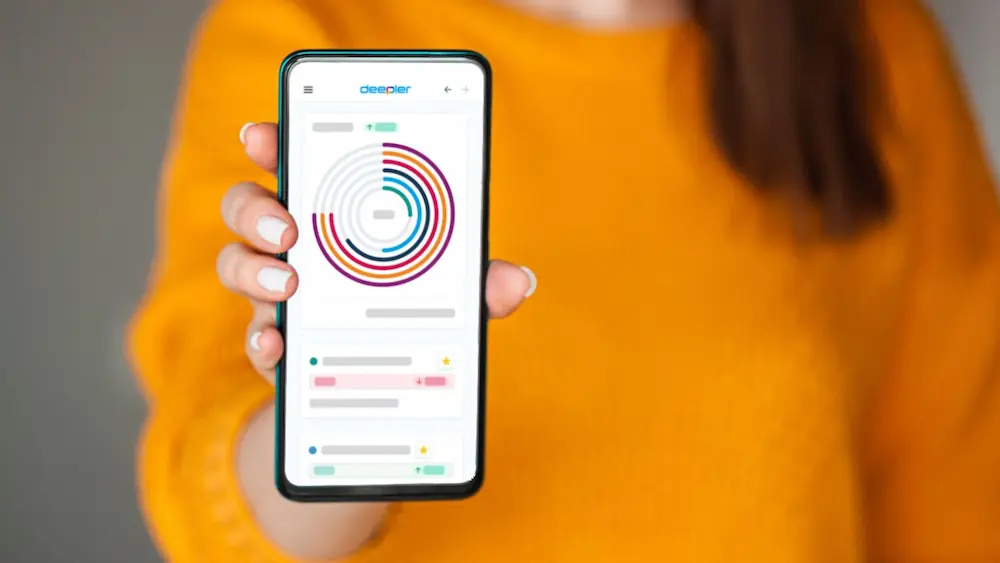
Persoon in gele trui houdt een smartphone vast met de Deeper-app en kleurrijke datavisualisatie op het scherm.
E-learning kaart toegevoegd door Leon met een score van 36 en plus- en minknoppen.
Kaart met de titel "Inwerken van collega's", waarop een streak van 14 dagen en 10 van de 12 voltooide taken worden getoond.
Background-circles-Deepler