


Verbeter prestatiebeheer met real-time feedback en data
Verbeter prestatiebeheer met real-time feedback en data De jaarlijkse functioneringscyclus staat ond...
Onboarding determines how quickly new employees feel welcome, secure, and productive. With Deepler’s Onboarding module, you measure how new colleagues experience their start, which parts of the onboarding process work well, and where guidance, role clarity, or culture needs attention. This way, you manage based on concrete input from the first weeks and months, not on gut feeling.
Onboarding is the process in which new employees are helped to get off to a good start within an organization. It goes beyond a practical checklist or the first day of work. Good onboarding helps employees understand what their role is, how the team works, what expectations there are and how they can contribute.
Yet you often only see where things go wrong later: unclear expectations, insufficient guidance, a sluggish onboarding process or a mismatch between promise and practice. New employees don’t always dare to immediately say what is unclear or disappointing, which means signals remain hidden.
With an onboarding survey, you surface these signals earlier. You measure at concrete moments, for example after 30, 60 and 90 days, how the start is experienced and where improvement is needed. This way you improve the onboarding program while the employee is still in the middle of their first experience.
The module measures how new employees experience their onboarding at critical moments: after 30, 60 and 90 days. This way you can see in time where guidance, information or role clarity is lacking and you can make adjustments before doubt grows.
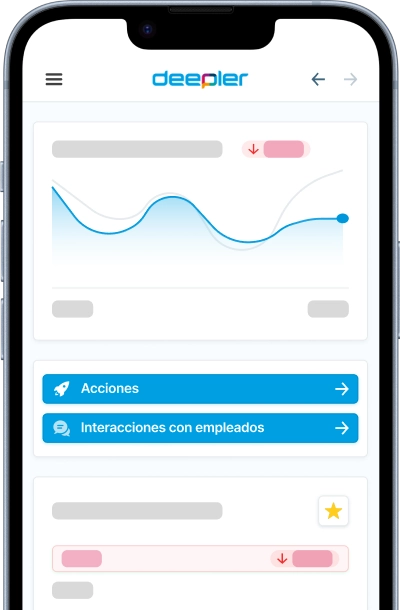
Per theme you map out what is going well and where new employees get stuck: from feeling welcome and the first day to guidance, expectations and fit with the culture. This way you know where your onboarding program needs improvement.
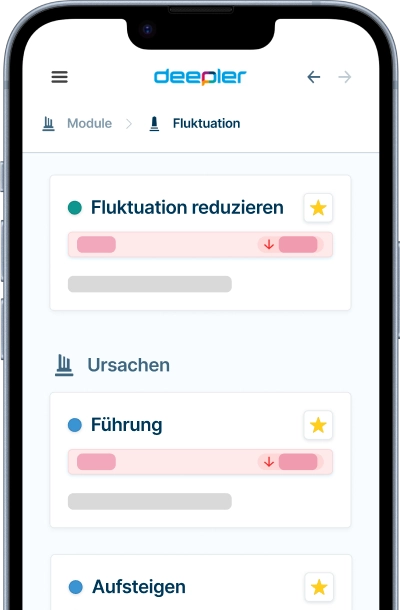
By measuring regularly you see patterns across teams, departments and functions. Which managers guide well? Where is information missing? Which teams help new colleagues land faster? This way you make onboarding measurable and better.
Onboarding is the process in which new employees are helped to make a good start within an organization. It includes guidance, information provision, introduction to the culture and building relationships. A strong onboarding program ensures that new colleagues feel welcome, confident and productive quickly and know what is expected of them.
A bad start can have lasting effects. New employees who receive insufficient guidance, don’t know what is expected of them or don’t feel connected to the team have a harder time finding their place. This leads to lower productivity, frustration or early departure. Good onboarding prevents this and ensures faster deployability and higher engagement.
Improving onboarding starts by listening to new employees. Measure at fixed intervals how they experience their start, ask about concrete pain points and involve managers and buddies in the outcomes. Small adjustments, such as clearer expectations, better guidance or a stronger first workday, often have an immediate effect on how quickly someone settles in.
Yes, onboarding can be measured well through targeted questionnaires at strategic moments. With Deepler’s module, you not only measure whether the start goes well, but also why and on which topics there are issues. Think of role clarity, guidance, access to information and alignment with culture. This gives you concrete insights to improve your onboarding program.
Provide a warm welcome and clear information in advance. Good pre-onboarding increases motivation and ensures that new colleagues start well-prepared.
Discuss early on what the role entails, which priorities apply and how success is measured. Unclear expectations create uncertainty.
Assign a buddy and schedule regular meetings with the manager. New employees need someone to answer questions and think along with them.
Ask after 30, 60 and 90 days how the start is going and what can be improved. This way you improve onboarding based on real experiences rather than assumptions.
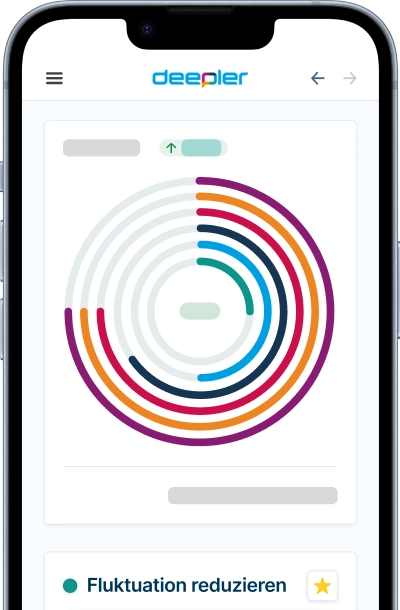
This module maps how new employees experience their onboarding period, across four main themes. Click a theme to see the underlying subthemes: this is the depth with which we make each theme concrete.
The Onboarding module measures how new employees experience their first months, so that early attrition is prevented and people perform at the required level faster. Across four themes, it maps how social integration, role clarity, guidance and expectations are experienced. Central to this is smooth onboarding: landing well, both socially and procedurally.

Discover in this video how organizations improve onboarding with Deepler’s module. From measurement at critical moments to concrete improvement actions, see how it works in practice.
Onboarding is related to other topics such as leadership, work pressure, engagement and psychological safety. Combine this module with other Deepler modules to get a more complete picture of what new employees experience and to more effectively steer towards the factors that determine their start.
Experiences of customers who make a difference with us.
Larren
Recruitment Lead,
De Selectie

“Recently, I used Deepler to arrive at an EVP. Great what they were able to achieve in a short time! In a period of two weeks, we collected information and were able to continue with our AMC plan. In any other situation, it takes weeks, if not months, to get this done. Contact is good, friendly and constructive. Very nice club to work with.”

Douwe
Recruiter,
Securitas
“Ideal tool and company to gain more and better insight into the organization and employees as an organization! And especially with speed! For us, it was also the need to get tools for the topics of retention, to prevent future absenteeism or turnover. I also have experience with other parties and I sincerely value the speed of switching, follow-up and personal contact with Deepler. Absolutely recommended.”

Jolanda
HR Business Partner,
Nedcargo
“Deepler is a great tool for continuously collecting feedback from our employees. This input is then centrally available for us as management, but also for managers who benefit from it.”

Jonathan
Manager,
UWV
“What makes Deepler special is that it doesn’t get stuck in numbers. It helps you immediately understand where it is and what teams need. For us, this ensured that employees themselves came up with areas for improvement and took responsibility for them. The insights were sharp and useful, but most importantly: the conversation that started afterwards made the difference. Thanks to Deepler, we didn’t get a paper plan, but change that was supported by the people themselves.”
Amadeus
COO,
OSRE
“The software has a positive impact on us as a rapidly growing organization. By better understanding what is going on in the workplace and what people offer as solutions for improvements, we can make more effective decisions. The platform helps us to gain real-time insight and to respond directly to it via the tool.”

Schedule a free demo and discover how Deepler helps your organization measure and improve onboarding. Our advisors are happy to think along with you about how to get new employees up to speed faster.
Introduction is often limited to the first day or week: getting to know each other, setting up a workplace, arranging practical matters. Onboarding is broader and lasts longer, often three to twelve months. It involves guidance, development, cultural integration, and building a network within the organization.
This varies by role and organization, but typically onboarding lasts at least three months and for more complex roles six to twelve months. What’s important is that there is structural attention, not just in the first week.
Measure at fixed intervals, for example after 30, 60, and 90 days. This gives you insight into how the experience develops and where you can make timely adjustments. A single measurement at the end of the trial period often comes too late.
Think of topics such as feeling welcome, role clarity, guidance from manager and buddy, access to information and resources, cultural fit, confidence in the choice, and satisfaction with the first period.
By asking concrete questions at fixed intervals and analyzing patterns. What goes structurally well? Where do new employees get stuck? Which managers and teams score better? This turns onboarding into a continuous improvement process.
An onboarding checklist is a practical list of tasks and actions before and during the first period, such as contract processing, setting up a workplace, arranging access, and scheduling meet-and-greet meetings. It is an important part of onboarding, but not the entire process.
Discuss the results with HR, managers, and possibly new employees themselves. Choose concrete improvement actions, such as better guidance, clearer communication, or adjustments to the onboarding program. Then measure again to see if the experience improves.
Common reasons are a mismatch between expectation and reality, unclear role, insufficient guidance, lack of connection with the team, or feeling like they don’t belong. A good onboarding survey brings these signals to light early on.
Experiences of customers who make a difference with us.