



Measure, understand and increase productivity

Productivity is not about working harder, but about working smarter. With Deepler’s Productivity module, you measure per team where work runs smoothly and where time, focus or energy is lost. You discover not only whether teams are productive, but above all which conditions help or hinder productivity. This way you steer not only on output, but on the work processes and conditions that make sustainable productivity possible.

  • Focus and concentration
  • Priorities and clarity
  • Work processes and collaboration
  • Workload and energy
  • Resources and support
Dejected woman behind a desk, photographed from above.
Image of a woman in a pink drop

What is productivity in the workplace?

Productivity describes the ratio between what is put in and what it delivers. In an organisation, it is not only about how many hours employees work, but above all about the value those hours create.

A team can be busy without being truly productive. Lots of meetings, unclear priorities, rework or overlapping tasks cost time without delivering results. Productivity grows when employees have clear goals, know what has priority and can do their work without unnecessary obstacles.

Measuring productivity does not have to mean checking individual performance. It is precisely about insight into the conditions in which people work: can they work with focus, do processes connect and is there enough room to deliver quality?
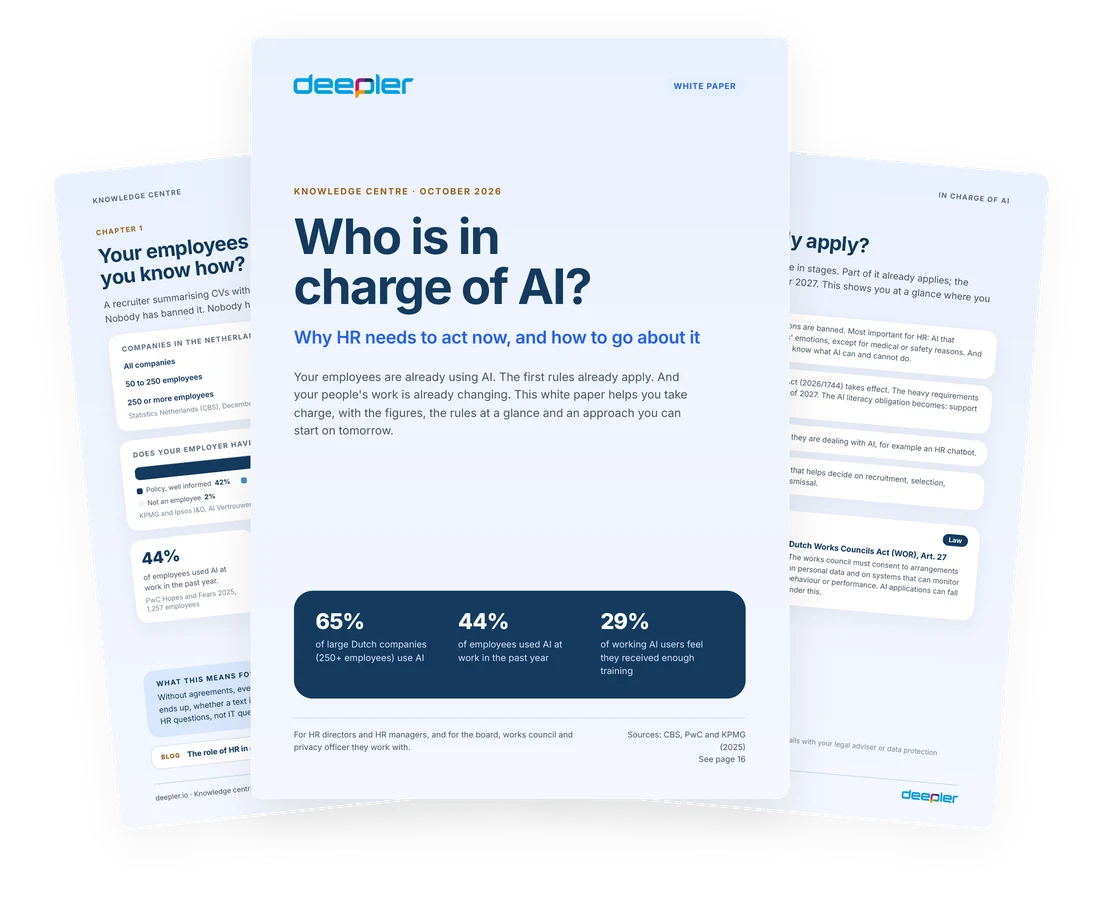
Preview of the white paper Who is in charge of AI?

Free whitepaper

Who is in control of AI?

How AI is already used in the workplace, which rules apply now and seven things HR should arrange now.

Download the whitepaper

How does the module help measure and increase productivity?

Identifying bottlenecks

The module maps where productivity is held back: unclear priorities, too many meetings, poor handovers or a lack of focus. Employees indicate themselves what helps and what hinders, so you see exactly where intervention is needed.
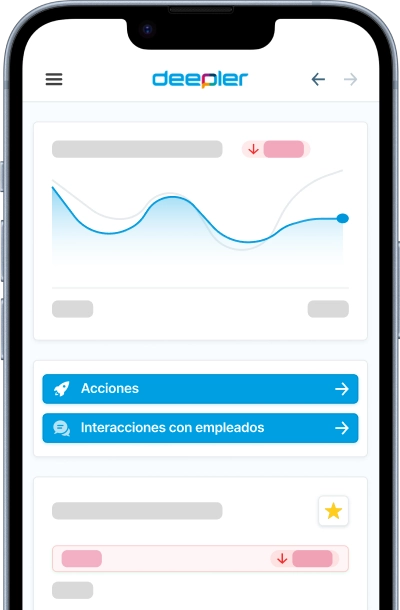
Phase 3 screen in Spanish

Targeted improvement actions per team

Productivity differs greatly per team and role. With concrete insights per department, you can steer in a targeted way: fewer disruptions for one team, clearer priorities for another. This way you work on solutions that really fit.
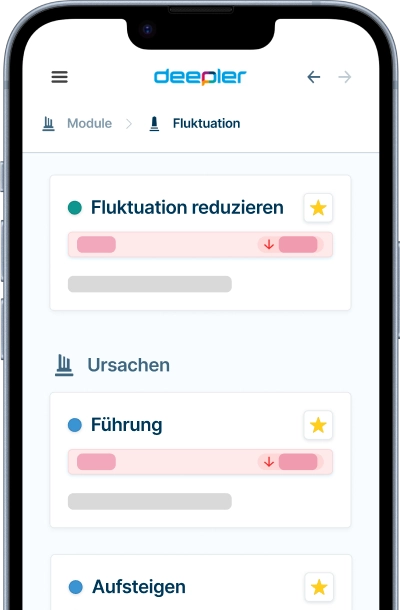
Phase 2 screen in German

Continuous monitoring and improvement

By measuring regularly, you see whether the measures taken have an effect. Work processes change constantly, so productivity requires lasting attention. With repeated measurements you steer on sustainable improvement instead of one-off quick wins.
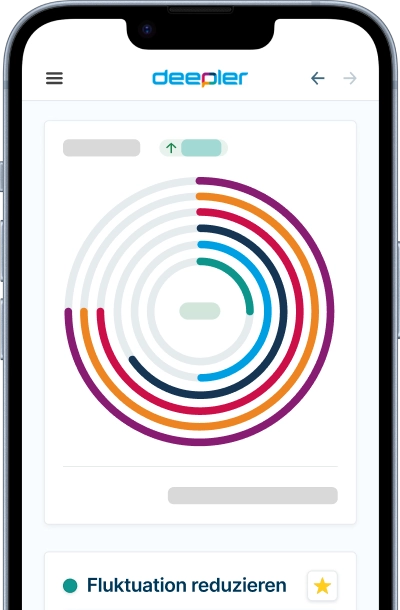

Phase 1 screen

What is productivity?

Productivity is the ratio between the resources used and the result they produce. It is not only about output, but above all about value creation: how much time, energy and focus actually delivers results? In teams, productivity arises when employees have clear goals, can work with focus and do not get stuck in unclear processes or unnecessary obstacles.

Three people collaborating on a design on a tablet.

Why is productivity important?

Low productivity means teams are busy without making progress. That leads to frustration, increased workload and absence. Employees become exhausted by work that costs a lot of energy but delivers little. When productivity remains structurally low, the organisation’s strength decreases and costs and turnover rise. It is therefore crucial to see productivity not as a performance indicator, but as a signal of how well work is organised.

Two tech people celebrating their success with a high five

Increasing productivity

Increasing productivity starts with removing obstacles. Provide clear priorities, limit interruptions, improve handovers between departments and give teams the resources they need. Small improvements in work processes, communication and planning often have more impact than large systems or tools. Involve employees in improvements: they know best what helps them work more effectively.

Smiling man in a yellow hoodie sitting at his desk holding a sticky note pad

Can you measure productivity?

Yes, productivity is measurable without lapsing into control or micromanagement. With Deepler’s module, you measure the conditions that influence productivity: focus, priorities, collaboration, work processes and available resources. This gives you insight into where work runs smoothly and where time or energy is lost, and lets you steer improvement in a targeted way without making employees feel constantly assessed.

Two men and a woman in the office discussing their day.
Woman in an orange drop, smiling

How to increase productivity in teams

Orange icon

Making priorities clear

Make sure everyone knows what is important and what is not. Unclear goals lead to wasted time and frustration.

Green icon

Protecting focus

Limit interruptions, unnecessary meetings and ad hoc questions. Give employees room for deep work.

Pink icon

Streamlining processes

Improve handovers, reduce duplicate work and make sure departments connect well.

Flag icon

Providing resources and support

Give teams the tools, knowledge and autonomy they need to do their work well without constantly having to ask for help.

Deepler's approach

This module maps which factors influence team productivity, along four main themes. Open a theme to see the underlying sub-themes: that is the depth with which we make each theme concrete.

Productivity
Module Productivity
Productivity

The Productivity module measures the environmental factors that promote or hinder effective work, so that bottlenecks become visible. Along four themes, it maps how focus, resources, collaboration and motivation relate to productivity. At its core is effective work: getting as much value as possible from the available time.

Focus and priorities
3 Sub-themes
  • Clear priorities
  • Concentration and distraction
  • Goal-oriented work
Resources and tools
3 Sub-themes
  • Available tools
  • Systems and technology
  • Access to information
Collaboration and processes
3 Sub-themes
  • Work processes
  • Mutual alignment
  • Communication
Motivation and energy
3 Sub-themes
  • Engagement
  • Energy and workload
  • Meaningfulness

See how to make productivity discussable with data

Discover in this video how organisations gain insight into productivity with Deepler’s module. From measurement to concrete team conversations, see how it works in practice and which improvements teams implement.

Image for the about us page showing pictures of Deepler.
Decorative circles in Deepler’s house style

Combine with other research themes

Productivity rarely stands on its own. Themes such as workload, engagement, leadership and collaboration directly influence each other. Combine this module with other Deepler modules to get a more complete picture of what helps or hinders productivity, and to steer more precisely on the factors that make the most difference.

Trusted by young and old

Experiences of customers who make a difference with us.

  • Portrait of a smiling man in a suit in front of an orange background, titled "Review-image-Larren (1)."

    Larren

    Recruitment Lead, 

    De Selectie

    Review stars icon

    “Recently, I used Deepler to arrive at an EVP. Great what they were able to achieve in a short time! In a period of two weeks, we collected information and were able to continue with our AMC plan. In any other situation, it takes weeks, if not months, to get this done. Contact is good, friendly and constructive. Very nice club to work with.”

  • Portrait of a smiling man named Douwe with a bald head and light eyes, against a turquoise background.

    Douwe

    Recruiter, 

    Securitas

    Review stars icon

    “Ideal tool and company to gain more and better insight into the organization and employees as an organization! And especially with speed! For us, it was also the need to get tools for the topics of retention, to prevent future absenteeism or turnover. I also have experience with other parties and I sincerely value the speed of switching, follow-up and personal contact with Deepler. Absolutely recommended.”

  • Portrait of Jolanda with long blonde hair, wearing a black lace top, set against a purple background.

    Jolanda

    HR Business Partner, 

    Nedcargo

    Review stars icon

    “Deepler is a great tool for continuously collecting feedback from our employees. This input is then centrally available for us as management, but also for managers who benefit from it.”

  • Portrait of Jonathan in a blue suit and tie, smiling in front of a blue background.

    Jonathan

    Manager, 

    UWV

    Review stars icon

    “What makes Deepler special is that it doesn’t get stuck in numbers. It helps you immediately understand where it is and what teams need. For us, this ensured that employees themselves came up with areas for improvement and took responsibility for them. The insights were sharp and useful, but most importantly: the conversation that started afterwards made the difference. Thanks to Deepler, we didn’t get a paper plan, but change that was supported by the people themselves.”

  • Vector

    Amadeus

    COO, 

    OSRE

    Review stars icon

    “The software has a positive impact on us as a rapidly growing organization. By better understanding what is going on in the workplace and what people offer as solutions for improvements, we can make more effective decisions. The platform helps us to gain real-time insight and to respond directly to it via the tool.”

Ready to gain insight into productivity?

Schedule a no-obligation demo and discover how Deepler helps your organisation measure and increase productivity. Our advisors are happy to think along with you about an approach that suits your situation.

Man in a turquoise drop
Aantal stemmen voor het idee 'Gezondere lunch', toegevoegd door Leon, met een score van +36.
Deepler dashboard for employee surveys
Decorative circles in Deepler’s house style

Frequently asked questions about productivity

Efficiency is about doing things right: using as little time or resources as possible. Productivity is about doing the right things: creating value with the time invested. You can be efficient without being productive, for example when you quickly complete tasks that do not contribute to the goal.