


Verbeter prestatiebeheer met real-time feedback en data
Verbeter prestatiebeheer met real-time feedback en data De jaarlijkse functioneringscyclus staat ond...
Business growth requires more than commercial ambitions. It requires an organization that can move along: teams that understand priorities, processes that remain scalable and employees who know what growth demands of them. With Deepler’s Business Growth module, you measure whether your organization is ready for the next step. You discover where growth gives energy, where it gets stuck and which organizational factors cause acceleration or slowdown.
Business growth means that an organization develops in size, revenue, impact, market share or maturity. Growth is visible in more customers, more employees, new markets or a larger service offering.
But growth also has an internal side. As an organization grows, the way people collaborate, make decisions and distribute responsibility changes. What worked initially with short lines of communication can later cause noise, delays or confusion.
That’s why business growth isn’t just about getting bigger, but especially about getting stronger as you grow. An organization can only grow sustainably when the foundation is solid: employees understand where the organization is headed, managers can translate priorities to teams and processes are clear enough to work repeatedly.
The module maps out where growth stalls: unclear priorities, overload, slow decision-making or lack of collaboration. You see not only that growth stagnates, but also why and where.
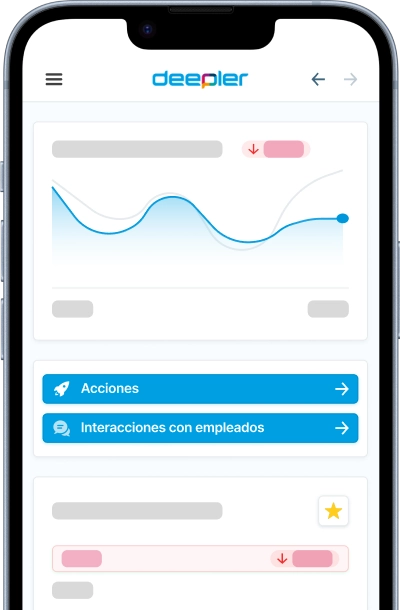
Not every team experiences growth the same way. One department benefits from new opportunities, another is drowning in workload. Measure per team how growth is experienced and where adjustments are needed to sustain growth.
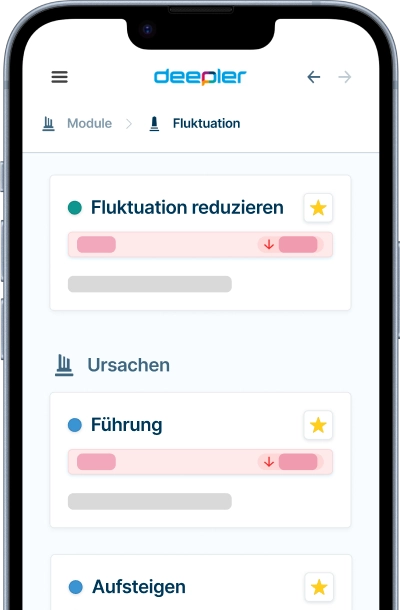
By measuring regularly and following patterns, you see whether your organization is growing in strength or only in size. This turns growth into a controlled process instead of a risk, and allows you to steer based on the factors that really make a difference.
Business growth means that an organization develops in size, revenue, impact or maturity. It’s not just about more customers or higher figures, but also about the internal strength to sustain growth. Sustainable growth requires teams that can adapt, clear processes and leadership that provides direction.
Growth is often assessed based on revenue figures or customer growth. But those figures don’t explain why growth succeeds or fails. An organization can grow commercially while internally pressure builds, collaboration becomes more difficult or decision-making slows down. By measuring business growth from the perspective of employees and teams, you gain insight into the organizational conditions behind growth.
Accelerating business growth requires targeted interventions at the points where growth stalls. This can mean: making priorities clearer, standardizing processes, relieving team burden or better equipping managers. The module helps base those interventions on what employees themselves experience, so actions align with the actual dynamics in the organization.
Yes, business growth is measurable from an organizational perspective. With Deepler’s module, you measure not only whether people can keep up with growth, but also where it causes friction: direction, workload, collaboration, decision-making or leadership. This gives you a concrete picture per team and allows you to steer specifically toward acceleration rather than slowdown.
Teams need to understand where the organization is growing toward and what that requires of them. Repeat priorities, explain choices and ensure everyone sees the bigger picture.
What worked with ten people no longer works with fifty. Standardize where necessary, document workflows and make agreements repeatable without becoming rigid.
Growth brings more decisions with it. Ensure it's clear who decides what, who gets informed and where employees can act themselves.
Managers play a key role during growth. Equip them to translate priorities, coach teams and relieve pressure instead of passing it on.
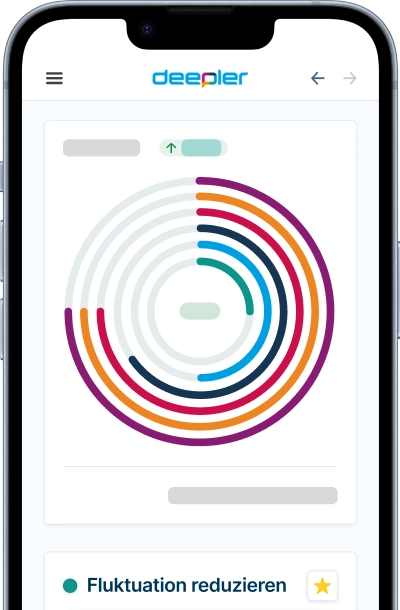
This module maps how growth is experienced by employees, across four main themes. Click a theme to see the underlying subthemes: that is the depth with which we make each theme concrete.
The Growth Monitoring module measures how (rapid) growth impacts the organization and where bottlenecks arise that slow growth. Across four themes, it maps how direction, processes, leadership and workload move with the growth. The focus is on controlling growth: scaling sustainably without losing people.

Discover in this video how organizations make business growth discussable with Deepler’s module. From measurement to concrete management actions, see how it works in practice and what insights it provides.
Business growth rarely stands alone. Themes such as work pressure, leadership, engagement, collaboration and change readiness continuously influence each other. Combine this module with other Deepler modules to get a more complete picture of what accelerates or slows growth, and to steer more strategically on the topics that have the most impact.
Experiences of customers who make a difference with us.
Larren
Recruitment Lead,
De Selectie

“Recently, I used Deepler to arrive at an EVP. Great what they were able to achieve in a short time! In a period of two weeks, we collected information and were able to continue with our AMC plan. In any other situation, it takes weeks, if not months, to get this done. Contact is good, friendly and constructive. Very nice club to work with.”

Douwe
Recruiter,
Securitas
“Ideal tool and company to gain more and better insight into the organization and employees as an organization! And especially with speed! For us, it was also the need to get tools for the topics of retention, to prevent future absenteeism or turnover. I also have experience with other parties and I sincerely value the speed of switching, follow-up and personal contact with Deepler. Absolutely recommended.”

Jolanda
HR Business Partner,
Nedcargo
“Deepler is a great tool for continuously collecting feedback from our employees. This input is then centrally available for us as management, but also for managers who benefit from it.”

Jonathan
Manager,
UWV
“What makes Deepler special is that it doesn’t get stuck in numbers. It helps you immediately understand where it is and what teams need. For us, this ensured that employees themselves came up with areas for improvement and took responsibility for them. The insights were sharp and useful, but most importantly: the conversation that started afterwards made the difference. Thanks to Deepler, we didn’t get a paper plan, but change that was supported by the people themselves.”
Amadeus
COO,
OSRE
“The software has a positive impact on us as a rapidly growing organization. By better understanding what is going on in the workplace and what people offer as solutions for improvements, we can make more effective decisions. The platform helps us to gain real-time insight and to respond directly to it via the tool.”

Schedule a free demo and discover how Deepler helps your organization measure and strengthen growth force. Our advisors are happy to think along with you about the next step.
Commercial growth is about revenue, customers and market share. Organizational growth is about the organization’s ability to sustain that growth: processes, collaboration, capacity and leadership. Both are interconnected, but organizational growth is often underestimated.
By measuring how employees experience growth: do they understand the direction, do they feel overwhelmed, are processes clear enough, can teams pivot quickly? That experience tells you more about growth capacity than financial figures alone.
That depends on the growth rate. In a stable phase, an annual measurement is sufficient. During rapid growth, a reorganization or strategic change, a quarterly measurement helps you make adjustments before problems escalate.
Yes. Deepler reports at group level and uses thresholds, so individual responses cannot be traced back. This increases honesty and makes it safer to identify bottlenecks.
Including clarity about growth direction, workload and capacity, scalability of processes, collaboration between teams, decision-making, leadership, change readiness and organizational culture during growth.
By using results as a starting point for conversations at the right level: executive team, management, team leaders or teams. Discuss patterns, identify bottlenecks and translate insights into concrete actions that support rather than hinder growth.
Start by interpreting patterns and discuss the results at executive and management level. Then choose targeted actions, such as clarifying priorities, standardizing processes, expanding capacity or training managers, and measure again later to see if the experience improves.
Yes. Growth often stalls not from lack of ambition, but from unclear direction, overload or slow decision-making. A growth survey makes those blockers visible, so you can strategically invest in the organizational conditions that make growth possible.
Experiences of customers who make a difference with us.