


Verbeter prestatiebeheer met real-time feedback en data
Verbeter prestatiebeheer met real-time feedback en data De jaarlijkse functioneringscyclus staat ond...
Learning and development determines whether employees can grow with what the organization needs. With Deepler’s Learning and Development module, you measure where employees want to grow, which skills are missing, how internal training aligns with work, and where learning gets stuck in practice. This way, you make development not an HR activity on the sideline, but a focused part of performance, retention and organizational development.
Learning and Development (L&D) encompasses everything organizations do to develop the knowledge, skills and behavior of employees. It goes beyond just training: think of coaching, onboarding, leadership development, on-the-job learning and professional education.
Effective L&D aligns with what employees need to do their work better, not with what happens to be available. An internal training is only valuable if it helps with concrete challenges in daily work. Development also happens through feedback, collaboration, new responsibilities and solving real problems.
An L&D survey shows where the current offering aligns with practice, which skills are missing and where employees need extra support to grow.
The module measures which skills employees want to develop, where they are missing growth opportunities and which trainings do not align with their work. This way you see not only what is offered, but especially what is needed.
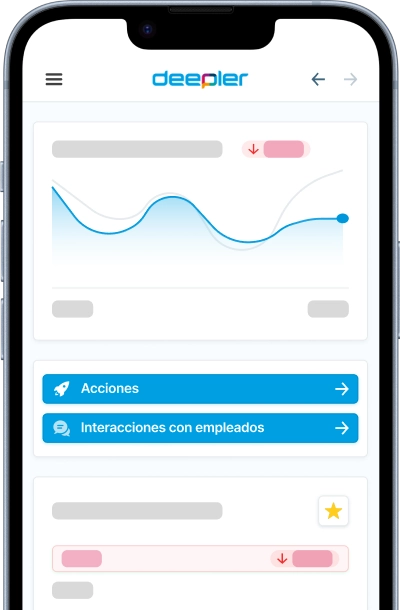
Development needs vary greatly by role, team and growth stage. With concrete data you choose interventions that match the situation: from coaching to professional training or leadership development.
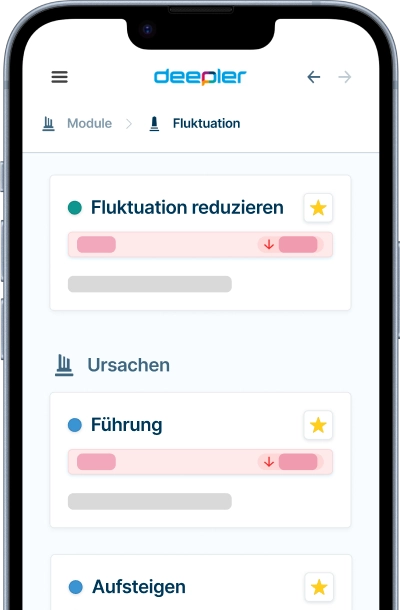
By measuring regularly you see whether internal training is applied in the work and whether development actions lead to growth. This way L&D becomes a continuous process of learning, measuring and adjusting rather than isolated training events.
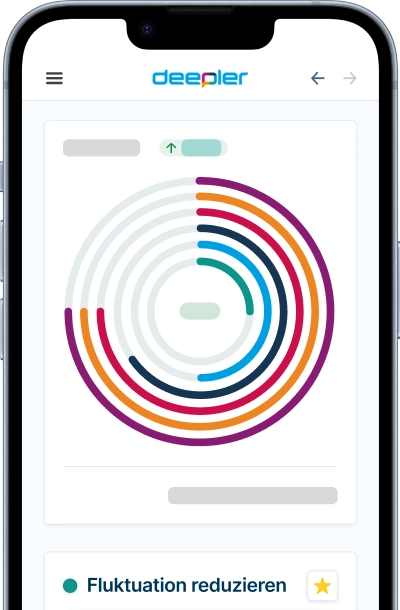
Learning and Development (L&D) encompasses all activities that organizations use to help employees grow in knowledge, skills, and behavior. It includes training, coaching, workplace learning, onboarding, and leadership development. Effective L&D aligns with what employees need to do their work better and grow with the organization.
Work is changing rapidly: new systems, different customer expectations, labor market shortages, and increasing complexity. Employees who cannot keep up become stuck or leave. At the same time, people want to know they have a future. If development remains vague or is only available to a small group, frustration arises. Targeted L&D helps with retention, performance, and future-proofing.
Improving L&D starts with alignment with work practices. Ask employees what they need, not just what training they want. Ensure that learned knowledge is directly applicable and that managers support development. Make growth paths visible and link development to career opportunities. Regularly measure whether training has an effect and adjust where necessary.
Yes, L&D is highly measurable through targeted surveys and data analysis. With Deepler’s module, you don’t just measure whether people are satisfied with training, but especially whether the offering aligns with their work, which skills are missing, and where learning stalls. This gives you a concrete picture per team and allows you to make targeted investments in development that has an impact.
Ensure that training is directly applicable in practice. Abstract training without work relevance rarely leads to behavior change.
Development is not a one-time training but an ongoing process of learning, feedback, and application in the workplace.
Managers who encourage development and provide space to practice significantly increase the impact of L&D activities.
Show employees how development is linked to career opportunities, so that learning becomes an investment in their future.
This module maps the organization’s learning culture across five main themes. Click on a theme to see the underlying subthemes: this is the depth with which we make each theme concrete.
The Learning and Development module measures the extent to which the organization stimulates and facilitates employee learning and growth. Across five themes, it maps how learning aligns with strategy, how people continue to develop, and the extent to which learning culture and leadership support this.
Discover in this video how organizations make Learning and Development discussable with Deepler’s module. From measurement to concrete development actions per team, see how it works in practice.
Learning and Development rarely stands alone. Topics such as leadership, engagement, work pressure and career prospects continuously influence each other. Combine this module with other Deepler modules to get a more complete picture of what is really happening on the work floor, and to steer more effectively on the topics that have the most impact.
Experiences of customers who make a difference with us.
Larren
Recruitment Lead,
De Selectie

“Recently, I used Deepler to arrive at an EVP. Great what they were able to achieve in a short time! In a period of two weeks, we collected information and were able to continue with our AMC plan. In any other situation, it takes weeks, if not months, to get this done. Contact is good, friendly and constructive. Very nice club to work with.”

Douwe
Recruiter,
Securitas
“Ideal tool and company to gain more and better insight into the organization and employees as an organization! And especially with speed! For us, it was also the need to get tools for the topics of retention, to prevent future absenteeism or turnover. I also have experience with other parties and I sincerely value the speed of switching, follow-up and personal contact with Deepler. Absolutely recommended.”

Jolanda
HR Business Partner,
Nedcargo
“Deepler is a great tool for continuously collecting feedback from our employees. This input is then centrally available for us as management, but also for managers who benefit from it.”

Jonathan
Manager,
UWV
“What makes Deepler special is that it doesn’t get stuck in numbers. It helps you immediately understand where it is and what teams need. For us, this ensured that employees themselves came up with areas for improvement and took responsibility for them. The insights were sharp and useful, but most importantly: the conversation that started afterwards made the difference. Thanks to Deepler, we didn’t get a paper plan, but change that was supported by the people themselves.”
Amadeus
COO,
OSRE
“The software has a positive impact on us as a rapidly growing organization. By better understanding what is going on in the workplace and what people offer as solutions for improvements, we can make more effective decisions. The platform helps us to gain real-time insight and to respond directly to it via the tool.”

Schedule a free demo and discover how Deepler helps your organization measure and improve learning and development. Our advisors are happy to think along with you.
Training is part of L&D, but L&D is broader. It encompasses all forms of learning: formal training, coaching, on-the-job learning, feedback and development through new responsibilities. Effective L&D combines different learning methods that align with work practice.
With targeted questions about access to development, relevance of training, application at work and career prospects. You measure not only satisfaction with training, but especially whether employees develop the skills they need and whether they can apply them in their work.
Start with a broad baseline measurement to map development needs. Then measure periodically, for example annually or semi-annually, to see if interventions have effect. After major changes or new L&D initiatives, an interim measurement helps to make adjustments.
Training that doesn’t align with work, no room to apply learned knowledge, unclear growth paths, development opportunities available only to a small group and lack of support from managers after training.
By using concrete data as a starting point for conversations about development. Discuss per team or department which skills are missing, where training doesn’t align and what support is needed. Provide visible feedback on which actions are being taken and measure the effect later.
Analyze where development needs are greatest and prioritize based on impact. Choose concrete actions such as adjusting training, introducing new learning methods, coaching, better onboarding or clearer growth paths. Measure again later whether the perceived effectiveness of L&D has improved.
By making growth paths clear and showing what development is needed for next steps. Regularly discuss ambitions and development needs in performance reviews and ensure that L&D activities align with career goals. This increases motivation and retention.
Managers largely determine whether development has effect. They identify development needs, encourage participation in training, create space to practice new skills and provide feedback. Without manager involvement, L&D often remains theoretical.
Experiences of customers who make a difference with us.