



Why we didn’t start with questionnaires
In 2021, four change managers founded Deepler. Not because the world needed another questionnaire, b...
Verder lezen



The year-end review is coming up. For many managers, that means thinking back over a whole year and hoping nothing slips through the cracks. With 360 degree feedback, you gather a broader picture in advance. But that only works if you prepare it well. In this blog, you will read how to prepare a review conversation with feedback you can really use.
A manager sees a lot, but not everything. You mainly see the moments when you are there yourself: meetings, presentations, the results at the end of a project. How someone works with colleagues, handles a difficult client call or onboards new colleagues often stays out of sight.
On top of that, a year is long. What happened in the last few weeks often weighs more heavily than what went well in the spring. The result is a picture from one person, at a few moments.
Feedback from several sides fills in that picture. Not to replace the manager, but to make the conversation richer. A good conversation starts with a clear picture.
Want to experience how that works? Do the free 360 mini-analysis: your own competency profile in three minutes, then compare it with how a colleague sees you.
With 360 degree feedback, you ask people from different directions for their view. Usually these are:
How many colleagues should you ask? A good guideline is three to five. Fewer makes the picture narrow and anonymity fragile. Many more makes gathering feedback heavy, without making the picture much sharper.
Let the employee help decide who gives feedback. Choose people who see the work up close, not just the colleagues they get on well with. Then briefly agree the list with the manager.

The self-assessment is sometimes seen as a formality. That is a shame, because this is exactly where the conversation begins. The gap between self-image and feedback is the conversation.
Does someone rate themselves lower than their colleagues do? Then there is an opportunity to show what others value. Does someone rate themselves higher? Then there is a blind spot to explore together, without judgement. And where self-image and feedback match, there is a solid base to build on.
So ask the employee to complete the self-assessment before the feedback comes in. That way it stays their own view, not a reaction to what others think.
Free-form feedback in an empty text box seems simple, but often produces loose remarks. One person writes about presentations, another about planning, a third about the atmosphere in the team. It is hard to find a common thread.
So work with a shared competency profile. Everyone gives feedback on the same competencies, based on concrete behaviour. “Shares information on time” says more than “communicates well”. That way you speak the same language, you can put the self-assessment next to the feedback and you can see where views match or differ.
Room for comments remains valuable. For example, ask for one example per competency, or close with two open questions: what should this colleague keep doing, and where do you see the biggest opportunity to grow?
Colleagues are more honest when they know what happens to their answers. So explain in advance how anonymity works. For example:
Also say what the feedback is for: development and a better conversation. If colleagues feel their answer will feed directly into an appraisal or pay decision, they become more cautious. And cautious feedback helps no one.
Gathering feedback takes time. People are busy, especially at the end of the year. So start well in advance. A workable schedule looks like this:
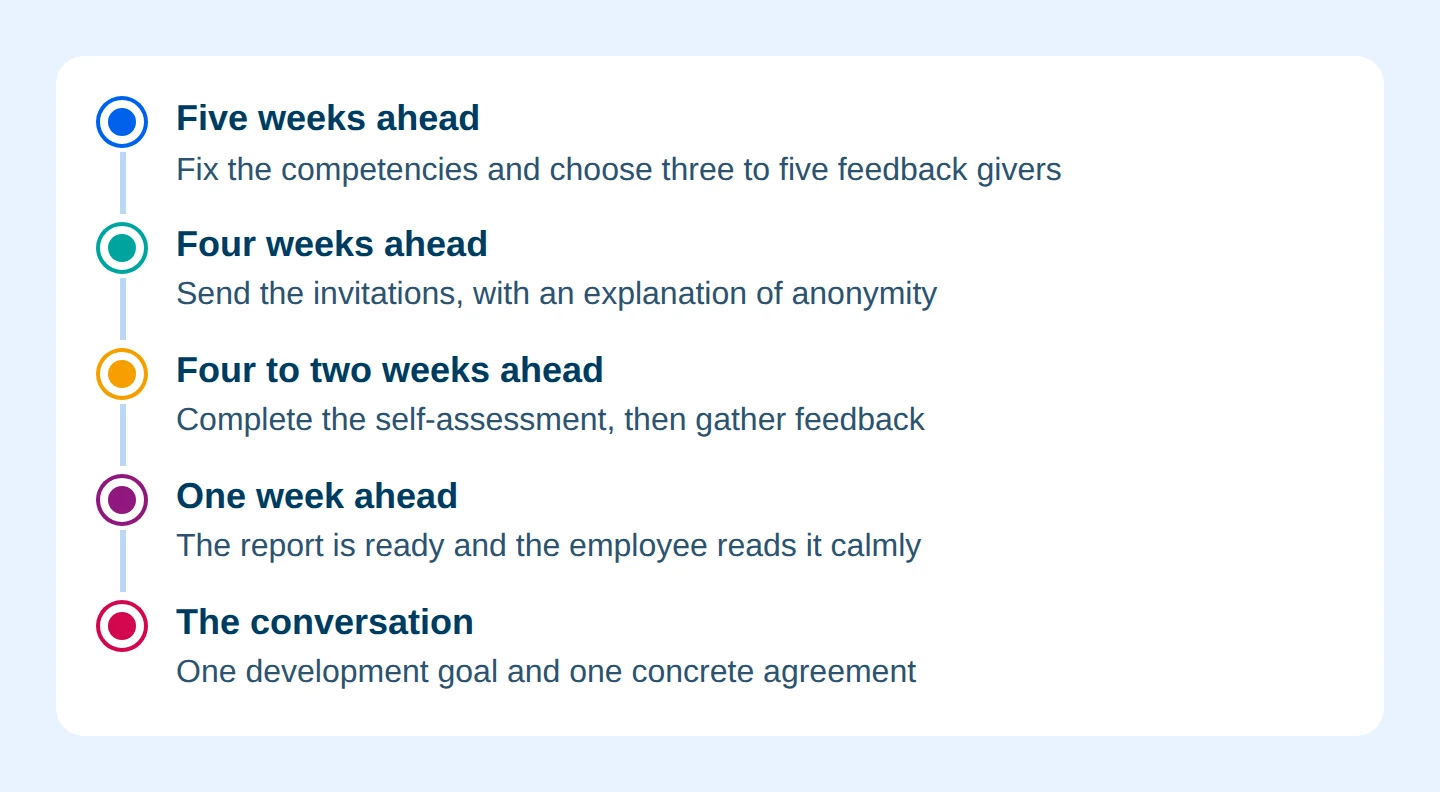
Keep the response period short and clear, with one reminder halfway. And give the employee time to read the report calmly before the conversation takes place. Anyone who sees the feedback for the first time during the conversation is more likely to become defensive.
The report is not an end point, but a beginning. Use it to open the conversation, not to tick it off. A good first question is: what do you recognise in this feedback, and what surprises you? In 10 questions that open the year-end review you will find more questions that help turn a report into a good conversation.
And if you want it to be more than one conversation a year, read how to turn development into a cycle.
With Deepler 360 you gather feedback around shared competency profiles, including a self-assessment and anonymous feedback from colleagues.

Stijn van der Vat
Founder / CEO
Stijn founded Deepler in 2021 together with three other change managers, driven by a shared conviction: organizations only truly change when employees are taken seriously. As CEO, he shapes Deepler’s strategic direction and builds lasting partnerships with clients and partners. Stijn is often the first point of contact for organizations looking to get more out of their employees' voices.