


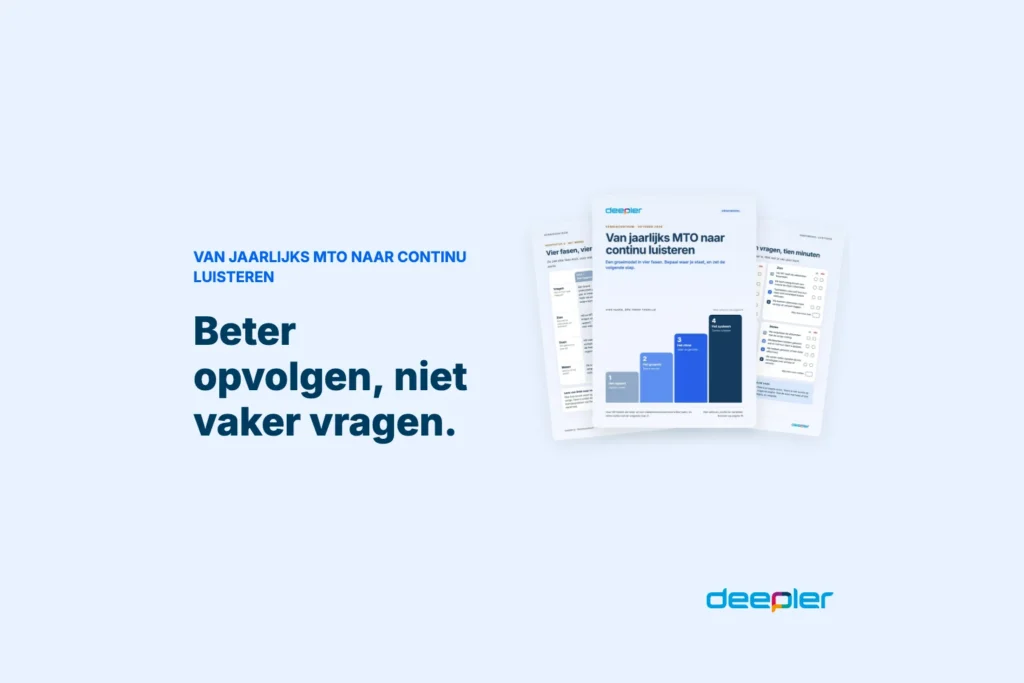
Van jaarlijks MTO naar continu luisteren: groeien in vier fasen
In maart is iedereen er even mee bezig: de uitnodiging, de herinneringen, de respons. Een paar weken...
Verder lezen



Being a good employer is about more than just following the rules. It’s about creating a culture where employees feel valued and motivated. And yes, culture is the catchphrase of this century. In this blog, we would like to make this statement concrete.
Good employment means that, as an employer, you ensure a healthy, productive and respectful work environment. This means more than just complying with legal obligations; it requires actively listening to your internal needs and responding effectively to them.
Good employment practices include the following aspects:

Dutch law sets requirements for employers to ensure good employment practices. This includes rights and obligations regarding employment contracts, working conditions and preventing discrimination and harassment.
In this law, consider the following standards:
These rules help create an equitable and supportive work environment, but they are bad hygiene factors. In order to focus on retaining staff and being an attractive employer, more is required of your employment.
In addition to legal obligations, there are various aspects that influence attracting and retaining talent:
These factors contribute to a greater or lesser extent to an attractive workplace where talent wants to stay and grow. You can identify the specific factors why employees value you as an employer with an Employee Value Proposition.
Research shows that good employment practices lead to better business results. Companies that take good care of their employees often have more engaged and satisfied employees. This results in lower turnover and higher productivity, which ultimately saves costs and provides a competitive advantage.
Much is being written about these effects. By us, but also by platforms such as Harvard Business Review and Forbes.
Poor employment practices can have serious consequences. Employees who are treated poorly often experience stress and demotivation, leading to higher health costs and staff turnover. This has a negative impact on business results.
A common example is the Uber scandal, where a toxic work culture led to lawsuits and global image damage. This cost the company not only financially, but also in terms of restoring its reputation.
Investing in good employment has many advantages:
Good employment is both ethically correct and strategically necessary. By investing in employee wellbeing and development, companies can achieve sustainable growth and success. Companies that embrace these principles will not only rank higher in search results for “good employment”, but also in the eyes of employees, customers and the wider society.
With a huge shortage in the labor market, good employment can make the difference between mediocrity and excellence. It’s time for more companies to recognize this, not just go for an employer label that they can post on their website, and really get started with being an employer.
Wondering how Deepler can help with that? Check out our solution.

Leon zu Salm-Salm
Founder / CIO
Leon is a co-founder of Deepler and is responsible for product development, compliance, and the ongoing evolution of the Deepler platform. He translates organizational needs into effective tools—ranging from surveys and 360-degree feedback to onboarding. Leon works in Dutch, English, German, and French, and easily switches between strategy, technology, and practical client applications.