












Three smiling people against coloured backgrounds, as a visual element for employers.
Review stars icon

4,9/5 reviews

Strengthen teams and leadership with insights into team dynamics

Strong teams don’t happen by themselves. They need clear direction, mutual trust, good collaboration and leadership that fits the situation.

With Deepler’s Teams and Leadership module, you make visible how employees experience their team, collaboration and leadership. This way you discover where team dynamics help, where teams get stuck and what form of leadership is needed to perform better. Not based on assumptions or isolated signals, but based on reliable feedback from the organization.

  • Map team dynamics, collaboration and leadership concretely
  • Discover what teams need to perform better
  • Help leaders develop based on real team feedback
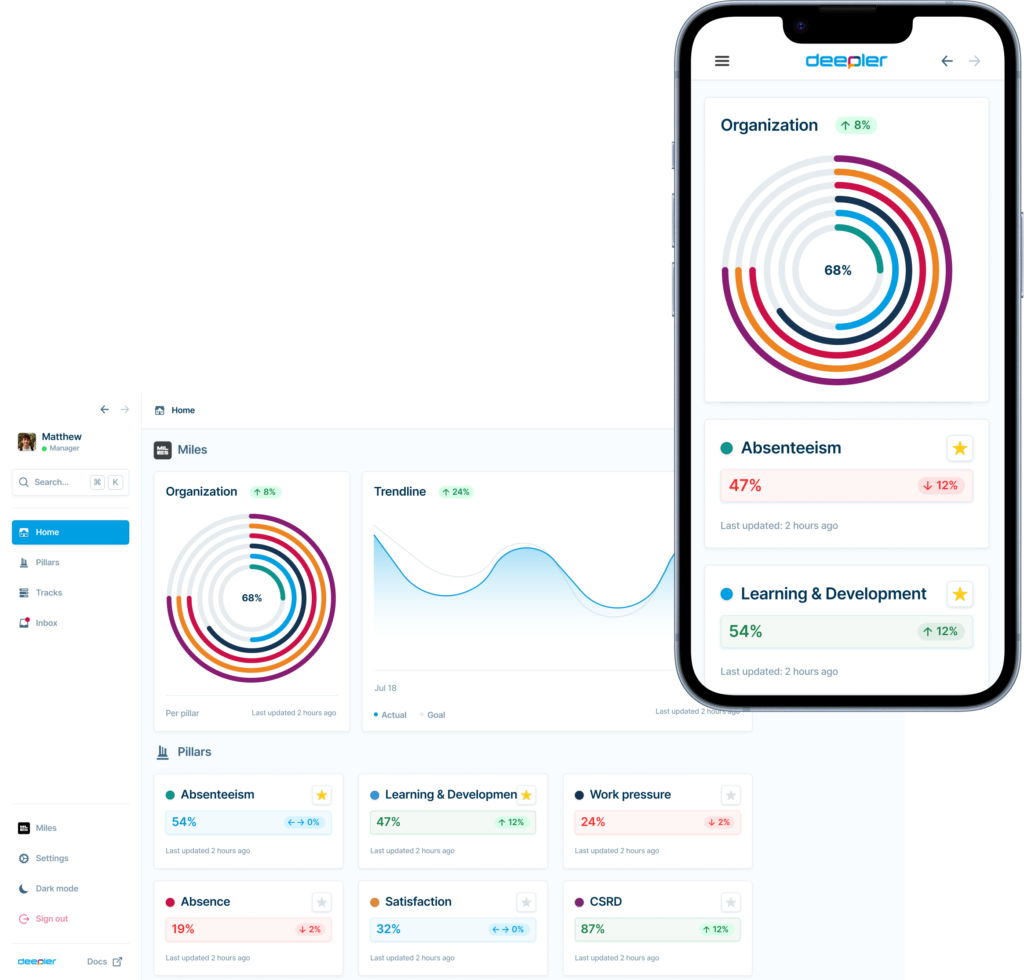
Screenshot of employee satisfaction survey results

Teams and leadership: what does it mean and how do you strengthen it?

Team dynamics and leadership largely determine how work runs in practice. A team can be strong on content, but still get stuck due to unclear roles, lack of trust, poor coordination or leadership that doesn’t match what the team needs.

Conversely, a team with the right guidance, open communication and clear expectations can actually do much more than it appears on paper. That’s why it’s valuable to not just discuss teams and leadership, but also measure them purposefully.

In this article we explain:

  • What team dynamics and leadership mean within organizations
  • Why collaboration and leadership have so much influence on performance
  • How to measure team dynamics without making it a performance review
  • What role leaders, HR and teams themselves have in follow-up
  • How Deepler helps translate insights into concrete team development

Table of contents

What are teams and leadership?

Teams and leadership are about the way people work together, get direction and take responsibility. Team dynamics show how team members interact with each other: how they communicate, make decisions, discuss tension, help each other and deal with differences.

Leadership is about the behavior that enables direction, clarity, trust and development. This doesn’t have to rest solely with the formal leader. Personal leadership, ownership and informal influence also play a role.

Mapping team dynamics

Mapping team dynamics means examining what patterns help or hinder collaboration. Think of role clarity, mutual trust, psychological safety, communication, decision-making and the extent to which team members take responsibility.

By measuring this purposefully, you prevent conversations from getting stuck in general statements like ‘collaboration could be better’. You make concrete where improvement is needed and what intervention fits.

Consequence of low employee satisfaction: employee sitting at a desk with their head on the keyboard, apparently dejected or exhausted.

What makes up team dynamics?

Team dynamics are not one single thing. They are the sum of a number of elements that constantly influence each other:

  • Trust: do team members dare to rely on each other and show vulnerability?
  • Communication: is information shared openly and are tensions voiced?
  • Roles and responsibilities: does everyone know what is expected of them?
  • Team culture: which norms and unwritten rules shape behavior?
  • Leadership: how does the manager provide direction, room and support?

Positive and negative team dynamics

In a team with positive team dynamics, people hold each other accountable, share knowledge and solve problems together. You can often recognize negative team dynamics by signals such as:

  • Meetings where the same people always do the talking
  • Conflicts that are not voiced, but can still be felt
  • Problems that keep ending up with the manager
  • Cliques within the team that work at cross purposes
  • Agreements that are not kept, without anyone saying anything

The sooner you spot these patterns, the easier it is to break them.

Why are teams and leadership important?

Teams are where strategy becomes reality. That’s where customer questions are solved, priorities are translated into daily work and decisions are executed.

If team dynamics aren’t right, noise is created: people wait for each other, don’t speak up, work past each other or keep bringing problems to the leader. Good leadership helps teams maintain direction, make choices and take responsibility. That’s why insights into teams and leadership are essential for organizational development.

Strengthening teams and leadership provides organizations with various benefits

When you measure teams and leadership, you see not only where collaboration is working well, but also where tension, unclear expectations or dependencies arise. That makes improvement much more targeted. You don’t have to organize the same training or workshop everywhere, but can determine per team what’s needed: more structure, better communication, clearer roles, coaching for leaders or more ownership among employees.

1. Work more purposefully on collaboration

By measuring team dynamics you see where collaboration gets stuck. Is it about communication, trust, role division, priorities or decision-making? That distinction matters. A team with unclear roles needs something different than a team where people don’t speak up to each other.

2. Develop leadership based on real team needs

Not every team requires the same leadership. Some teams need more direction, others need more space. With employee feedback, you see which style helps and where leaders unintentionally create dependency, confusion or distance.

3. Detect where teams get stuck faster

Problems in teams often build up slowly. First irritation develops, then withdrawal behavior, and eventually quality, speed or work satisfaction decline. By measuring regularly, you recognize signals earlier and can intervene before collaboration deteriorates structurally.

4. More ownership within teams

Good leadership doesn’t mean the leader solves everything. The goal is for teams to take more responsibility for results, collaboration and improvement. By making it clear where ownership does and doesn’t emerge, you can guide teams more effectively.

5. Better substantiated leadership development

Leadership development often remains stuck in personal preferences or general competency models. With Deepler, you link development to what employees actually experience. This makes leadership programs more concrete, relevant and easier to track over time.

Measuring teams and leadership with Deepler’s software

With Deepler, you examine how teams experience collaboration, direction, communication and leadership. Employees provide feedback easily through short, focused questions.

The results are translated into clear dashboards and team insights, so HR, management and leaders see where the greatest development opportunities lie. This creates not a standalone report, but a practical starting point for better team conversations, leadership development and targeted interventions.

Two people discussing work while looking at a tablet together.

Our satisfied customers

  • Logo Vereen
  • Logo-ABNAmro
  • Logo of "deSelectie" with the tagline "jouw recruitment marketing team" in bold, modern typography.
  • Logo of Van der Valk featuring a stylized toucan with a yellow beak and red accents.
  • Logo Securitas
  • Logo Brabant Water
  • Logo-eviden
  • Logo Smurfit Westrock
  • GestioNet logo with blue circular icons and the tagline "Play Think Learn".
  • Logo ABP
  • Logo-Gomes 1
  • Logo-uwv
  • Logo-headfirst
  • Logo Gemeente Velsen
  • Logo of Hendriks with a blue and orange icon and the Dutch slogan "Bedenkt, bouwt, beheert".
  • Truckland logo with blue and white text and an orange circle featuring horizontal white lines.
  • Logo-Site
  • Logo-Comtest
  • Logo of D&B The Facility Group in white text on a dark blue background with rounded squares.
  • Logo-Recruitment
  • Logo of Management Drives with bold "MD" initials and a colorful horizontal line beneath.
  • Logo-mateboer
  • Logo AM Groep
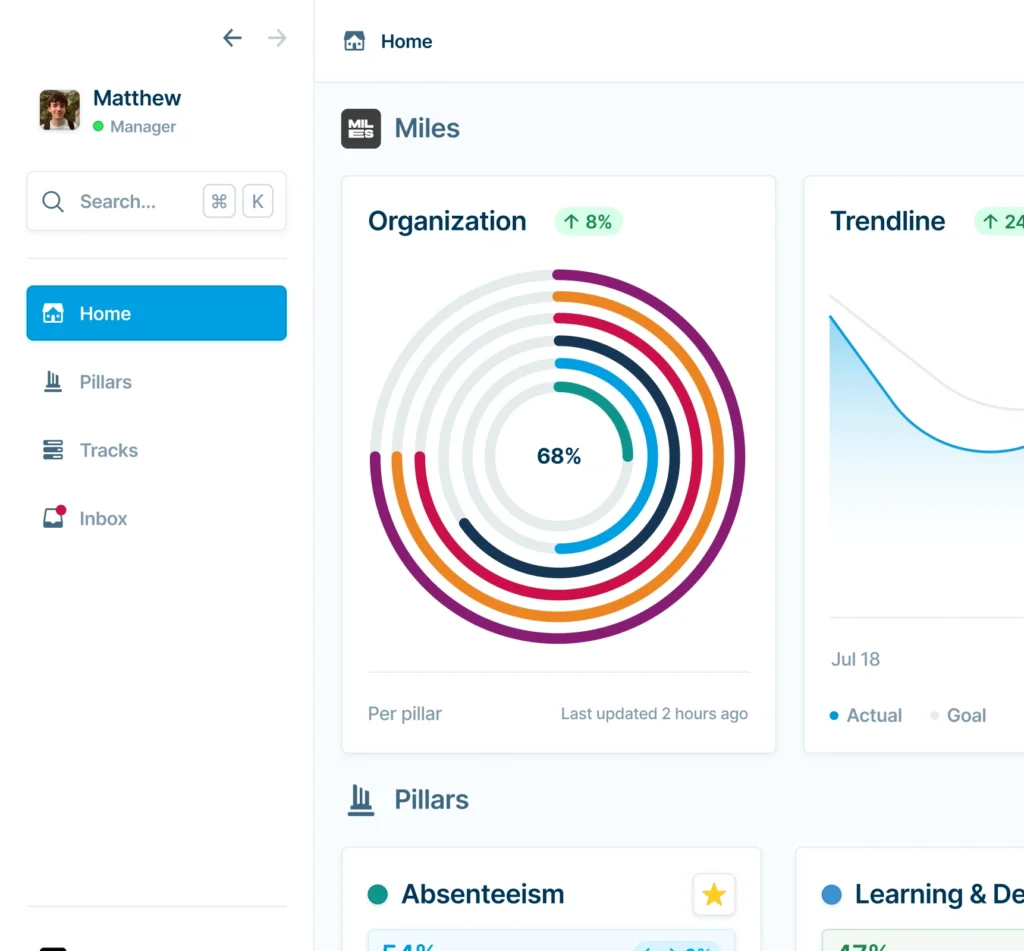
Dashboard view of the employee satisfaction survey system.

Tuckman’s 5 stages of team development

Psychologist Bruce Tuckman described in 1965 how teams develop through fixed stages. In 1977, together with Mary Ann Jensen, he added a fifth stage. Each stage asks something different of the team and of the manager:

  • Forming: team members get to know each other and are still cautious. Above all, the team needs direction and clarity
  • Storming: differences in ideas and ways of working come to the surface. Tension is part of it and needs to be open for discussion
  • Norming: the team agrees on roles and ways of working together. Trust and ownership grow
  • Performing: the team works independently and effectively. The manager can let go more
  • Adjourning: the team wraps up or breaks up, for example after a project or a reorganization

Teams don’t always go through these stages neatly in order. A new team member or a new manager can take a team back to storming. A survey shows you which stage your teams are in and which leadership fits.

Employee filling in the employee satisfaction survey.

A powerful tool

A Teams and Leadership survey is especially powerful when used as a starting point for development. The outcome is not intended to hold leaders accountable or label teams.

The goal is to better understand together what’s needed for effective collaboration. Deepler helps by making results concrete per theme and target group, so conversations are based less on feeling and more on shared insight.

Three colleagues sitting together at a desk discussing the results of the employee satisfaction survey.

What are the benefits of research into teams and leadership?

Insight into teams and leadership makes organizational development more concrete. You see not only that teams differ, but also why.

That helps to better choose where to invest time, attention and budget. For HR, this means better substantiation of leadership development.

For leaders it means clear feedback. For teams it means that collaboration becomes discussable without immediately becoming personal or vague.

Strengthen effective leadership

Effective leadership is not a fixed style that always works. Situational leadership, coaching leadership, personal leadership and directive leadership can all be valuable, depending on what the team needs.

With Deepler you see if employees experience sufficient direction, support, trust and clarity. This makes leadership development less abstract and better linked to the practice of teams.

Colleagues working together on documents and laptops during a meeting.
Two colleagues writing and conferring together at a whiteboard in the office.

Improve team dynamics

Improving team dynamics starts by making visible how the team collaborates. Where do agreements break down?

Are tensions voiced? Is it clear who is responsible for what?

By measuring these topics, language develops for what’s happening. Teams can then work more effectively on better alignment, more trust and clearer collaboration.

More agility and ownership

Teams that function well wait less for instruction and can respond faster to changes. This requires leadership that provides frameworks without controlling everything. By measuring team dynamics and leadership together, you see where teams can move independently and where they’re still too dependent on managers, processes or informal decision-making.

Three young people sitting on a pavement working together with a laptop and a smartphone.

Models for understanding team dynamics

Alongside Tuckman’s stages, two well-known models help you make sense of team dynamics. They give you words for what you see happening in a team and make it easier to talk about it.

Lencioni’s pyramid

In his book The Five Dysfunctions of a Team (2002), Patrick Lencioni describes five dysfunctions that hold teams back. They build on each other, from the bottom up:

  • Absence of trust: team members don’t dare to show vulnerability
  • Fear of conflict: disagreements are avoided instead of discussed
  • Lack of commitment: without real discussion, nobody commits to decisions
  • Avoidance of accountability: team members don’t hold each other to agreements
  • Inattention to results: individual interests come before the team result

Trust is therefore the foundation. That ties in with what you can read on our page about psychological safety.

Belbin’s team roles

Meredith Belbin researched why some management teams perform better than others and described this in Management Teams (1981). His conclusion: a team works best when different roles are represented. He distinguishes nine team roles, divided into three groups:

  • Thinking roles: Plant, Monitor Evaluator and Specialist
  • People roles: Co-ordinator, Teamworker and Resource Investigator
  • Action roles: Shaper, Implementer and Completer Finisher

If a role is missing, or too many people have the same role, you will see it in the way people work together. For example in lots of ideas without follow-through, or in quick decisions without a critical eye.

From model to measurement

Models help you understand what is going on, but they don’t tell you how things stand in your teams. By measuring trust, communication, role clarity and leadership per team, you see which model best fits what employees experience and where to start first.

Trusted by small and large organizations

Experiences of clients who make a difference with us.

  • Portrait of a smiling man in a suit in front of an orange background, titled "Review-image-Larren (1)."

    Larren

    Recruitment Lead, 

    De Selectie

    Review stars icon

    “Recently, I used Deepler to arrive at an EVP. Great what they were able to achieve in a short time! In a period of two weeks, we collected information and were able to continue with our AMC plan. In any other situation, it takes weeks, if not months, to get this done. Contact is good, friendly and constructive. Very nice club to work with.”

  • Portrait of a smiling man named Douwe with a bald head and light eyes, against a turquoise background.

    Douwe

    Recruiter, 

    Securitas

    Review stars icon

    “Ideal tool and company to gain more and better insight into the organization and employees as an organization! And especially with speed! For us, it was also the need to get tools for the topics of retention, to prevent future absenteeism or turnover. I also have experience with other parties and I sincerely value the speed of switching, follow-up and personal contact with Deepler. Absolutely recommended.”

  • Portrait of Jolanda with long blonde hair, wearing a black lace top, set against a purple background.

    Jolanda

    HR Business Partner, 

    Nedcargo

    Review stars icon

    “Deepler is a great tool for continuously collecting feedback from our employees. This input is then centrally available for us as management, but also for managers who benefit from it.”

  • Portrait of Jonathan in a blue suit and tie, smiling in front of a blue background.

    Jonathan

    Manager, 

    UWV

    Review stars icon

    “What makes Deepler special is that it doesn’t get stuck in numbers. It helps you immediately understand where it is and what teams need. For us, this ensured that employees themselves came up with areas for improvement and took responsibility for them. The insights were sharp and useful, but most importantly: the conversation that started afterwards made the difference. Thanks to Deepler, we didn’t get a paper plan, but change that was supported by the people themselves.”

  • Vector

    Amadeus

    COO, 

    OSRE

    Review stars icon

    “The software has a positive impact on us as a rapidly growing organization. By better understanding what is going on in the workplace and what people offer as solutions for improvements, we can make more effective decisions. The platform helps us to gain real-time insight and to respond directly to it via the tool.”


Man leaning forward at a desk, looking at a laptop with concentration.

Is research into teams and leadership mandatory and what about privacy?

Research into teams and leadership is usually not legally required. However, it can be an important part of good employment practices, leadership development and organizational improvement.

Because feedback often concerns collaboration, leaders and team behavior, careful handling is important. Make clear beforehand why you’re measuring, who sees the results, how anonymity is protected and what happens with the outcomes.

Is a survey on teams and leadership anonymous?

Yes, in most cases anonymity is important. Employees must be able to honestly indicate how they experience collaboration and leadership, without fear that feedback can be traced back to them.

Especially in small teams, this requires clear reporting rules. Deepler helps to present results responsibly, so insights are useful without unnecessarily exposing individual employees.

A motivated group of colleagues listening and applauding during a presentation in the office.
Man on a Zoom call while drinking coffee at his desk.

What about GDPR and privacy in leadership surveys?

In leadership surveys, you process personal data or data that can indirectly refer to people. Think of team, role, department or manager.

Therefore, it must be clear beforehand which data is used, why it is needed and how long it is retained. Share results only at a level where anonymity and careful interpretation remain possible.

What is the role of HR, management and leaders?

HR usually oversees the setup, timing and follow-up of the survey. Management determines why teams and leadership are measured and what improvement ambition goes with it.

Leaders play a key role in follow-up: they must discuss results with their team without becoming defensive. Teams themselves are needed to translate insights into agreements and behavior.

Two colleagues working on laptops at a shared desk in a modern office with brick walls, seen from above.
Woman in a grey blazer working on a laptop at a meeting table with colleagues in the background.

Why do many organizations conduct surveys on teams and leadership anyway?

Because team problems are often more expensive than they appear at first glance. Poor alignment, unclear roles or leadership that doesn’t fit lead to delays, frustration, turnover and quality loss.

By regularly measuring teams and leadership, organizations can make corrections earlier and invest more strategically in development. This makes the survey valuable, even if it’s not required.

How to get more out of surveys on teams and leadership

Make it concrete per team

Don’t just look at the average across the entire organization. Team dynamics differ by department, manager and context. Therefore, analyze where patterns emerge and discuss results as close as possible to where the work happens.

Two smiling people in casual clothes posing against a blue background.

Have the conversation without blame

Don’t use results to settle scores with managers or team members. This creates defensiveness instead of development. Position the survey as a tool to improve collaboration and leadership together.

Two smiling colleagues in a meeting in the financial sector.

Link leadership to context

A leadership score only really means something when you understand the team context. A new team has different needs than an experienced team. Therefore, always combine leadership feedback with insight into team phase, role clarity and collaboration.

Smiling man in a red shirt with a colourful logo in the top left corner.

Do’s of surveys on teams and leadership

If you really want to improve, make the survey part of team development and leadership support.

  • Explain beforehand why you measure teams and leadership
  • Safeguard anonymity, especially in small teams
  • Discuss results with both managers and teams
  • Translate insights into concrete behavior and agreements
  • Measure again later to make development visible

Don’ts of surveys on teams and leadership

  • Don’t make it a popularity contest for the manager
  • Don’t draw hard conclusions from small teams without context
  • Don’t share team results without explanation or guidance
  • Don’t use scores as an assessment tool
  • Don’t let results disappear without follow-up
Two people discussing work while looking at a tablet together.

What do you do with the results of team and leadership research?

The results of a Teams and Leadership survey provide direction for development. They show which teams need more clarity, better collaboration, coaching, structure, or room for ownership.

It’s important to analyze results not just at the organizational level, but also translate them into conversations and actions per team. This way, feedback becomes something that teams and leaders work on together, rather than something from HR.

From insight to concrete improvement

The step from analysis to action is crucial. It is not enough to recognize patterns in team dynamics and leadership: you must convert them into targeted interventions that really make a difference. This begins with systematically going through the results per team, identifying the core problems and determining priorities for improvement.

By following a structured approach, you ensure that feedback leads to sustainable change in your organization. Teams feel heard, managers get clear guidelines and HR can monitor progress. Teams and leaders do this most effectively in these six steps:

Want to know how to gather feedback that managers can really work with? Read our article:
Preparing 360 degree feedback: how to gather feedback you can actually use

1. Analyze patterns per team

Look at the results at team level and compare themes such as communication, trust, role clarity, decision-making, and leadership. Pay attention not only to low scores, but also to striking differences between teams.

Leaders need insight into what their team is experiencing. Give them not just scores, but also context and guidance. This prevents feedback from being received defensively.

A team report is only valuable if it is followed by discussion. Let the team together explore what resonates, where energy lies, and what agreements are needed to work better together.

Not every team needs coaching. Sometimes a clear role distribution is enough. Sometimes leadership training is needed. And sometimes management needs to set clearer priorities. Choose interventions based on the cause.

Translate results into visible behavior. For example: document decisions more explicitly, address each other sooner, improve weekly starts or clarify ownership per project.

Team dynamics change. Therefore, measure periodically whether the chosen actions have an effect and whether teams are developing. This way, leadership becomes not a one-time training, but a continuous improvement process.

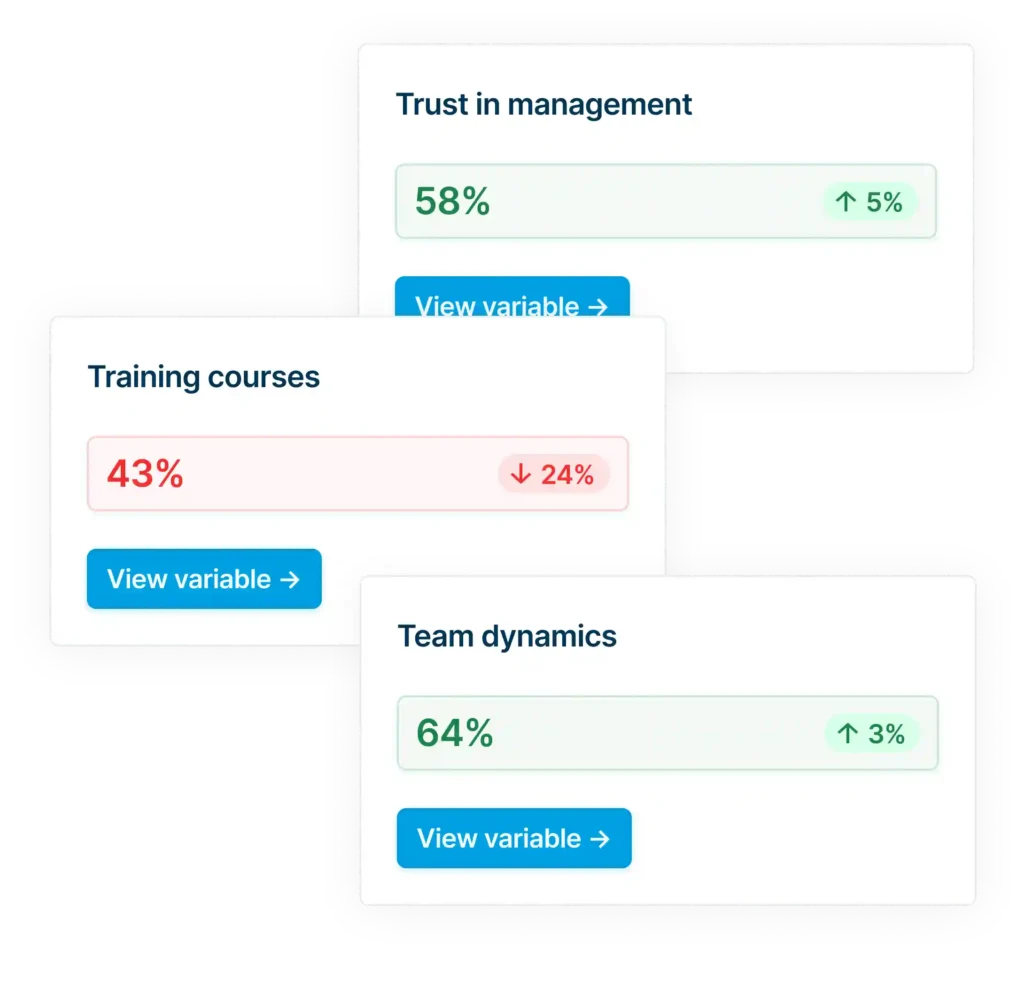
Three dashboard cards with percentages for trust in managers, training and team dynamics.

Conduct better team conversations through insight into collaboration and leadership

With Deepler, managers and HR get a clear picture of what teams need. The dashboard makes visible where collaboration runs well, where noise arises and which leadership needs differ per team. This makes team conversations more concrete, less based on feelings and better linked to improvement.

Organizational research without high costs

Choose the Basic or Plus package to match your needs. Want to compare multiple countries or organizations? Then the Enterprise package is the best choice.

Basic

From

€2.49

Per employee per month, per suite

Get started quickly with insight into your organization.

View all features →Request a demo
Most popular

Plus

From

€3.49

Per employee per month, per suite

Reach multiple teams and follow up actively.

View all features →Request a demo

Enterprise

Price

Custom

Proposal tailored to your organization

For organizations from 500 employees, with customization.

View all features →Request a demo

750 employees or more? Then a tailored tiered price applies. Contact sales →

Combine suites and save: 2nd suite 50% off, 3rd suite 75% off, 4th suite free. Calculate your bundle price →

Prices shown assume annual billing.

Frequently asked questions

What is team dynamics?

Team dynamics is the way people within a team interact with each other. It’s about communication, trust, role distribution, decision-making, collaboration and the way tension or difference of opinion is discussed.

Leadership is the behavior by which someone provides direction, helps make choices and supports others in taking responsibility. This can be formal leadership from a manager, but also personal leadership from employees within a team.

Leadership partly determines whether teams know where they are working towards, which priorities apply and how much space they have to take responsibility. Without appropriate leadership, confusion, dependency or frustration arises more quickly.

Improving team dynamics starts with making visible what is happening in the team. Then you discuss patterns, make agreements and choose targeted actions. Think of better meeting structures, clearer roles or guidance on trust and accountability behavior.

Effective leadership is leadership that fits the situation, the team and the task. Sometimes a team needs clear direction, sometimes coaching or more space. Effectiveness therefore depends on context and need.

Collaboration is mainly about how people work together on tasks. Team dynamics is broader: underlying patterns such as trust, communication, power dynamics, psychological safety and informal roles also play a role.

Leadership is measured by asking employees how they experience direction, clarity, support, trust, and decision-making. Combine this with team context, so you not only get a leadership score, but understand what the team needs.

Yes, anonymity is strongly recommended. Employees provide more honest feedback when they know their answers are not directly traceable. Especially with small teams, careful reporting is important.

Examples include role clarity, trust, communication, psychological safety, decision-making, ownership, leadership style, support from the manager, and collaboration between team members.

Situational leadership is based on adapting the leadership style to the situation and maturity of the team. Coaching leadership focuses more on asking questions, stimulating ownership, and helping employees find solutions themselves.

For many organizations, measuring once or twice a year is sufficient, supplemented with shorter pulse measurements for teams experiencing significant change. More important than frequency is that you act on the results.

Deepler makes visible how employees experience team dynamics and leadership. The results are translated into dashboards and concrete starting points, so that HR, managers and teams can improve in a targeted way.

The module is suitable for organizations that want to make collaboration, leadership and team development more concrete. Think of growing organizations, teams in transition, management development programs or organizations where collaboration is under pressure.

According to Bruce Tuckman (1965), a team goes through four stages: forming (getting to know each other), storming (differences come to the surface), norming (making agreements) and performing (working together effectively). In 1977, together with Mary Ann Jensen, he added a fifth stage: adjourning, the wrapping up or breaking up of the team.

In The Five Dysfunctions of a Team, Patrick Lencioni describes five dysfunctions that build on each other: absence of trust, fear of conflict, lack of commitment, avoidance of accountability and inattention to results. Trust forms the base of the pyramid.

Meredith Belbin distinguishes nine team roles: Plant, Monitor Evaluator, Specialist, Co-ordinator, Teamworker, Resource Investigator, Shaper, Implementer and Completer Finisher. A team works best when the different roles are in balance.

Group dynamics are about the processes in any group of people, such as the division of roles, norms and influence. Team dynamics are group dynamics within a team that shares a common goal. That is why leadership, the division of tasks and results also play a major role.

Schedule a consultation

Ready to take the next step? Get in touch and together we will look at the best approach. Whether you have a question or just want to brainstorm, we are here for you.

  • A look at the Deepler dashboard
  • Personal advice and a start with honest insight
  • A no-obligation conversation for all your questions
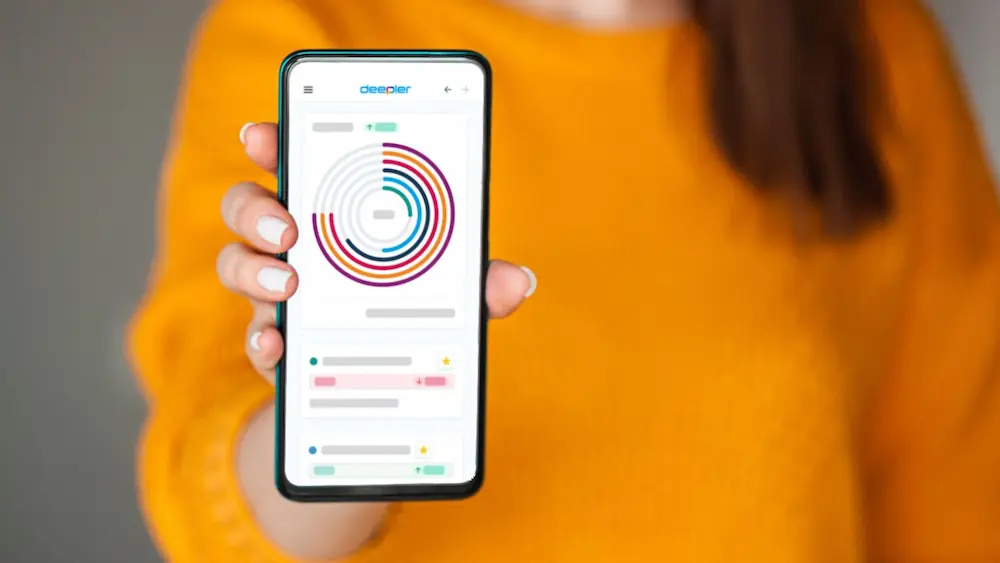
Person in a yellow jumper holding a smartphone with the Deepler app and colourful data visualisation on the screen.
E-learning card added by Leon with a score of 36 and plus and minus buttons.
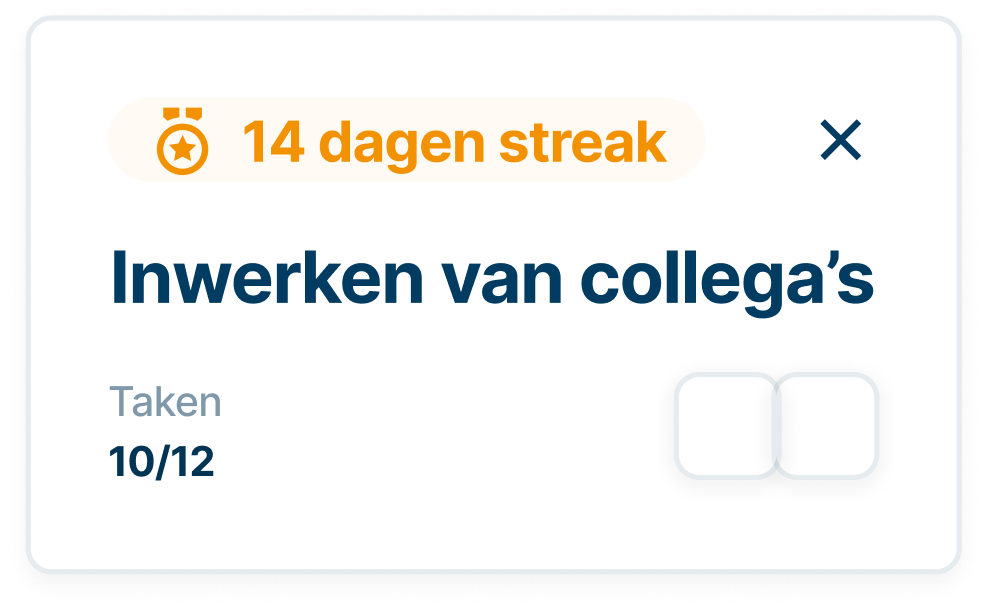
Card titled "Onboarding colleagues" showing a 14-day streak and 10 of 12 tasks completed.
Background-circles-Deepler