
























4,9/5 reviews
Measuring and discussing psychological safety
Psychological safety determines whether employees dare to say what they see, think and need. Not only when everything is going well, but especially when tension arises: in teams, in leadership, in collaboration or in the face of unwanted behavior.
With Deepler you investigate how employees experience social and psychological safety in the workplace. You make visible where people feel free to speak up, where barriers exist and which teams need extra attention. This way you don’t steer based on isolated incidents, but on patterns that determine whether people can work together safely, honestly and effectively.
- Measure whether employees dare to speak up
- Discover where social safety is under pressure
- Translate signals into targeted team and leadership actions
Psychological safety at work: meaning, signals and research
Organizations conduct research on psychological safety when they want to understand whether employees feel free to ask questions, discuss mistakes, give feedback or report unwanted behavior. The reason can be an employee survey, culture initiative, incident, reorganization, leadership development or rising work pressure. Deepler helps to discuss social safety and psychological safety not only as an abstract topic, but to measure it concretely within teams, roles and locations.
In this article we explain:
- What psychological safety means
- What the difference is between social and psychological safety
- How you recognize psychological safety in the workplace
- Which topics you measure in a survey
- How you carefully follow up on results
Table of contents
What is psychological safety?
Psychological safety means that employees feel safe enough to speak up without fear of negative consequences. It’s about the space to ask questions, point out mistakes, share differing opinions, set boundaries and give feedback.
Social safety is closely related to this topic and covers a broader work environment in which people treat each other respectfully and are protected against unwanted behavior, exclusion, intimidation or discrimination. So in a survey on psychological safety, you measure not only whether employees feel comfortable, but especially whether they experience that they can be honest.
Topics include trust in the team, approachability of managers, inclusion, willingness to report, conduct norms, learning from mistakes and the extent to which people feel heard. The results help HR, management and leaders to identify risks and work deliberately on a safer work culture.
Speaking safely without backlash
Psychological safety requires careful research, because employees often only answer honestly when questions are formulated concretely, neutrally and safely. Short, targeted questions work better than broad questions like ‘do you feel safe?’.
Employees should be able to indicate where exactly the problem lies: in team meetings, in feedback, in contact with managers, in reporting or in interactions between colleagues. By measuring regularly you see whether improvement actions have effect and whether signals in certain teams increase or decrease.
Why is psychological safety important?
When psychological safety is lacking, signals remain hidden. Employees don’t speak up about mistakes, share ideas less readily, don’t report unwanted behavior or withdraw from collaboration.
This sometimes makes things seem calm on the surface, while underlying tension increases. This affects not only well-being, but also quality, innovation, decision-making and trust in leadership. A survey helps to see early where employees don’t feel free to be honest, so you don’t only react after a conflict, report or departure has already occurred.
A survey makes safety concrete before silence becomes a risk
Social and psychological safety doesn’t emerge from a policy document alone. It is determined by daily interactions: how mistakes are responded to, how managers deal with criticism, whether colleagues dare to address each other and whether reports are taken seriously. By measuring these experiences, a more honest picture of the culture behind the behavior emerges.
1. Earlier visibility of silent signals
Unsafety is often not immediately visible. Employees avoid conversations, keep ideas to themselves or don’t report behavior because they doubt it will be followed up on. Research makes these silent signals visible, so you can act before problems escalate.
2. More trust in teams and leadership
When employees notice that their experience is taken seriously and followed up on, trust grows. A survey shows where leaders strengthen safety and where behavior, communication or decision-making actually creates distance.
3. Better collaboration and more openness
Teams function better when people dare to address each other, ask questions and discuss mistakes. By measuring psychological safety, you see which teams collaborate openly and where consultation remains mainly socially desirable.
4. More targeted work on policy against unwanted behavior
A social safety policy only works when employees know where to turn and trust in the follow-up. A survey makes visible whether reporting routes are known, whether boundaries are clear and whether employees feel protected.
5. Learn faster from mistakes and risks
In a safe culture, mistakes are discussed sooner. This prevents repetition and makes improvement easier. A survey shows whether employees dare to share mistakes and whether the organization responds in a learning or accountability-focused way.
Measuring psychological safety with Deepler
With the Deepler module for psychological safety you investigate how employees experience social and psychological safety in the workplace. You measure topics such as trust, feedback culture, willingness to report, inclusion, respectful conduct, leadership, learning from mistakes and space to speak up.
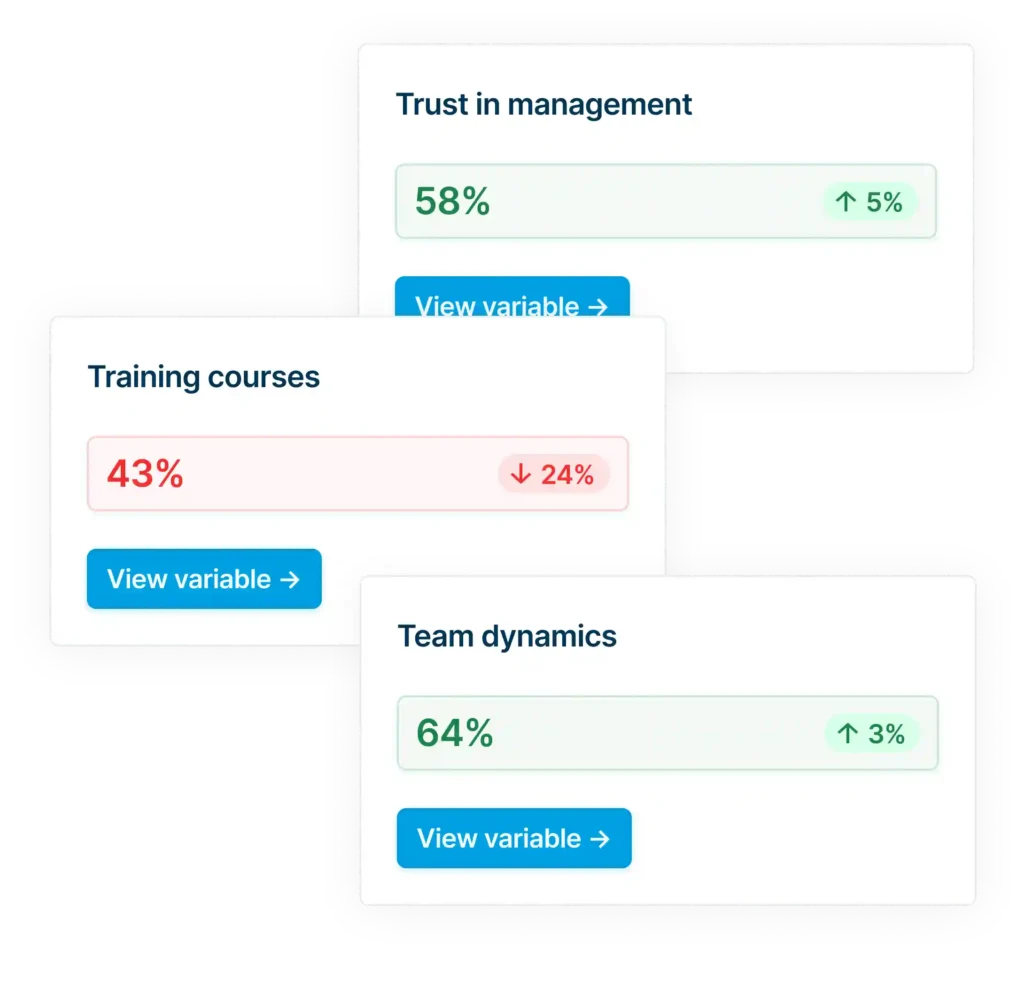
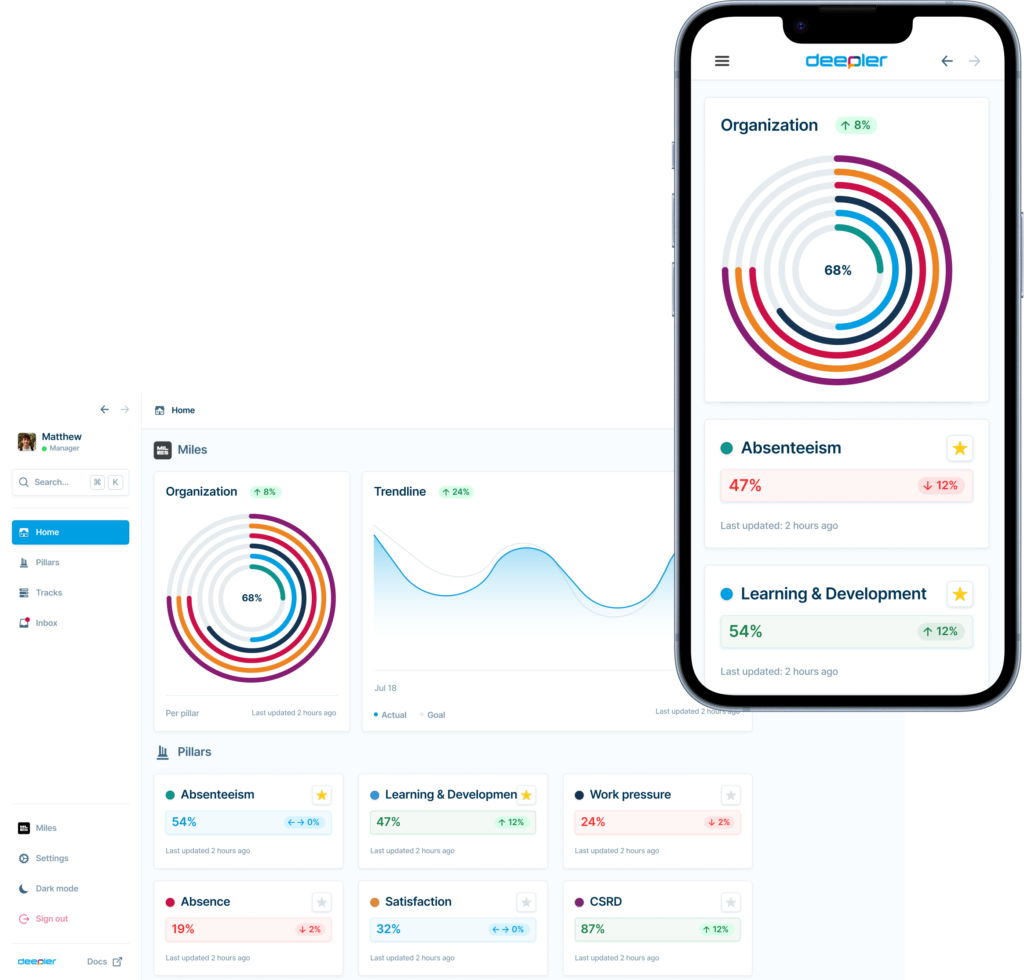
The results are displayed clearly in the dashboard, so you see differences between teams, roles or locations without individual employees being traceable. Deepler helps you see beyond a single overall score.
You see which factors correlate with low safety, where risks are concentrated and which topics deserve priority. This allows you to have conversations based on data rather than assumptions. The module is suitable for organizations that want to monitor social safety, strengthen psychological safety in teams or make policies around unwanted behavior more concrete.
Our satisfied customers
Benefits of measuring psychological safety
A survey on psychological safety helps organizations make openness, trust and safety concrete. The value lies not only in determining whether employees feel safe, but especially in understanding how that feeling arises. That’s why we look at three main benefits: early detection, better steering of team behavior and more careful follow-up of social risks.
From feeling to pattern
Improving psychological safety is not a one-time action. It requires a cycle of measuring, discussing, choosing, implementing and measuring again.
Start with a safe baseline measurement, discuss the results at the right level and then choose a few concrete improvement points per team or department. Think of better discussion rules, clearer exemplary behavior from leaders, more room for disagreement or better follow-up on reports.
By measuring again later, you see whether employees actually experience more safety. This way, social safety becomes not just a loose campaign, but a recurring part of culture development.
Benefits of measuring psychological safety
A survey on psychological safety helps organizations make openness, trust and safety concrete. The value lies not only in determining whether employees feel safe, but especially in understanding how that feeling arises. That’s why we look at three main benefits: early detection, better steering of team behavior and more careful follow-up of social risks.
Early detection of unsafety
Psychological unsafety often only becomes visible when the damage is already significant: conflicts, reports, absences or departures. By measuring regularly, you recognize earlier patterns.
- Employees dare to give feedback less often
- Mistakes are not discussed openly
- Leaders receive little pushback
- Reporting routes are unknown or feel unsafe
- Certain groups experience less room to be themselves
More targeted steering of team behavior
Safety often differs greatly per team. In one team, disagreement is valued, while in another team silence is the norm.
By segmenting results, you see where team dynamics, leadership or collaboration affects safety. This helps not only to create organization-wide policies, but to support teams specifically with conversations, agreements and interventions that fit their own situation.
More trust in follow-up
Employees only answer sensitive questions honestly when they believe the organization handles the results carefully. A good survey helps to make transparent what is being measured, how anonymity is protected and what happens with the results. This makes follow-up part of trust: employees see that signals don’t disappear, but lead to concrete conversations and improvements.
Trusted by small and large organizations
Ervaringen van klanten die met ons het verschil maken.
-
Larren
Recruitment Lead,
De Selectie
“Recently, I used Deepler to arrive at an EVP. Great what they were able to achieve in a short time! In a period of two weeks, we collected information and were able to continue with our AMC plan. In any other situation, it takes weeks, if not months, to get this done. Contact is good, friendly and constructive. Very nice club to work with.”
-

Douwe
Recruiter,
Securitas
“Ideal tool and company to gain more and better insight into the organization and employees as an organization! And especially with speed! For us, it was also the need to get tools for the topics of retention, to prevent future absenteeism or turnover. I also have experience with other parties and I sincerely value the speed of switching, follow-up and personal contact with Deepler. Absolutely recommended.”
-

Jolanda
HR Business Partner,
Nedcargo
“Deepler is a great tool for continuously collecting feedback from our employees. This input is then centrally available for us as management, but also for managers who benefit from it.”
-

Jonathan
Manager,
UWV
“What makes Deepler special is that it doesn’t get stuck in numbers. It helps you immediately understand where it is and what teams need. For us, this ensured that employees themselves came up with areas for improvement and took responsibility for them. The insights were sharp and useful, but most importantly: the conversation that started afterwards made the difference. Thanks to Deepler, we didn’t get a paper plan, but change that was supported by the people themselves.”
-
Amadeus
COO,
OSRE
“The software has a positive impact on us as a rapidly growing organization. By better understanding what is going on in the workplace and what people offer as solutions for improvements, we can make more effective decisions. The platform helps us to gain real-time insight and to respond directly to it via the tool.”

Is measuring psychological safety mandatory?
There is no single general legal requirement that says every organization must conduct a separate survey on psychological safety. However, employers have a responsibility to ensure a safe and healthy work environment.
Social safety relates to topics such as psychosocial work stress, unwanted behavior, discrimination, intimidation, aggression, bullying and work pressure. Organizations must identify risks, implement policies and take appropriate measures. A survey on psychological safety can help to practically substantiate this responsibility, because you gain insight into the experience of employees and the effectiveness of policies in practice.
For certain sectors, such as education or healthcare, additional frameworks or expectations may apply regarding monitoring of social safety. For Deepler, the focus is on organizations that want to measure and improve social safety at work. The survey does not replace legal advice, but does provide data that HR, management, Works Council and leaders can use to better determine where risks lie and what follow-up is needed.
Why anonymity is crucial here
With psychological safety, anonymity is extra important. Employees answer questions about trust, boundaries, willingness to report, or unwanted behavior honestly only when they don’t have to fear that answers will be traced back to them personally.
Deepler therefore reports at group level and works with reporting thresholds. This way you can see patterns in teams or departments without putting individual employees in the spotlight. That makes the conversation safer and more useful.
GDPR and privacy in safety data
An investigation into social and psychological safety contains sensitive employee data. Therefore, it must be clear beforehand what data is collected, for what purpose, who has access to results, and how long data is retained.
- Collect only data necessary for analysis and follow-up
- Report at group level and prevent traceability
- Communicate clearly in advance about purpose, anonymity, and use
- Limit access to results to the appropriate roles
- Handle open answers carefully, especially with small teams
Role of Works Council, HR, and managers
In an investigation into psychological safety, support is essential. HR often oversees the survey design, management shows that the topic is taken seriously, managers conduct conversations with teams, and the Works Council can contribute to considerations about thoroughness, privacy, and follow-up.
- Involve stakeholders early in purpose and scope
- Explain what is and isn’t being measured
- Make clear how anonymity is protected
- Agree on who discusses and follows up on results
- Prevent outcomes from being used to single out individual employees
Why measuring is valuable even without incidents
Many organizations investigate social safety only after a report or incident. That’s understandable, but often too late.
Precisely when there is no clear escalation yet, research can help reveal whether employees have trust in teams, managers, and reporting channels. This prevents mistaking silence for safety. A quiet organization can just as easily be one where people have stopped speaking up.
How to get more out of your safety survey
Make it concrete
Don’t just ask whether employees feel safe, but what influences that safety: team conversations, mistakes, feedback, managers, reporting channels, and conduct.
Communicate carefully beforehand
Explain why you’re measuring, how anonymity works, and what happens with the results. With sensitive topics, trust beforehand often determines the quality of responses.
Follow up visibly
After the survey, show which actions are being taken. Not every signal can be resolved immediately, but employees must see that their input is taken seriously.
Do’s for psychological safety
A good survey requires care in language, process, and follow-up. This is what you should especially do:
- Use concrete, neutral questions
- Distinguish between social and psychological safety
- Report only at safe group levels
- Discuss results with managers and teams
- Report back which actions are being taken
Don’ts in safety measurements
- Don’t ask about incidents without clear follow-up
- Don’t use results to publicly settle scores with teams
- Don’t draw conclusions from groups that are too small
- Don’t expect one training to solve the problem
- Don’t automatically confuse few reports with a safe culture
How to monitor psychological safety results
The value of a safety survey lies in the follow-up. Results can be sensitive and therefore require a careful approach.
Start by recognizing patterns: where is safety low, which themes are connected to it, and which groups experience the most barriers? Then determine who will lead the conversation and at what level. Some findings call for team discussions, others for leadership development, policy adjustments, or better reporting channels.
It is important that employees see what happens with their input. Without feedback, a survey can actually damage trust. With a clear approach, the survey becomes a starting point for more open collaboration and a safer culture.
Converting results into concrete improvement
Measuring psychological safety is only the beginning. The real value emerges when you translate insights into tangible changes in your organization. This requires a thoughtful approach in which you set priorities, involve the right stakeholders and communicate clearly what steps you are taking based on the feedback.
By systematically addressing the bottlenecks — whether that concerns team dynamics, leadership style, processes or culture — you gradually build an environment in which employees truly feel safe to share their opinion, admit mistakes and hold each other accountable. This not only leads to better collaboration, but also to more innovation, lower turnover and stronger results. We have identified six concrete follow-up steps that you can implement immediately:
Wil je nog meer tips over hoe je een medewerkerstevredenheidsonderzoek (MTO) effectief op kan volgen? Lees dan ons artikel:
MTO Effectief Opvolgen: Waarom Is Dat Belangrijk?
Analyze where safety is under pressure
Don’t just look at the overall score, but at differences between teams, functions, and locations. Look for patterns in trust, speaking space, reporting willingness, leadership, and conduct.
Determine which risks are a priority
Not every signal requires the same action. First choose the themes that affect many employees, have a direct impact on wellbeing, or point to risks around unwanted behavior or weak reporting channels.
Discuss results carefully with teams
Use the results as a starting point for a safe conversation. Make room for recognition, examples and nuance, but prevent employees from having to point each other out or defend themselves.
Translate insights into concrete agreements
Make actions tangible, such as conversation rules, better feedback on reports, training for managers, team agreements on feedback or clearer behavioral standards.
Choose focus over doing everything at once
Start with the biggest security risk or the place where trust is most vulnerable. Too many actions at once make follow-up unclear and can actually weaken trust.
Measure again at an appropriate time
Repeat the measurement after an intervention, culture trajectory or agreed period. This shows whether employees actually experience more security, openness and trust.
Make psychological safety discussable with data
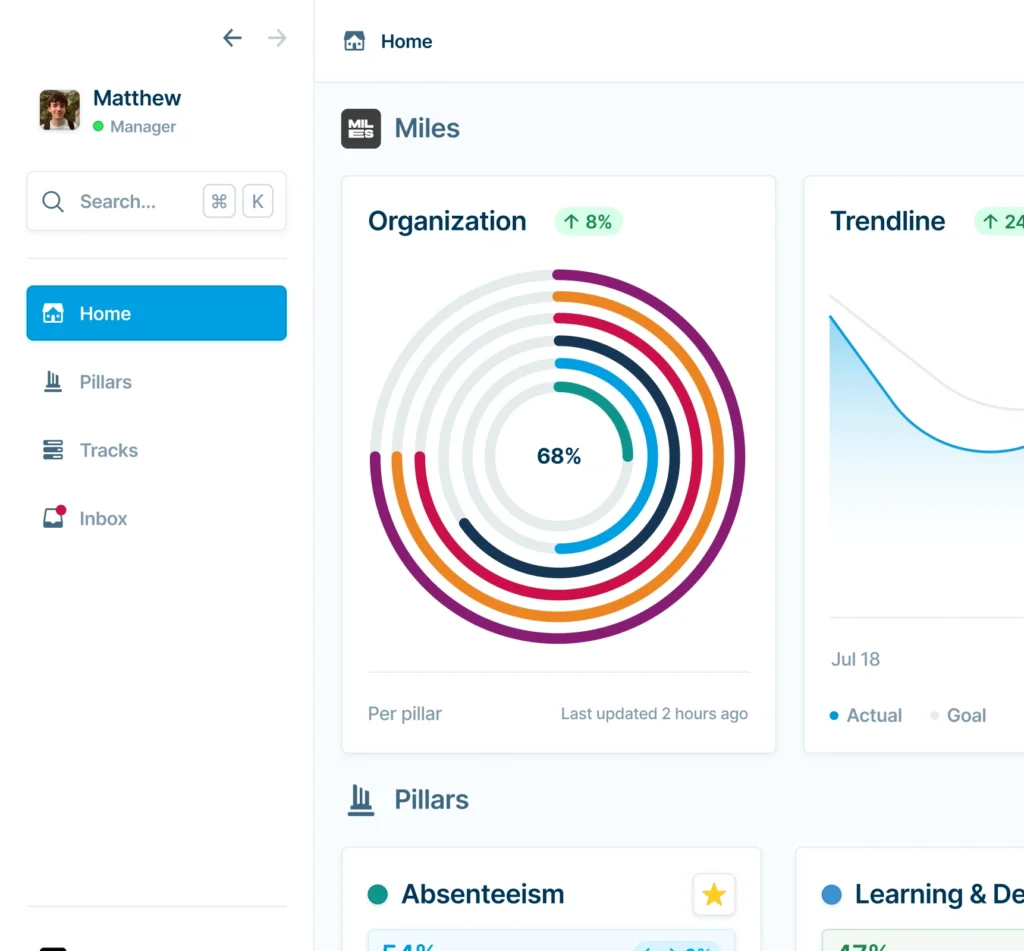
In the Deepler dashboard, HR, management and leaders see where psychological safety is strong and where risks emerge. Segmentations help understand patterns, while group reporting protects anonymity. This way you have the right conversation at the right level.
Organizational research without high costs
Stem je wensen af met ons Basic- of Plus-pakket. Wil je meerdere landen of organisaties vergelijken? Dan is het Enterprise-pakket de beste keuze.
Basic
€2.99
Per user/per month
The best for your team or smaller organizations that want to gain insights quickly.
- Maximum of 1 module
- Score segmentation
- In-depth analysis for Managers
- Unlimited number of languages
- Personal dashboard for employees
Plus
€3.49
Per user/per month
The best option if you want to survey multiple teams and SMEs.
- Everything from Basic
- 2 additional research modules
- Personal success manager
- Non-desk employees
- Custom questions
Most popular
Enterprise
On request
Per user/per month
The best for large organizations and custom modules.
- Everything from Plus
- Single Sign-On
- Custom modules
- Advanced Security
- Personal onboarding
Basic
€36
Per user/per year
The best for your team or smaller organizations that want to gain insights quickly.
- Maximum of 1 module
- Score segmentation
- In-depth analysis for Managers
- Unlimited number of languages
- Personal dashboard for employees
- Suitable for employees company email address
Plus
€42
Per user/per year
The best option if you want to survey multiple teams and SMEs.
- Basic
- 2 additional research modules
- Personal support from a Deepler expert
- Suitable for all employees
- Add your own questions
- Option to conduct surveys using QR codes
Most popular
Enterprise
On request
Per user/per year
The best for large organizations and custom modules.
- Plus
- Unlimited research modules
- Custom modules
- Unlimited number of languages
- Personal dashboard for employees
- Suitable for employees company email address
Frequently asked questions
What is psychological safety?
Psychological safety means that employees feel free to ask questions, discuss mistakes, give feedback and share dissenting opinions without fear of negative consequences. It is about the experienced space to be honest within teams and towards managers.
Why is psychological safety important?
Without psychological safety, signals often remain hidden. Employees speak up less, report unwanted behavior less quickly, and share mistakes or ideas less openly. This affects collaboration, quality, innovation, well-being, and trust in the organization.
How often should you measure psychological safety?
That depends on the situation. For a baseline measurement or culture initiative, you can start with a broad measurement and then track it periodically. In cases of incidents, reorganizations, or leadership programs, an additional pulse measurement can help identify effects and risks more quickly.
Is a psychological safety survey anonymous?
Yes, for sensitive employee surveys, anonymity is essential. Deepler reports at group level and prevents individual responses from being identifiable. This increases the likelihood that employees answer honestly about trust, reporting willingness, and conduct.
Which topics do you measure for psychological safety?
Examples include trust in the team, space to speak up, handling of mistakes, accountability culture, respectful collaboration, leadership, reporting willingness, inclusion, unwanted behavior, and awareness of reporting channels.
What is the difference between social and psychological safety?
Social safety broadly concerns a work environment free from unwanted behavior, exclusion, or intimidation. Psychological safety is mainly about the space to speak up, discuss mistakes, and ask questions. In organizations, both are closely related.
How do you get sufficient response to a safety survey?
Response heavily depends on trust. Therefore, clearly explain why you are measuring, how anonymity works, who sees the results and what happens with them. Keep the questionnaire short, concrete and relevant to the daily work situation.
How long does a psychological safety survey take?
The timeline depends on scope, target audience and desired follow-up. The process often consists of preparation, communication, measurement period, analysis and feedback. Deepler helps you set this up compactly and carefully.
What do you do after measuring psychological safety?
Start by interpreting patterns and discuss results at the right level. Then choose concrete actions, such as team discussions, leadership support, better reporting routes or clear behavioral agreements. Measure again later to see if the experience improves.
What does a psychological safety survey cost?
The costs depend on the number of employees, desired segmentations, survey design and level of guidance. Check out the packages or schedule a demo to determine which approach fits your organization.
What are example questions for psychological safety?
Examples are: do I dare discuss mistakes in my team? Is my opinion taken seriously?
Can I safely report unwanted behavior? Is my manager open to feedback? Do I feel respected by colleagues?
When are the results reliable?
Results become more reliable when there is sufficient response, questions are clear, and reporting occurs at safe group levels. With small teams, caution is needed, as traceability and random outliers can affect interpretation.
How do you ensure employees answer honestly?
Honesty emerges through trust in the process. Communicate clearly about anonymity, purpose, and follow-up. Use neutral questions, limit access to results, and show afterward which actions will be taken.
Schedule a consultation
Klaar om stappen te zetten? Laat van je horen, dan kijken we samen naar de beste aanpak. Of je nu een vraag hebt of gewoon even wilt sparren, we zijn er voor je.
- Een inkijkje in het dashboard van Deepler
- Persoonlijk advies en start met eerlijk inzicht
- Een vrijblijvend gesprek voor al jouw vragen