Measure CSRD social factors with employee data

The CSRD asks organizations to report more transparently on sustainability. With the CSRD module of Deepler, you collect structured employee data for the social part of your reporting: work experience, safety, inclusion, development, leadership and engagement. This way you substantiate policy, identify social risks and turn sustainability reporting from a paper obligation into an instrument for concrete improvement of your organizational culture.

  • Work experience and work pressure
  • Safety and inclusion
  • Development and training
  • Leadership and social dialogue
  • Engagement and wellbeing
Mensen die aan het luisteren naar 2 mannen

What does CSRD mean for social factors?

CSRD stands for Corporate Sustainability Reporting Directive: European legislation that requires organizations to report more transparently on sustainability. Within the ESG framework (Environmental, Social, Governance), Deepler specifically focuses on social factors.

Think of topics such as work pressure, safety, equality, development opportunities, leadership, engagement and social dialogue. While hard HR figures such as headcount and absenteeism provide part of the picture, there is often a lack of insight into how employees actually experience policies.

With targeted employee surveys, you collect experience data that makes social risks and opportunities visible. This input is valuable for double materiality, policy substantiation, risk analysis and concrete improvement actions. This way, CSRD reporting becomes not an administrative burden, but a means to truly anchor social sustainability in your organization.

How does the module help with CSRD reporting and improvement?

Collect relevant social data

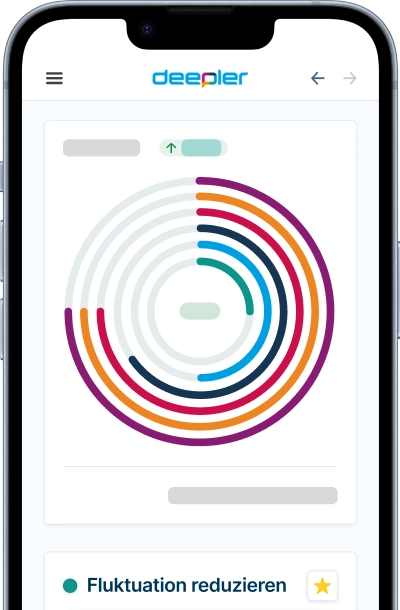
The module asks targeted questions about social CSRD topics and collects structured employee data. This gives you current insights that go beyond formal HR figures and support the social part of your reporting.
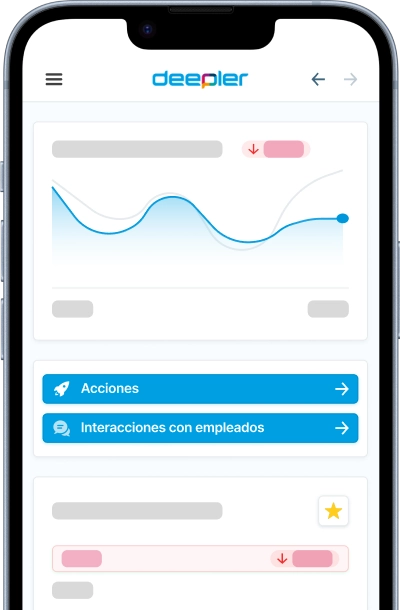
Identify risks and opportunities

By analyzing by department, team or job category, you see where social risks arise and where policies are already working well. These insights help with double materiality analysis and support risk management.
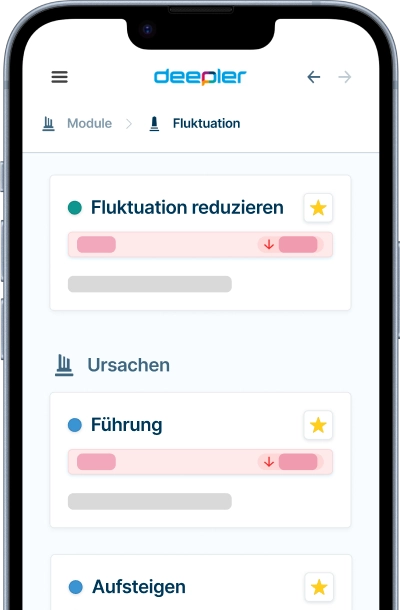
Substantiate policies and actions

Use the data to formulate policies, select improvement actions and monitor effects. By measuring regularly, you can see whether interventions are working and report on progress in social sustainability.

What is CSRD?

CSRD stands for Corporate Sustainability Reporting Directive, a European directive that requires organizations to report transparently on sustainability. It encompasses environmental (Environmental), social factors (Social) and governance. Deepler focuses on the social component: how employees experience work, safety, development and culture.

Why are social factors important within CSRD?

Social factors are harder to quantify than financial figures, but equally important for sustainable business operations. Work pressure, inclusion, safety and development help determine whether an organization is future-proof. CSRD calls for insight into these topics because they impact stakeholders and an organization’s ability to perform.

How do you collect social data for CSRD?

You collect social CSRD data by asking employees about their experiences. Short, concrete questions about work pressure, safety, development, leadership and engagement provide useful insights. By measuring and analyzing periodically, you see trends, risks and effects of policies. This makes the social component of CSRD concrete and measurable.

From employee data to CSRD reporting

With structured data from employee surveys, you substantiate double materiality, identify social risks and formulate policies. The data also helps you report progress and evaluate improvement actions. This turns CSRD reporting from a separate exercise into an integral part of HR policy and organizational development.

How you use employee data for CSRD reporting

Substantiate double materiality

Use employee data to determine which social topics are material for the organization and for stakeholders. This helps guide what you report.

Identify social risks

Map where work pressure, safety or inclusion are under pressure. This helps you prevent escalation and intervene strategically before problems grow larger.

Formulate and evaluate policies

Let data show where policies work and where adjustments are needed. This makes policy choices evidence-based and lets you report progress concretely.

Monitor effects and progress

Measure periodically to see if actions are effective. This provides direction for improvement and supports transparent reporting on social sustainability.

The methodology of Deepler

This module maps the social aspects of sustainable entrepreneurship for CSRD reporting, across four main themes. Click a theme to view the underlying subthemes: that is the depth with which we make each theme concrete.

CSRD
Module CSRD
CSRD

The CSRD module makes the social side of sustainable entrepreneurship measurable, so you can report and improve reliably. Across four themes, it maps how well-being, diversity, development and societal impact are experienced. Central to this is social capital: the human side of sustainability.


Well-being and satisfaction
3 Sub-themes
  • Employee satisfaction
  • Health and well-being
  • Working conditions
Diversity and inclusion
3 Sub-themes
  • Diversity in composition
  • Equal opportunities
  • Inclusive culture
Development and training
3 Sub-themes
  • Training and education
  • Growth opportunities
  • Investment in talent
Societal impact
3 Sub-themes
  • Impact on community
  • Social responsibility
  • Ethical entrepreneurship

See how you collect and use social CSRD data

Discover in this video how organizations use the CSRD module of Deepler to measure social factors, analyze them and translate them into reporting and policy. From employee surveys to concrete insights for sustainability reporting.

Background-circles-Deepler

Combine with other research topics

CSRD social factors touch on multiple HR topics. Work pressure, safety, inclusion, leadership and engagement influence each other and together determine your organization’s social sustainability. Combine the CSRD module with other Deepler modules for a more complete picture and more targeted management of the topics that have the most impact.

Trusted by young and old

Experiences of customers who make a difference with us.

  • Portrait of a smiling man in a suit in front of an orange background, titled "Review-image-Larren (1)."

    Larren

    Recruitment Lead, 

    De Selectie

    Icon Review Stars

    “Recently, I used Deepler to arrive at an EVP. Great what they were able to achieve in a short time! In a period of two weeks, we collected information and were able to continue with our AMC plan. In any other situation, it takes weeks, if not months, to get this done. Contact is good, friendly and constructive. Very nice club to work with.”

  • Portrait of a smiling man named Douwe with a bald head and light eyes, against a turquoise background.

    Douwe

    Recruiter, 

    Securitas

    Icon Review Stars

    “Ideal tool and company to gain more and better insight into the organization and employees as an organization! And especially with speed! For us, it was also the need to get tools for the topics of retention, to prevent future absenteeism or turnover. I also have experience with other parties and I sincerely value the speed of switching, follow-up and personal contact with Deepler. Absolutely recommended.”

  • Portrait of Jolanda with long blonde hair, wearing a black lace top, set against a purple background.

    Jolanda

    HR Business Partner, 

    Nedcargo

    Icon Review Stars

    “Deepler is a great tool for continuously collecting feedback from our employees. This input is then centrally available for us as management, but also for managers who benefit from it.”

  • Portrait of Jonathan in a blue suit and tie, smiling in front of a blue background.

    Jonathan

    Manager, 

    UWV

    Icon Review Stars

    “What makes Deepler special is that it doesn’t get stuck in numbers. It helps you immediately understand where it is and what teams need. For us, this ensured that employees themselves came up with areas for improvement and took responsibility for them. The insights were sharp and useful, but most importantly: the conversation that started afterwards made the difference. Thanks to Deepler, we didn’t get a paper plan, but change that was supported by the people themselves.”

  • Vector

    Amadeus

    COO, 

    OSRE

    Icon Review Stars

    “The software has a positive impact on us as a rapidly growing organization. By better understanding what is going on in the workplace and what people offer as solutions for improvements, we can make more effective decisions. The platform helps us to gain real-time insight and to respond directly to it via the tool.”
Ready to make social CSRD data concrete?

Schedule a free demo and discover how Deepler helps your organization measure and report on social CSRD factors. Our advisors would be happy to think along with you about what fits your reporting needs.

Aantal stemmen voor het idee 'Gezondere lunch', toegevoegd door Leon, met een score van +36.
Kaart met de titel "Inwerken van collega's", waarop een streak van 14 dagen en 10 van de 12 voltooide taken worden getoond.
Background-circles-Deepler

Frequently asked questions about CSRD and social factors

CSRD stands for Corporate Sustainability Reporting Directive, a European directive that requires large and listed organizations to report on sustainability. It applies in phases from 2024 onwards and covers environmental, social and governance factors.