Verbeter prestatiebeheer met real-time feedback en data
Verbeter prestatiebeheer met real-time feedback en data De jaarlijkse functioneringscyclus staat ond...

Corporate culture determines how decisions are made, how people collaborate and whether behavior aligns with the organization’s core values. With Deepler’s Corporate Culture module, you measure per team and department how employees truly experience the culture, where values and behavior align and where distance emerges. This way, you don’t steer based on paper values, but on the patterns that determine how work gets done.
Corporate culture is the sum of beliefs, habits, behaviors and unwritten rules within an organization. It determines how people work together, how decisions are made, how leaders provide direction and how employees deal with change, mistakes and customers.
The formal values of an organization tell you what is considered important. The real culture shows what employees experience in practice. For example, an organization may have transparency as a core value, while important decisions are primarily communicated top-down.
By measuring culture, you make visible where behavior and values align and where adjustments are needed. This helps strengthen the desired culture and address patterns that hinder development.
The module measures how employees experience the culture in practice and identifies where core values are recognizable and where behavior deviates. This creates a clear picture of the current culture per team and department.
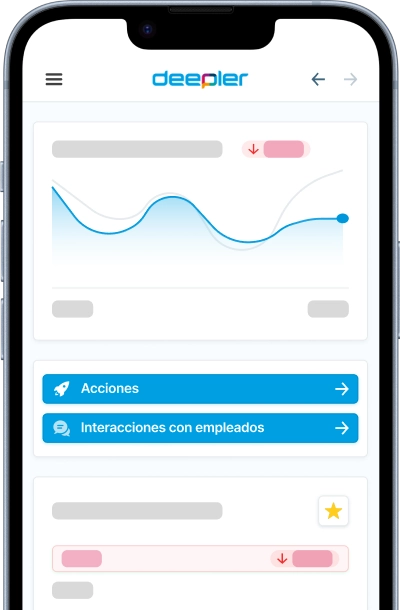
Results are translated into concrete conversation starters for teams and leaders. This makes culture discussable and allows teams to make their own choices about which behaviors to strengthen or change.
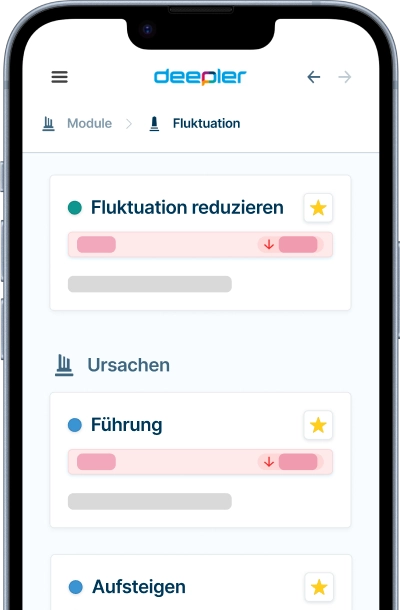
By measuring periodically, you see whether interventions have effect and whether the experienced culture shifts toward the desired culture. This makes culture development an ongoing process rather than a one-time project.
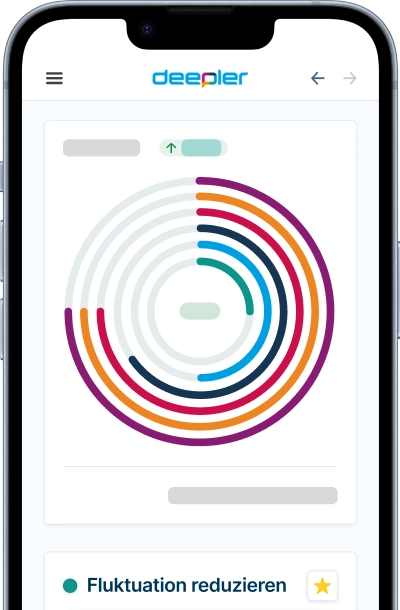
Corporate culture is the sum of beliefs, habits and behaviors within an organization. It determines how people work together, how decisions are made and how employees interact with customers, mistakes and change. Culture is not what’s on the wall, but what people do, say and allow every day.
Culture determines faster how people act than procedures or policies. A strong culture in which values and behavior align leads to better collaboration, more ownership and higher engagement. When culture is unclear or doesn’t align with core values, confusion, resistance and loss of talent arise.
Changing culture starts with role modeling by leaders and making patterns discussable. Focused team conversations, clear choices about desired behavior and consistent follow-up help strengthen culture step by step. Small, consistent actions have more impact than large one-time programs.
Yes, corporate culture can be measured well through targeted surveys that map the experience of employees. With Deepler’s module, you not only measure how the culture is experienced, but also where behavior and core values diverge and which teams need extra attention. This gives you a concrete picture and allows you to steer with purpose.
Role modeling by leaders is the most powerful cultural intervention. What gets rewarded, discussed and allowed determines how employees behave.
Organize conversations where teams themselves identify what the culture is and what they want to maintain or change. This creates ownership of culture development.
Translate abstract core values into concrete behavior: what does 'openness' mean in a meeting, when a mistake is made or in a decision? What does 'customer focus' look like day to day?
Culture doesn't change after one intervention. Measure periodically whether the experience is shifting and use data to determine where extra attention is needed.
This module maps the culture of the organization across four main themes. Click a theme to see the underlying subthemes: this is the depth with which we make each theme concrete.
The Culture module measures the underlying values, norms and conduct that color daily work. Across four themes, it maps how engaged people are, how openly communication takes place, how the work environment feels and what values the organization upholds. The focus is on organizational culture: how we work together here.

Discover in this video how organizations measure and strengthen corporate culture with Deepler’s module. From measurement to concrete team discussions, see how it works in practice.
Corporate culture relates to almost all other HR topics. Leadership, collaboration, engagement, psychological safety, and work pressure are all influenced by culture. Combine this module with other Deepler modules to get a more complete picture of what’s really happening in the organization and to more effectively steer toward the topics that have the most impact.
Experiences of customers who make a difference with us.
Larren
Recruitment Lead,
De Selectie

“Recently, I used Deepler to arrive at an EVP. Great what they were able to achieve in a short time! In a period of two weeks, we collected information and were able to continue with our AMC plan. In any other situation, it takes weeks, if not months, to get this done. Contact is good, friendly and constructive. Very nice club to work with.”

Douwe
Recruiter,
Securitas
“Ideal tool and company to gain more and better insight into the organization and employees as an organization! And especially with speed! For us, it was also the need to get tools for the topics of retention, to prevent future absenteeism or turnover. I also have experience with other parties and I sincerely value the speed of switching, follow-up and personal contact with Deepler. Absolutely recommended.”

Jolanda
HR Business Partner,
Nedcargo
“Deepler is a great tool for continuously collecting feedback from our employees. This input is then centrally available for us as management, but also for managers who benefit from it.”

Jonathan
Manager,
UWV
“What makes Deepler special is that it doesn’t get stuck in numbers. It helps you immediately understand where it is and what teams need. For us, this ensured that employees themselves came up with areas for improvement and took responsibility for them. The insights were sharp and useful, but most importantly: the conversation that started afterwards made the difference. Thanks to Deepler, we didn’t get a paper plan, but change that was supported by the people themselves.”
Amadeus
COO,
OSRE
“The software has a positive impact on us as a rapidly growing organization. By better understanding what is going on in the workplace and what people offer as solutions for improvements, we can make more effective decisions. The platform helps us to gain real-time insight and to respond directly to it via the tool.”
Schedule a free demo and discover how Deepler helps your organization measure and strengthen corporate culture. Our advisors would be happy to think through with you how to make culture discussable and developable.
The terms are often used interchangeably and in practice mean the same thing: the totality of values, norms and behaviors within an organization. Organizational culture is used slightly more often in public and non-profit sectors, corporate culture in commercial organizations.
With targeted questions about concrete behaviors and experiences, supplemented with data analysis. You measure themes such as exemplary behavior, openness, ownership, collaboration and learning from mistakes. General questions like ‘do you think the culture is good?’ yield less useful answers than concrete statements about daily work.
Start with a broad baseline measurement to map out the current culture. Repeat annually or during major changes such as mergers, reorganizations or new strategic direction. For specific interventions, an interim pulse measurement helps monitor impact.
Culture change is not a sprint but a multi-year process. First signs of shift are often visible within six months to a year, but sustainable change requires two to five years of consistent attention, exemplary behavior and recurring conversations.
Including alignment between values and behavior, communication and decision-making, ownership, exemplary behavior of leaders, collaboration, handling of mistakes, trust, learning and development, and room for initiative.
By using measurement results as a starting point for safe conversations at the right level. Allow room for recognition and examples, address behavior rather than people and visibly communicate back which actions are being taken. Culture only becomes truly discussable when people see the conversation has an effect.
Start by interpreting patterns and discuss the results with the management team and team leaders. Then choose concrete actions, such as team conversations, leadership training, process adjustments or clear behavioral choices. Measure again later to see if the experience improves and keep adjusting.
Yes. A strong culture in which values and behavior come together leads to more engagement, faster decision-making, less turnover and better collaboration. In times of tight labor markets, culture is also an important factor in employer branding and attracting talent.
Experiences of customers who make a difference with us.