






















Drei lächelnde Menschen vor farbigem Hintergrund als visuelles Element für Arbeitgeber.
Icon-Review-sterren

4,9/5 reviews

Diversity and inclusion in the workplace: make visible where everyone can contribute

Diversity and inclusion are not only about who works in the organization, but especially about who feels seen, heard and taken seriously. An organization can be diverse on paper, while employees in practice still experience barriers to speaking up, growing or being themselves.

With the diversity and inclusion module of Deepler, you examine how employees experience culture, collaboration, safety and equality. This makes visible where inclusion already works well, where exclusion unintentionally arises and what steps are needed to build a work environment where everyone can contribute.

  • Measure how inclusive the workplace is truly experienced
  • Discover where barriers to equal participation arise
  • Translate employee input into a concrete D&I action plan
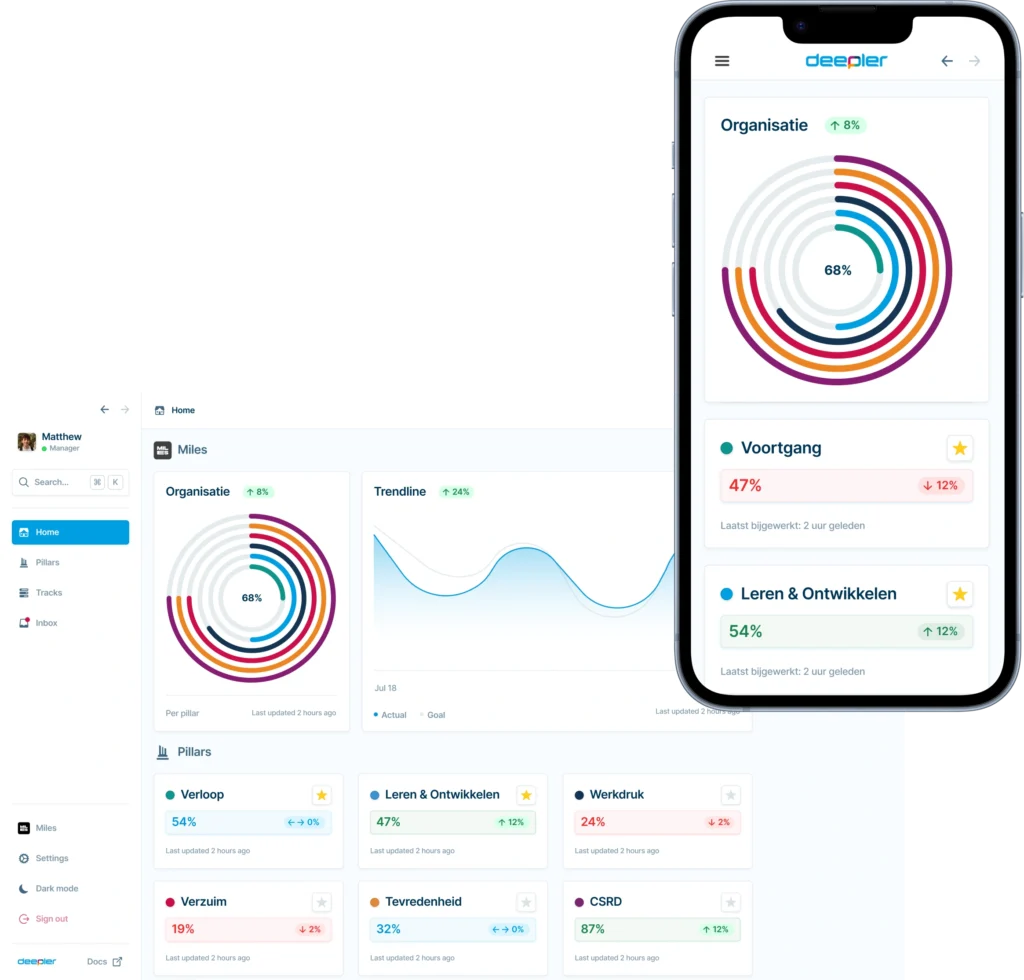
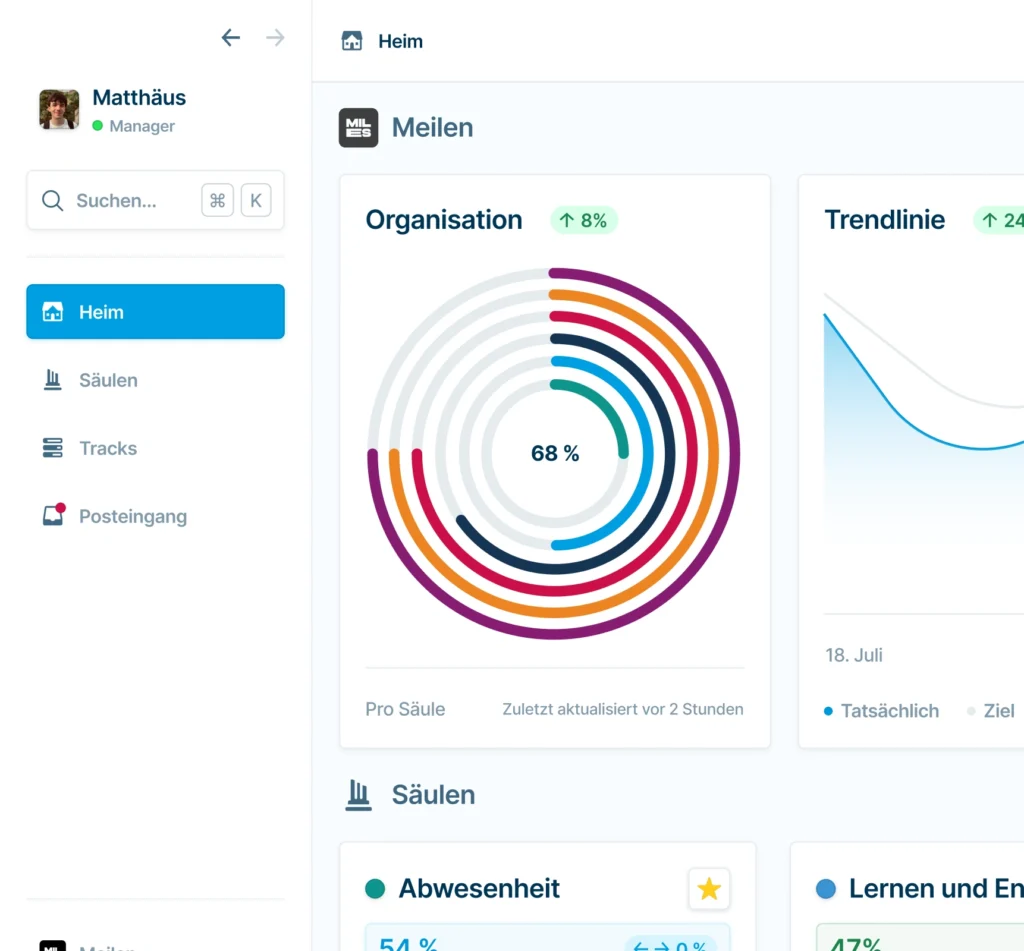
Screenshot van het Deeper-dashboard (Dashboard-Home-MTO-Page-NE) met organisatiegegevens, trendanalyse en prestatie-indicatoren per pijler.

Diversity and inclusion: what does it mean in the workplace?

Many organizations want to work on diversity and inclusion, but get stuck in general ambitions, isolated trainings or well-intentioned communication. The real question is not only whether policy exists, but whether employees in daily work notice that they experience equal opportunities, psychological safety and space for difference. A study into diversity and inclusion in the workplace helps make that experience concrete and choose priorities that fit the organization.

In this article we explain:

  • What diversity and inclusion mean within organizations
  • What the difference is between diversity and inclusion
  • Why diversity and inclusion in the workplace are important
  • How to survey employees safely and carefully
  • How Deepler helps move from insight to a practical action plan

Table of contents

What is diversity and inclusion?

Diversity is about the differences between people. Think of background, age, gender, education level, work experience, thinking style, culture, disability, neurodiversity, life stage or beliefs.

Inclusion is about the question of whether those differences are actually welcome in daily work. Are people taken seriously? Do they get equal opportunities?

Can they share their perspective without adapting to a dominant norm? A study into diversity and inclusion makes visible how employees experience this. So it’s not just about numbers or policies, but about behavior, culture, decision-making and the space people feel to participate.

Diversity without inclusion remains vulnerable

A diverse organization is not automatically an inclusive organization. If employees don’t feel safe expressing their opinion, experience little influence or believe that growth opportunities are unevenly distributed, diversity remains superficial. That’s why a good D&I study measures not just representation, but especially employees‘ experience: where do people feel at home, where not, and what patterns need attention?

Man met het hoofd op het toetsenbord zittend aan een bureau, ogenschijnlijk teneergeslagen of uitgeput.

Why is diversity and inclusion important?

Diversity and inclusion are important because organizations function better when people with different perspectives can contribute. New ideas don’t emerge automatically from difference; they emerge when difference is leveraged.

That requires a culture where employees feel safe, where decision-making is experienced as fair and where leaders actively create space for different voices. Without that inclusive foundation, talent, innovation and collaboration can actually stall.

Measuring diversity and inclusion provides organizations with various benefits.

The experience of inclusion is determined by a combination of factors: leadership, team behavior, social safety, communication, growth opportunities, recruitment, policy and how differences are handled. By measuring these factors deliberately, you prevent D&I from remaining an abstract topic. You see where employees experience progress and where the organization still unintentionally creates barriers.

1. Insight into inclusion in the workplace

A D&I study shows how employees experience daily collaboration. Do they feel free to ask questions, share dissenting opinions and be themselves? That insight helps make inclusion concrete at team and organizational level.

2. Fairer opportunities for development and growth

When employees experience unequal opportunities, talent remains underutilized. By measuring how people experience growth, assessment, guidance and recognition, you discover where processes or behavior need to be adjusted.

3. Stronger collaboration through greater understanding

Different perspectives can enrich collaboration, but can also create tension when expectations are unclear. An inclusion study helps teams make patterns discussable without basing the conversation on assumptions.

4. Less risk of exclusion or social unsafety

Exclusion is often invisible. Sometimes it’s in jokes, meeting formats, decision-making, language use or who is and isn’t invited to contribute. By safely surveying employees, you can detect earlier where boundaries are crossed or where people disengage.

5. More concrete D&I policy

Many organizations have ambitions around diversity and inclusion, but lack direction. Research helps make policy based on what employees actually experience. This creates an action plan that is more practical, credible and easier to explain.

Conduct your diversity and inclusion study with Deepler’s software

With the diversity and inclusion module of Deepler, you examine how employees experience inclusion, equality and social safety within your organization. The questionnaire is short, carefully formulated and focused on concrete topics such as space for difference, equal opportunities, leadership, team culture and psychological safety.

The results are displayed clearly in dashboards, so HR, management and leaders can see where the organization is strong and where targeted action is needed. Deepler helps to treat D&I not as a separate project, but as part of organizational development.

Twee personen bespreken werk terwijl ze samen naar een tablet kijken.

Our satisfied customers

  • Logo-ABNAmro
  • Logo-Comtest
  • Logo van D&B The Facility Group met witte tekst op een donkerblauwe achtergrond.
  • Logo van De Selectie met de slogan 'jouw recruitment marketing team' in donkerblauw en lichtblauw.
  • Logo-eviden
  • Logo van GestioNet met blauwe cirkels en de slogan "Play Think Learn".
  • Logo-Gomes 1
  • Logo-headfirst
  • Logo van Hendriks met blauwe en oranje grafische elementen en de slogan "Bedenkt, bouwt, beheert".
  • Logo van Truckland met blauwe en witte tekst voor een oranje cirkel met witte strepen.
  • Logo-Site
  • Logo-Recruitment
  • Logo van Management Drives met de initialen "MD" en een gekleurde lijn onder het woord "Management".
  • Logo-mateboer
  • Logo van Van der Valk met een gestileerde toekan in zwart, rood, geel en groen.
  • Logo-uwv
Dashboardweergave van het MTO-systeem met organisatieprestatie op 68% en trends per pijler.

What are the benefits of diversity and inclusion in the workplace?

Diversity and inclusion in the workplace only deliver value when employees can leverage difference rather than hide it. An inclusive work climate helps to have better conversations, incorporate more perspectives and enable talent to grow more broadly. For organizations, this means not only stronger employer appeal, but also greater agility and better decision-making.

Jonge man werkt geconcentreerd aan een bureau met een tablet, laptop en notitieblok.

A powerful tool

A D&I study is especially powerful when used as a starting point for conversation and improvement. The goal is not to pigeonhole people, but to make patterns visible that would otherwise remain undiscussed.

By surveying employees safely and carefully, you can better align policy, leadership and team agreements with reality. This creates not a symbolic D&I program, but an approach that employees recognize.

Drie collega’s zitten samen aan een bureau en bespreken werkdocumenten.

What are the benefits of diversity and inclusion in the workplace?

Diversity and inclusion in the workplace only deliver value when employees can leverage difference rather than hide it. An inclusive work climate helps to have better conversations, incorporate more perspectives and enable talent to grow more broadly. For organizations, this means not only stronger employer appeal, but also greater agility and better decision-making.

Better decision-making through different perspectives

Teams that create space for different experiences, perspectives and thinking styles can view problems from multiple angles. That doesn’t automatically lead to better decisions; for that, people also need to feel safe expressing their opinion. A D&I study shows whether that space actually exists. Possible benefits are:

  • More challenge in decision-making
  • Less groupthink
  • Better alignment with employees and customers
  • More ideas from different levels of the organization
Collega's werken samen aan documenten en laptops tijdens een vergadering.
Twee collega’s schrijven en overleggen samen bij een whiteboard op kantoor.

Making the organization more inclusive

D&I policy becomes stronger when it’s not only developed by HR. By surveying employees, you discover what improvements are really needed: better conversation norms, fairer growth opportunities, more inclusive leadership, more accessible communication or clearer behavior around unwanted conduct. This makes inclusion not an abstract value story, but a concrete improvement agenda.

Stronger employer appeal and more engagement

Employees remain more engaged when they can be themselves and feel their contribution matters. Inclusion thus directly affects motivation, trust and loyalty. An organization that shows it listens to experiences around diversity and inclusion builds employer appeal that is more credible than a campaign or loose promise.

Drie jonge mensen zitten op een stoep en werken samen met een laptop en een smartphone.

Trusted by small and large organizations

Ervaringen van klanten die met ons het verschil maken.

  • Portret van een lachende man in pak voor een oranje achtergrond, getiteld "Review-image-Larren (1)".

    Larren

    Recruitment Lead, 

    De Selectie

    Icon-Review-sterren

    „Vor Kurzem habe ich Deepler benutzt, um eine EVP zu finden. Großartig, was sie in kurzer Zeit erreichen konnten! In einem Zeitraum von zwei Wochen sammelten wir Informationen und konnten unseren AMC-Plan fortsetzen. In jeder anderen Situation dauert es Wochen, wenn nicht Monate, bis dies erledigt ist. Der Kontakt ist gut, freundlich und konstruktiv. Sehr netter Club, mit dem man arbeiten kann.“

  • Portretfoto van een glimlachende man genaamd Douwe met een kale hoofdhuid en lichte ogen, voor een turquoise achtergrond.

    Douwe

    Recruiter, 

    Securitas

    Icon-Review-sterren

    „Ideales Tool und Unternehmen, um mehr und bessere Einblicke in die Organisation und die Mitarbeiter als Organisation zu erhalten! Und vor allem mit Geschwindigkeit! Für uns war es auch die Notwendigkeit, Tools für das Thema Mitarbeiterbindung zu bekommen, um zukünftige Fehlzeiten oder Fluktuation zu verhindern. Ich habe auch Erfahrung mit anderen Parteien und schätze die Geschwindigkeit des Wechsels, die Nachverfolgung und den persönlichen Kontakt mit Deepler sehr. Absolut zu empfehlen.“

  • Porträtfoto von Jolanda vor einem lila Hintergrund.

    Jolanda

    HR Business Partner, 

    Nedcargo

    Icon-Review-sterren

    „Deepler ist ein großartiges Tool, um kontinuierlich Feedback von unseren Mitarbeitern zu sammeln. Dieser Input ist dann zentral für uns als Management verfügbar, aber auch für Manager, die davon profitieren.“

  • Portret van Jonathan in een blauw pak met stropdas, lachend voor een blauwe achtergrond.

    Jonathan

    Manager, 

    UWV

    Icon-Review-sterren

    „Das Besondere an Deepler ist, dass es nicht in Zahlen stecken bleibt. Es hilft dir, sofort zu verstehen, wo es ist und was Teams brauchen. Für uns stellte dies sicher, dass sich die Mitarbeiter selbst Verbesserungsmöglichkeiten ausdachten und Verantwortung dafür übernahmen. Die Erkenntnisse waren scharf und nützlich, aber das Wichtigste: Das Gespräch, das danach begann, machte den Unterschied. Dank Deepler erhielten wir keinen Plan auf Papier, sondern eine Änderung, die von den Leuten selbst unterstützt wurde.“

  • Vector

    Amadeus

    COO, 

    OSRE

    Icon-Review-sterren

    „Die Software wirkt sich positiv auf uns als schnell wachsendes Unternehmen aus. Indem wir besser verstehen, was am Arbeitsplatz vor sich geht und was die Leute als Lösungen für Verbesserungen anbieten, können wir effektivere Entscheidungen treffen. Die Plattform hilft uns, Einblicke in Echtzeit zu gewinnen und direkt über das Tool darauf zu reagieren.“


Man leunt voorover aan een bureau terwijl hij geconcentreerd naar een laptop kijkt.

Is a diversity and inclusion study mandatory and what about GDPR, anonymity and careful measurement?

A diversity and inclusion study is usually not legally required as a separate study. However, employers have the responsibility to ensure a safe, healthy and equal work environment.

Topics such as discrimination, social safety, equal treatment and psychosocial work stress therefore relate to existing policy and good employer practice. Because D&I research can touch on sensitive subjects, care is important.

Only ask what is necessary, clearly explain why you are conducting the study and ensure that results are not traceable to individual employees. Especially with small teams or specific background characteristics, you must be careful with segmentation.

Is a diversity and inclusion survey anonymous?

Yes, in most cases anonymity is essential. Employees must be able to freely indicate how they experience inclusion, psychological safety and equal opportunities.

When people are afraid that answers are traceable, they will be less likely to share sensitive experiences. Deepler helps by presenting results in a way that makes patterns visible, without unnecessarily identifying individual employees.

Een gemotiveerde groep collega’s luistert en applaudisseert tijdens een presentatie op kantoor.
Man voert een Zoom-gesprek terwijl hij koffie drinkt aan zijn bureau.

What about GDPR and privacy in a D&I survey?

In a D&I survey, answers can be sensitive, especially when they concern background, identity, discrimination, safety or personal experiences. Therefore, you must be conscious about data minimization, anonymity and reporting. Be sure to pay attention to:

  • Only ask for data that is necessary for the purpose of the survey
  • Avoid unnecessary personal characteristics or make participation in such questions voluntary
  • Do not report on groups that are too small
  • Explain in advance who sees the results and what happens with them
  • Use outcomes for improvement, not to judge individual employees

What is the role of HR, management and the works council in diversity and inclusion?

Diversity and inclusion affect multiple roles within the organization. HR ensures the survey is conducted carefully and translates results into policy.

Managers make the topic concrete in teams, for example by improving meeting norms, decision-making and development opportunities. Leadership must make clear why the topic is important and what choices the organization is making.

In employee surveys, the works council can also play a role, especially when the survey concerns personnel policy, working conditions or the processing of employee data. Involve stakeholders early so the survey builds trust rather than resistance.

Twee collega’s werken op laptops aan een gedeeld bureau in een modern kantoor met bakstenen muren, van bovenaf gezien.
Vrouw in grijze blazer werkt op laptop aan vergadertafel met collega's op de achtergrond.

Why do many organizations conduct a diversity and inclusion survey anyway?

Organizations conduct a D&I survey because good intentions are not enough. Without measurement, it remains unclear whether employees truly feel seen, safe and treated equally.

Surveys help uncover blind spots, track progress and make choices that fit the reality of the organization. It makes diversity and inclusion less abstract and much more actionable.

How to get more out of your D&I survey

Make it safe and concrete

Use questions that relate to recognizable situations in the workplace, such as participation in meetings, equal opportunities, accountability and space for differences. The more concrete the question, the more useful the outcome.

Twee lachende personen in casual kleding poseren voor een blauwe achtergrond.

Always provide feedback on what you learn

With a sensitive topic like diversity and inclusion, feedback is especially important. Show what patterns are visible, what choices the organization is making and what employees can expect.

Twee lachende collega’s in een vergadering binnen de financiële sector.

Make inclusion part of daily behavior

A training or policy document is not enough. Translate results into team agreements, leadership behavior, recruitment, development and decision-making. This is where inclusion is either realized or not in daily practice.

Lachende man in een rood shirt met een kleurrijk logo in de linkerbovenhoek.

Do’s of a D&I survey

A successful diversity and inclusion survey requires careful preparation and clear communication.

  • Explain why you are conducting the survey and what you will do with the results
  • Use neutral, clear and respectful questioning
  • Protect anonymity, especially in small groups
  • Involve HR, leadership, managers and where necessary the works council
  • Translate outcomes into concrete actions and follow up on them

Don’ts of a D&I survey

  • Do not ask for sensitive characteristics if you don’t need them
  • Do not report results on groups that are traceable
  • Do not make the survey a symbolic action without follow-up
  • Do not use D&I as a marketing story when internal experience falls short
  • Do not leave managers unsupported with sensitive results
Twee personen bespreken werk terwijl ze samen naar een tablet kijken.

What do you do with the results of a diversity and inclusion survey?

The results of a D&I survey are only valuable when they are carefully discussed and translated into improvement. It requires more than sharing a dashboard.

Precisely because the topic can be sensitive, you must ensure context, safety and clear next steps. Start with patterns, not with blame questions. Look at where employees share positive experiences, where barriers arise and which themes have priority.

From insight to real change

Now that you have identified the patterns and vulnerable themes, it is time to translate those insights into concrete steps. This requires a structured approach in which you set priorities, involve stakeholders and make progress measurable. It is about not only knowing where the challenges lie, but also making it clear how your organization is going to work on it together.

Effective change in the field of diversity and inclusion does not happen by itself. It requires commitment, transparency and clear ownership. By methodically carrying out the following six follow-up steps, you ensure that your D&I insights lead to real improvement in the work environment and engagement of all employees. These are the follow-up steps:

Wil je nog meer tips over hoe je een medewerkerstevredenheidsonderzoek (MTO) effectief op kan volgen? Lees dan ons artikel:
‍MTO Effectief Opvolgen: Waarom Is Dat Belangrijk?

Analyze patterns and vulnerable themes

Look at which themes stand out: psychological safety, equal opportunities, leadership, team culture, communication or accessibility. Pay attention to differences between groups or teams, but avoid drawing conclusions based on small numbers.

Provide feedback on results in understandable language. State what is going well and where improvement is needed. Make clear that the goal is to learn and improve, not to assign blame.

Use the results as a basis for conversations. Ask which situations are recognizable, where employees need change, and what agreements can help make inclusion more concrete.

Choose actions that fit the outcomes. Think of leadership training, better conversation standards, more inclusive recruitment, more transparent career progression, more accessible communication, or clear procedures around undesired behavior.

Don’t tackle all topics at once. Choose one or a few priorities and determine who is responsible. Without ownership, D&I often remains stuck in intentions.

Diversity and inclusion require repetition. Measure periodically whether employees experience improvement, whether actions have effect, and where new points of attention arise.

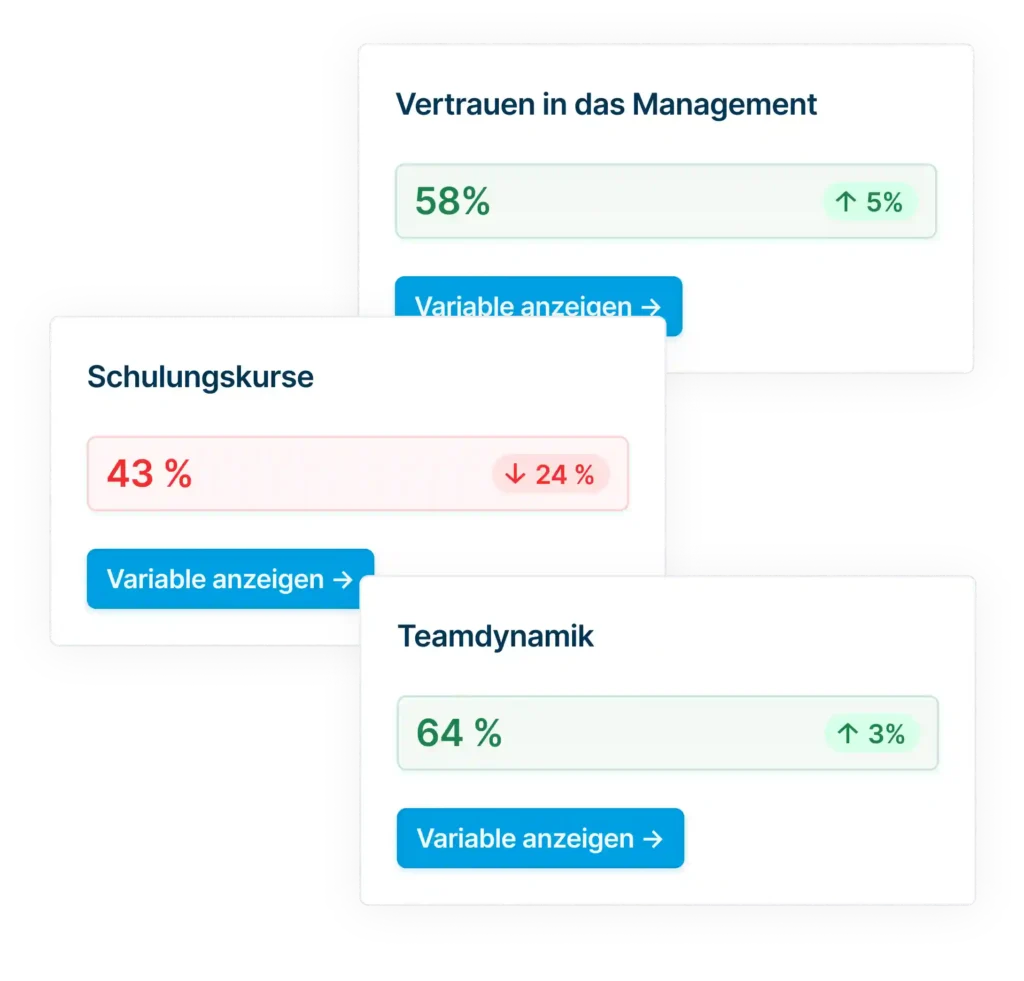
Drie dashboardkaarten met percentages voor vertrouwen in leidinggevende, opleidingen en teamdynamiek.

Make inclusion discussable with insight into what employees experience

Leaders and HR see through Deepler where employees experience room to participate and where barriers arise. The dashboard helps to have a concrete conversation: not about general opinions, but about patterns in how employees experience things.

Organizational research without high costs

Stem je wensen af met ons Basic- of Plus-pakket. Wil je meerdere landen of organisaties vergelijken? Dan is het Enterprise-pakket de beste keuze.

Basic

€2,99

Pro Benutzer/pro Monat

Das Beste für Ihr Team oder kleinere Organisationen, die schnell Erkenntnisse gewinnen möchten.

  • Maximal 1 Modul
  • Segmentierung nach Punktzahl
  • Eingehende Analyse für Manager
  • Unbegrenzte Anzahl von Sprachen
  • Eigenes Dashboard für Mitarbeiter

Plus

€3,49

Pro Benutzer/pro Monat

Ideal, wenn Sie mehrere Teams und KMU befragen möchten.

  • Alles von Basic
  • 2 zusätzliche Forschungsmodule
  • Persönlicher Erfolgsmanager
  • Nicht-Büromitarbeiter
  • Eigene Fragen

Am häufigsten ausgewählt

Enterprise

Auf Anfrage

Pro Benutzer/pro Monat

Das Beste für große Organisationen und maßgeschneiderte Module.

  • Alles von Plus
  • Single Sign-On
  • Maßgeschneiderte Module
  • Erweiterte Sicherheit
  • Persönliches Onboarding

Basic

€36

Pro Benutzer/pro Jahr

Das Beste für Ihr Team oder kleinere Organisationen, die schnell Erkenntnisse gewinnen möchten.

  • Maximal 1 Modul
  • Segmentierung nach Punktzahl
  • Eingehende Analyse für Manager
  • Unbegrenzte Anzahl von Sprachen
  • Eigenes Dashboard für Mitarbeiter
  • Geeignet für Mitarbeiter Firmen-E-Mail-Adresse

Plus

€42

Pro Benutzer/pro Jahr

Ideal, wenn Sie mehrere Teams und KMU befragen möchten.

  • Basic
  • 2 zusätzliche Forschungsmodule
  • Persönliche Unterstützung durch einen Deepler-Experten
  • Geeignet für alle Mitarbeiter
  • Eigene Fragen hinzufügen
  • Möglichkeit zur Durchführung von Umfragen mittels QR-Code

Am häufigsten ausgewählt

Enterprise

Auf Anfrage

Pro Benutzer/pro Jahr

Das Beste für große Organisationen und maßgeschneiderte Module.

  • Plus
  • Unbegrenzte Forschungsmodule
  • Maßgeschneiderte Module
  • Unbegrenzte Anzahl von Sprachen
  • Eigenes Dashboard für Mitarbeiter
  • Geeignet für Mitarbeiter Firmen-E-Mail-Adresse

Frequently asked questions

What is diversity and inclusion?

Diversity is about differences between people, such as background, age, gender, experience, perspective, and thinking style. Inclusion is about the question of whether people with those differences can truly participate, have influence, and feel safe being themselves within the organization.

Diversity and inclusion in the workplace mean that employees are not only present, but can also contribute on equal terms. It’s about daily experiences: who is heard, who gets opportunities, how differences are handled, and whether employees feel safe sharing their perspective.

Diversity describes the composition of a group. Inclusion describes how people within that group are treated and involved. A team can be diverse, but still not function inclusively when some employees experience less space, influence, or safety.

Diversity and inclusion are important because organizations make better use of talent when different perspectives are heard. It contributes to better collaboration, more engagement, fairer opportunities, and stronger employer branding. Without inclusion, differences can actually lead to distance or untapped potential.

A D&I survey can measure themes such as psychological safety, equal opportunities, space for difference, inclusive leadership, team culture, communication, career development opportunities, accessibility, and experiences with unwanted behavior or exclusion.

Many organizations measure D&I periodically, for example annually or semi-annually. With sensitive topics, it’s important to not only measure, but also visibly follow up. Repetition is especially valuable when you want to see if actions have an effect.

Yes, anonymity is strongly recommended. Employees share more honestly when they know that answers cannot be traced back to them personally. This is especially important for sensitive topics such as discrimination, psychological safety, and experiences with exclusion.

Not always. Only ask for characteristics if they are necessary for the purpose of the survey and if you can report carefully without traceability. Sometimes it’s better to mainly measure the experience of inclusion and keep demographic questions voluntary or limited.

After a D&I survey, you discuss the key patterns, determine priorities, and create a concrete action plan. Consider actions around leadership, team behavior, equal opportunities, communication, or psychological safety. It’s important that employees see what happens with their feedback.

A diversity and inclusion action plan describes what improvements the organization will implement, who is responsible, and how progress will be monitored. A good action plan is based on data and employee experience, not just general ambitions.

Examples include equal opportunities for career advancement, accessible communication, space for different holidays or life stages, inclusive leadership, clear standards regarding unwanted behavior, and consultation formats where quieter or less dominant voices are also heard.

A good response depends on the size of the organization and confidence in the research. With D&I, not only the percentage is important, but also whether employees feel safe enough to answer honestly. Clear communication and anonymity help increase response rates.

Make D&I part of existing processes such as leadership, recruitment, onboarding, development, team discussions and employee surveys. Measure periodically, provide feedback and clarify ownership. This way, inclusion becomes a way of working instead of a temporary campaign.

Schedule a consultation

Klaar om stappen te zetten? Laat van je horen, dan kijken we samen naar de beste aanpak. Of je nu een vraag hebt of gewoon even wilt sparren, we zijn er voor je.

  • Een inkijkje in het dashboard van Deepler
  • Persoonlijk advies en start met eerlijk inzicht
  • Een vrijblijvend gesprek voor al jouw vragen
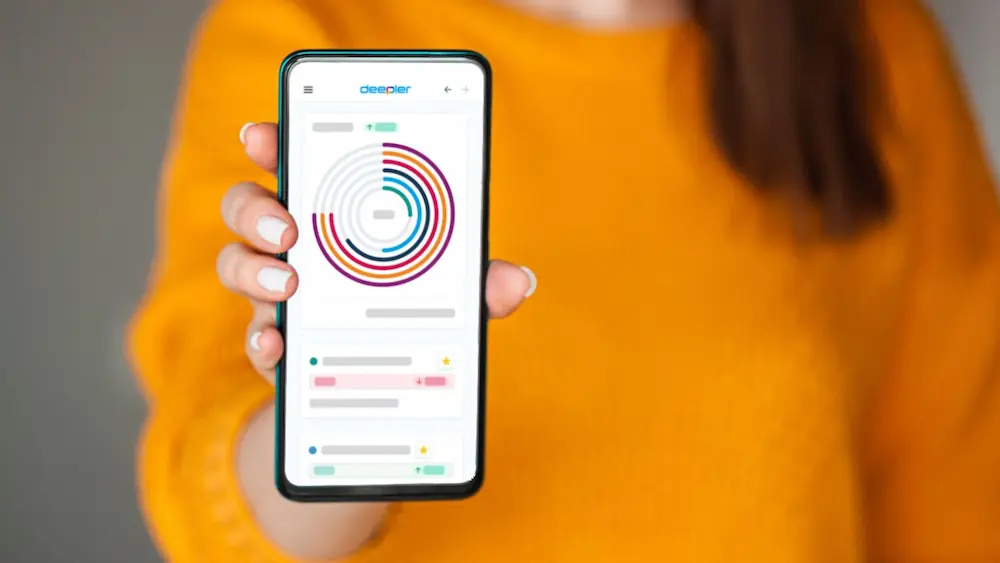
Person in einem gelben Pullover hält ein Smartphone mit der Deeper-App und einer farbenfrohen Datenvisualisierung auf dem Bildschirm in der Hand.
E-Learning-Karte von Leon hinzugefügt mit einer Punktzahl von 36 und Plus- und Minus-Buttons.
Kaart met de titel "Inwerken van collega's", waarop een streak van 14 dagen en 10 van de 12 voltooide taken worden getoond.
Hintergrundkreise-Deepler