



Balancing team and individual performance within compensation systems
Balancing team and individual performance within compensation systems Most HR professionals struggle...
Verder lezen



Renew decision-making in HR with the Collective Intelligence Model. Explore the key dynamics and discover how to use the right platform for effective decision-making, collaboration and success.
Every stage of human evolution has depended on the ability to excel at something specific. Far back in our past, we strove to be excellent hunters or gatherers. We were successful if we could pick berries quickly. In the agricultural era, prosperity was based on efficient crop farming. In the industrial era, those with superior factories and machines were rewarded. And now, in the information age, organizations thrive on knowledge and access to the best information.

Organizations are increasingly transforming toward collective intelligence, or team intelligence. This concept uses the combined knowledge, insights and perspectives of employees to tackle complex challenges and drive effective decision-making. We also see this principle in Agile and Scrum.
By embracing the three fundamental steps of the collective intelligence model (crowdsourcing, co-creation and self-organization), organizations can be agile, engaged and successful. These stages represent growth phases in which organizations gradually move from passive and individualistic employee mindsets to active and collective engagement.

Crowdsourcing is a common approach in the passive and individualistic quadrant. It is often carried out through employee satisfaction surveys run by HR professionals. In this phase, management starts the process by requesting information through a platform. The platform then forwards the request to employees, who provide their feedback or input.
Through the platform, management can find and follow up on this feedback. Although this method can provide valuable insights, it often lacks active participation and collective ownership. The focus is mainly on individual satisfaction and contributions, which holds back collaboration, innovation and the full potential of the organization.

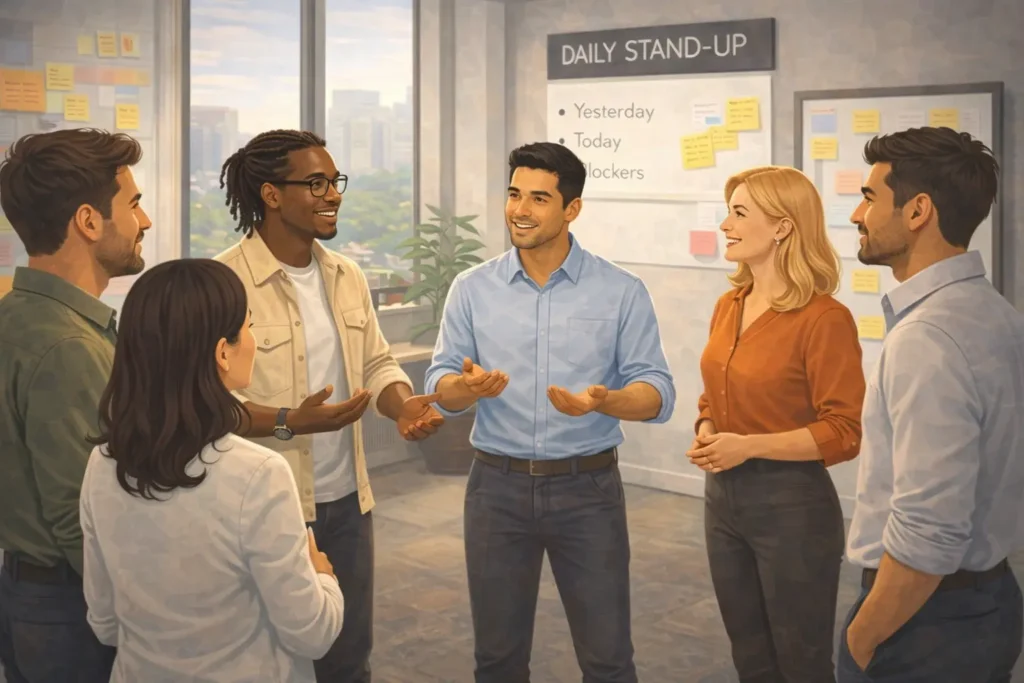
As we move toward the middle of the model, we encounter co-creation: a dynamic that balances individual and collective mindsets. Co-creation involves employees actively taking part in collaborative efforts, where they can contribute their unique perspectives and expertise. In this phase, management asks for employee input through a dedicated platform.
Employees give their feedback or input, and the platform makes communication between management and employees easier for follow-up. This approach fosters a sense of collective ownership and shared responsibility, unlocking the full potential of collective intelligence. By encouraging individuals to take an active part in decision-making, problem-solving and innovation, organizations can stimulate creativity, promote a culture of collaboration and achieve results more easily.

At the top of the model, we find the dynamic of self-organization, driven by an active and collective mindset. This is often a difficult step because the foundation was not laid well enough in the previous stages. In this quadrant, individuals take responsibility for their role within the organization and actively contribute to collective goals. They are empowered to make decisions autonomously and to work together. In this phase, management takes on a moderating role, while employees communicate directly with the platform.
Employees request input, provide information and follow up on this feedback through the platform. This direct interaction promotes the free exchange of information and ideas, enabling efficient decision-making and problem-solving. Self-organization unlocks the full potential of collective intelligence and drives innovation, agility and lasting success. This dynamic enables organizations to respond quickly to challenges, seize opportunities and, through engagement, achieve exceptional results.
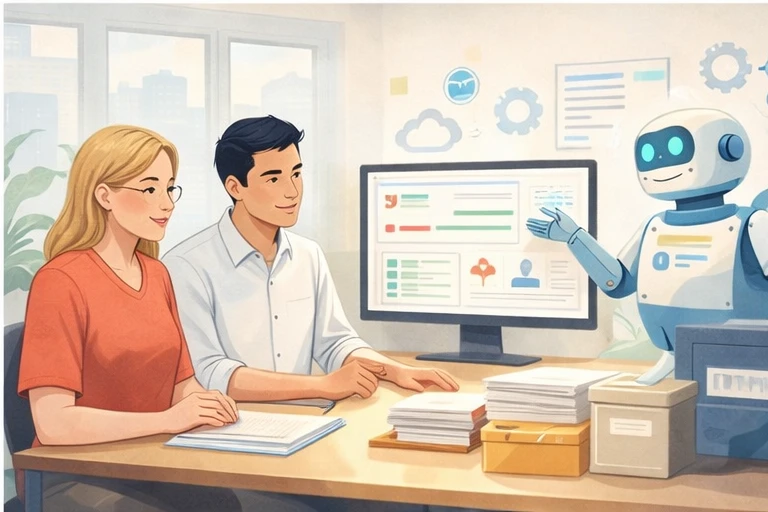
To support an organization’s progress through these phases of collective intelligence, it is essential to use the right technology. The ideal platform should offer a central space where management and employees can interact seamlessly. Through this platform, management can initiate requests, collect feedback and closely follow employee input, together with their team members.
Employees, in turn, contribute actively, share their ideas and take part in meaningful discussions, doing their part to find the solution. HR professionals should look for a platform that facilitates a smooth exchange of information, but above all promotes collaboration. By choosing the right platform, organizations can use engagement as a means to take the organization to new heights together.

Stijn van der Vat
Founder / CEO
Stijn founded Deepler in 2021 together with three other change managers, driven by a shared conviction: organizations only truly change when employees are taken seriously. As CEO, he shapes Deepler’s strategic direction and builds lasting partnerships with clients and partners. Stijn is often the first point of contact for organizations looking to get more out of their employees' voices.