















Drie lachende mensen tegen gekleurde achtergronden, als visueel element voor werkgevers.
Icon Review Stars

4,9/5 reviews

Onboarding survey for new employees

Good onboarding determines how quickly new employees feel welcome, confident and productive. Yet you often only discover where things go wrong too late: unclear expectations, insufficient guidance, a sluggish onboarding process or a mismatch between promise and reality.

With Deepler’s onboarding survey, you measure how new employees experience their start, which parts of the onboarding program work well and where improvement is needed. This way you don’t steer by intuition, but by concrete input from the first weeks and months.

  • Measure how new employees truly experience their start
  • Discover where guidance, role clarity or culture is strained
  • Improve your onboarding program based on employee data
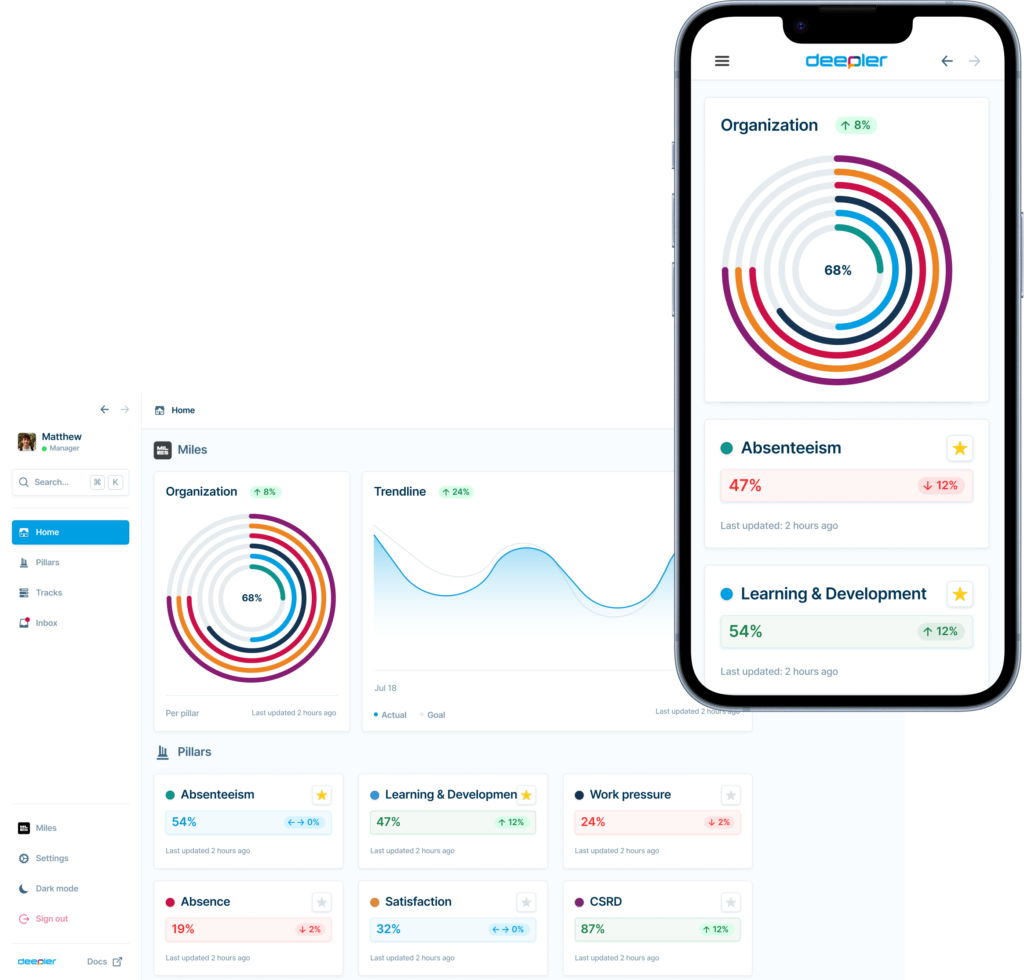
Screenshot van het Deeper-dashboard (Dashboard-Home-MTO-Page-NE) met organisatiegegevens, trendanalyse en prestatie-indicatoren per pijler.

Onboarding: meaning, process and survey in one overview

Many organizations search for onboarding, onboarding meaning or onboarding new employees because they want to make their hiring process more professional. A tight onboarding program helps new colleagues land faster, but only if you know how it is experienced in practice. An onboarding survey reveals whether the introduction, guidance, information provision and first collaboration align with what new employees need.

In this article we explain:

  • What onboarding means
  • Why good onboarding is important
  • Which elements belong in an onboarding process
  • How to make onboarding new employees measurable
  • How Deepler helps improve your onboarding program

Table of contents

What is onboarding?

Onboarding is the process in which new employees are helped to make a good start within an organization. It goes beyond the first day of work or a practical onboarding checklist.

Good onboarding helps employees understand what their role is, how the team works, what expectations there are and how they can contribute to the organization. An onboarding survey measures how new employees experience this process.

Think of topics such as feeling welcome, role clarity, guidance from the manager, support from a buddy, access to information, fit with the culture and confidence in the choice for the organization. The results show where your onboarding program is strong and where new employees get stuck.

The first weeks in sharp focus

With onboarding, timing is important. New employees quickly form an impression of the organization, but don’t always dare say what is unclear or disappointing right away.

Short, targeted measurements after, for example, 30, 60 and 90 days provide earlier insight into signals. This way you discover whether someone is getting sufficient guidance, knows what the priority is and feels part of the team before uncertainty or doubt grows.

Man met het hoofd op het toetsenbord zittend aan een bureau, ogenschijnlijk teneergeslagen of uitgeput.

Why onboarding survey is important

A poor start can have lasting effects. New employees who don’t get sufficient guidance, don’t know what is expected of them or don’t feel connected to the team have more difficulty finding their place.

Sometimes this leads to lower productivity, frustration or early departure. With an onboarding survey, you surface these signals earlier. This allows you to improve the onboarding process while the employee is still in the middle of their first experience.

An onboarding survey prevents signals from coming too late

New employees are often motivated, but also dependent on their environment. They must learn systems, build relationships, understand their role and discover how decisions are made.

If that start is messy, people fill in the gaps themselves. An onboarding survey makes it discussable where new employees are missing clarity, attention or structure. This helps HR and managers provide more targeted support.

1. Faster clarity on the start of new employees

With an onboarding survey you see early whether new employees understand what their role, priorities and expectations are. This prevents confusion from lingering unnecessarily.

2. Better guidance from managers and buddies

Onboarding succeeds or fails with good guidance. By measuring how employees experience contact, feedback and support, you see where managers or buddies need extra support.

3. Less risk of early departure

If new employees have doubts, you don’t always notice it immediately. Research helps to recognize signals around uncertainty, mismatch or lack of connection earlier.

4. A stronger onboarding program

An onboarding program example or checklist is useful, but every organization works differently. With employee data you see which elements truly add value and which mainly look good on paper.

5. Become productive faster without pushing harder

Good onboarding helps employees work independently faster. Not by increasing pressure, but by better organizing information, expectations, collaboration and support.

Measure onboarding with the Deepler module

The onboarding module of Deepler helps organizations measure the experience of new employees in a structured way. You map out how employees experience their start, where guidance falls short and which parts of the onboarding program need improvement.

Deepler makes results transparent by team, function, location or intake group, while maintaining anonymity. This way HR and managers can follow up in a targeted manner and improve the onboarding process step by step.

Twee personen bespreken werk terwijl ze samen naar een tablet kijken.

Our satisfied customers

  • Logo-ABNAmro
  • Logo-Comtest
  • Logo of D&B The Facility Group in white text on a dark blue background with rounded squares.
  • Logo of "deSelectie" with the tagline "jouw recruitment marketing team" in bold, modern typography.
  • Logo-eviden
  • GestioNet logo with blue circular icons and the tagline "Play Think Learn".
  • Logo-Gomes 1
  • Logo-headfirst
  • Logo of Hendriks with a blue and orange icon and the Dutch slogan "Bedenkt, bouwt, beheert".
  • Truckland logo with blue and white text and an orange circle featuring horizontal white lines.
  • Logo-Site
  • Logo-Recruitment
  • Logo of Management Drives with bold "MD" initials and a colorful horizontal line beneath.
  • Logo-mateboer
  • Logo of Van der Valk featuring a stylized toucan with a yellow beak and red accents.
  • Logo-uwv
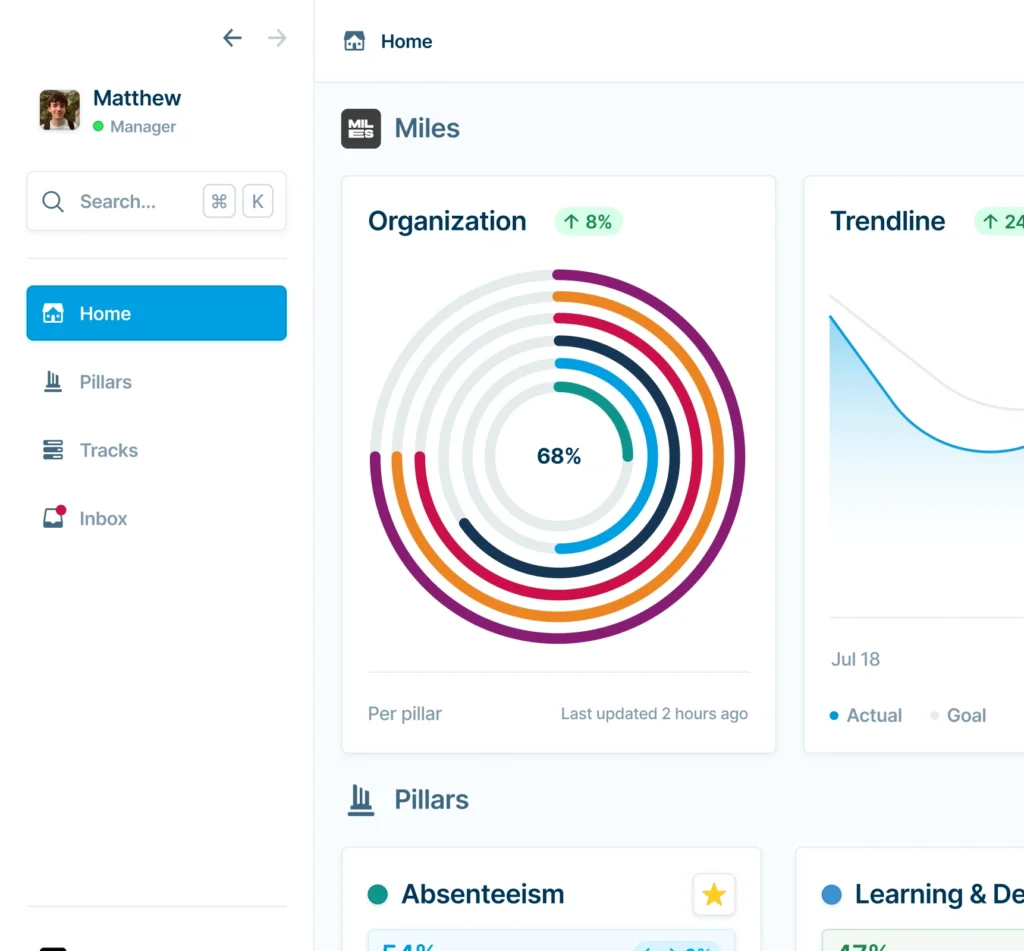
Dashboardweergave van het MTO-systeem met organisatieprestatie op 68% en trends per pijler.

The benefits of onboarding survey

A good onboarding survey gives HR and management concrete input to improve the start of new employees. The value is not just in measuring satisfaction, but especially in understanding which parts of the onboarding process contribute to trust, clarity and speed of landing.

Jonge man werkt geconcentreerd aan een bureau met een tablet, laptop en notitieblok.

From feeling welcome to lasting commitment

Onboarding is not a one-time introduction day. It is a process in which new employees gradually gain more control over their work, team and organization.

By measuring at fixed times, a cycle of improvement emerges: you see where employees get stuck, discuss patterns with managers and adapt the program. Then you measure again to see if the change has an effect.

Drie collega’s zitten samen aan een bureau en bespreken werkdocumenten.

The benefits of onboarding survey

A good onboarding survey gives HR and management concrete input to improve the start of new employees. The value is not just in measuring satisfaction, but especially in understanding which parts of the onboarding process contribute to trust, clarity and speed of landing.

Faster landing in the organization

New employees need a lot of information in a short time. A survey shows whether that information is logical, digestible and arrives on time.

  • Measure whether the first day and first weeks are clear
  • Discover if employees know who to contact
  • See if systems, processes and expectations are well explained
Collega's werken samen aan documenten en laptops tijdens een vergadering.
Twee collega’s schrijven en overleggen samen bij een whiteboard op kantoor.

Better collaboration between HR and managers

Onboarding is often divided between HR, managers, buddies and teams. This easily creates gaps: HR thinks the manager will handle something, while the manager expects it to be already arranged. Research shows where handoff, responsibility and coordination need to be sharper.

Stronger connection with new employees

The first months are decisive for the sense of belonging. If employees feel welcome, understand their contribution and notice that attention is paid to their development, trust grows. An onboarding survey shows where that connection is built and where it comes under pressure.

Drie jonge mensen zitten op een stoep en werken samen met een laptop en een smartphone.

Trusted by small and large organizations

Ervaringen van klanten die met ons het verschil maken.

  • Portrait of a smiling man in a suit in front of an orange background, titled "Review-image-Larren (1)."

    Larren

    Recruitment Lead, 

    De Selectie

    Icon Review Stars

    “Recently, I used Deepler to arrive at an EVP. Great what they were able to achieve in a short time! In a period of two weeks, we collected information and were able to continue with our AMC plan. In any other situation, it takes weeks, if not months, to get this done. Contact is good, friendly and constructive. Very nice club to work with.”

  • Portrait of a smiling man named Douwe with a bald head and light eyes, against a turquoise background.

    Douwe

    Recruiter, 

    Securitas

    Icon Review Stars

    “Ideal tool and company to gain more and better insight into the organization and employees as an organization! And especially with speed! For us, it was also the need to get tools for the topics of retention, to prevent future absenteeism or turnover. I also have experience with other parties and I sincerely value the speed of switching, follow-up and personal contact with Deepler. Absolutely recommended.”

  • Portrait of Jolanda with long blonde hair, wearing a black lace top, set against a purple background.

    Jolanda

    HR Business Partner, 

    Nedcargo

    Icon Review Stars

    “Deepler is a great tool for continuously collecting feedback from our employees. This input is then centrally available for us as management, but also for managers who benefit from it.”

  • Portrait of Jonathan in a blue suit and tie, smiling in front of a blue background.

    Jonathan

    Manager, 

    UWV

    Icon Review Stars

    “What makes Deepler special is that it doesn’t get stuck in numbers. It helps you immediately understand where it is and what teams need. For us, this ensured that employees themselves came up with areas for improvement and took responsibility for them. The insights were sharp and useful, but most importantly: the conversation that started afterwards made the difference. Thanks to Deepler, we didn’t get a paper plan, but change that was supported by the people themselves.”

  • Vector

    Amadeus

    COO, 

    OSRE

    Icon Review Stars

    “The software has a positive impact on us as a rapidly growing organization. By better understanding what is going on in the workplace and what people offer as solutions for improvements, we can make more effective decisions. The platform helps us to gain real-time insight and to respond directly to it via the tool.”


Man leunt voorover aan een bureau terwijl hij geconcentreerd naar een laptop kijkt.

Is onboarding survey mandatory?

An onboarding survey is usually not legally required. However, for many organizations it is still wise, because onboarding relates to good employer practices, sustainable employability and preventing unnecessary turnover.

For works councils or HR teams, it can be valuable to know how new employees enter the organization. Explain upfront what you measure, why you do it and how the results will be used.

Anonymity in onboarding research

Onboarding research requires nuance. New employees may be hesitant to be honest because they are still in their probation period or don’t want to damage their position.

Anonymity and careful reporting are therefore important. Do not report on groups that are too small and be clear about who sees which results. This increases the chances of honest feedback.

Een gemotiveerde groep collega’s luistert en applaudisseert tijdens een presentatie op kantoor.
Man voert een Zoom-gesprek terwijl hij koffie drinkt aan zijn bureau.

GDPR and privacy in onboarding research

In onboarding research, you process data about employee experiences. That requires a careful approach.

  • Collect only information necessary for the purpose of the research
  • Be clear about anonymity, retention period, and access to results
  • Do not report in an identifiable manner for small intake groups
  • Use open responses carefully, especially if examples make people recognizable
  • Explain how results are used to improve onboarding

Who do you involve in onboarding research?

Onboarding affects multiple stakeholders. HR often designs the onboarding program, but managers and teams largely determine how the start feels.

  • HR for process, questionnaire, and follow-up
  • Managers for guidance, role clarity, and team agreements
  • Buddies or mentors for practical support
  • New employees for experience and improvement points
  • Management or MT for priority, capacity, and consistency
Twee collega’s werken op laptops aan een gedeeld bureau in een modern kantoor met bakstenen muren, van bovenaf gezien.
Vrouw in grijze blazer werkt op laptop aan vergadertafel met collega's op de achtergrond.

Why measure onboarding if you already have a checklist?

An onboarding checklist helps ensure nothing is forgotten, but says little about the employee’s experience. Someone can have completed all practical steps and still feel little clarity, connection, or trust.

Measuring onboarding shows whether the process also works in practice. This prevents onboarding from becoming a checklist to tick off rather than a good start.

How to get more out of onboarding research

Measure at logical moments

Don’t ask new employees for feedback only after the first workday. Measure for example after 30, 60, and 90 days, so you see how the experience develops. The first week is often about welcoming and practical matters. Later, role clarity, collaboration, and independence become more important.

Twee lachende personen in casual kleding poseren voor een blauwe achtergrond.

Make it safe to be honest

Explain that feedback is not intended to hold individual managers accountable, but to improve the onboarding process. Tell who sees the results and how anonymity is protected. Especially with new employees, trust is crucial for honest answers.

Twee lachende collega’s in een vergadering binnen de financiële sector.

Link insights to concrete improvements

Use outcomes to adjust specific parts: preparation for the first day, information provision, buddy role, manager meetings, team introduction, or training moments. For each improvement, make clear who is responsible and when you will measure again to see if it works better.

Lachende man in een rood shirt met een kleurrijk logo in de linkerbovenhoek.

Do’s in onboarding research

Good onboarding research is practical, safe, and linked to the real process.

  • Measure at multiple moments in the first months
  • Ask about role clarity, guidance, information, and connection
  • Involve managers in following up on results
  • Keep questions short and recognizable for new employees
  • Combine scores with open explanation for concrete examples

Don’ts in onboarding research

  • Don’t wait until the exit interview to discover onboarding problems
  • Don’t make onboarding only an HR process without managers
  • Don’t use a long questionnaire in the first work week
  • Don’t report on small groups where people become identifiable
  • Don’t confuse a completed checklist with successful onboarding
Twee personen bespreken werk terwijl ze samen naar een tablet kijken.

Following up on onboarding results

The value of onboarding research lies in what you do with the results. Discuss patterns not only within HR, but also with managers and teams.

Look at where new employees consistently get stuck and translate that into targeted improvements in the onboarding program. This makes onboarding a continuous learning process rather than a one-time introduction.

Implementing the improvement cycle

The step from insight to action is crucial for the success of your onboarding program. With the results from your research, you have concrete starting points where new employees feel insufficiently supported. Now it’s time to translate these findings into targeted improvements that have direct impact on your hiring and retention.

By systematically addressing the weak points, you not only strengthen your onboarding process, but you also ensure that new employees become productive faster and stay with your organization longer. This enhances your employer branding and reduces expensive replacement costs. We have identified six practical follow-up steps for you that you can implement after the research:

Wil je nog meer tips over hoe je een medewerkerstevredenheidsonderzoek (MTO) effectief op kan volgen? Lees dan ons artikel:
‍MTO Effectief Opvolgen: Waarom Is Dat Belangrijk?

Analyze where new employees get stuck

Look at differences between teams, functions, locations, or intake times. Search for patterns in role clarity, guidance, information provision, workload, team contact, and trust in the organization.

Not every bottleneck requires a major project immediately. Choose the moments that are decisive for many new employees, such as preparation, first work week, manager meetings, or transition to working independently.

Use the outcomes as a starting point for discussion. Ask managers and buddies which signals they recognize and what improvements are feasible in the daily onboarding process.

Translate insights into agreements, such as a fixed 30-day meeting, clearer role expectations, better team introduction, a sharpened buddy role or shorter training blocks. Make clear for each action who is responsible.

Improving onboarding does not work if every component is tackled simultaneously. Start with the bottleneck that affects the most new employees or poses the greatest risk of delay, uncertainty or departure.

Repeat the measurement with the next intake groups or at fixed moments in the onboarding journey. This way you can see whether adjustments to the program actually have an impact on the experience of new employees.

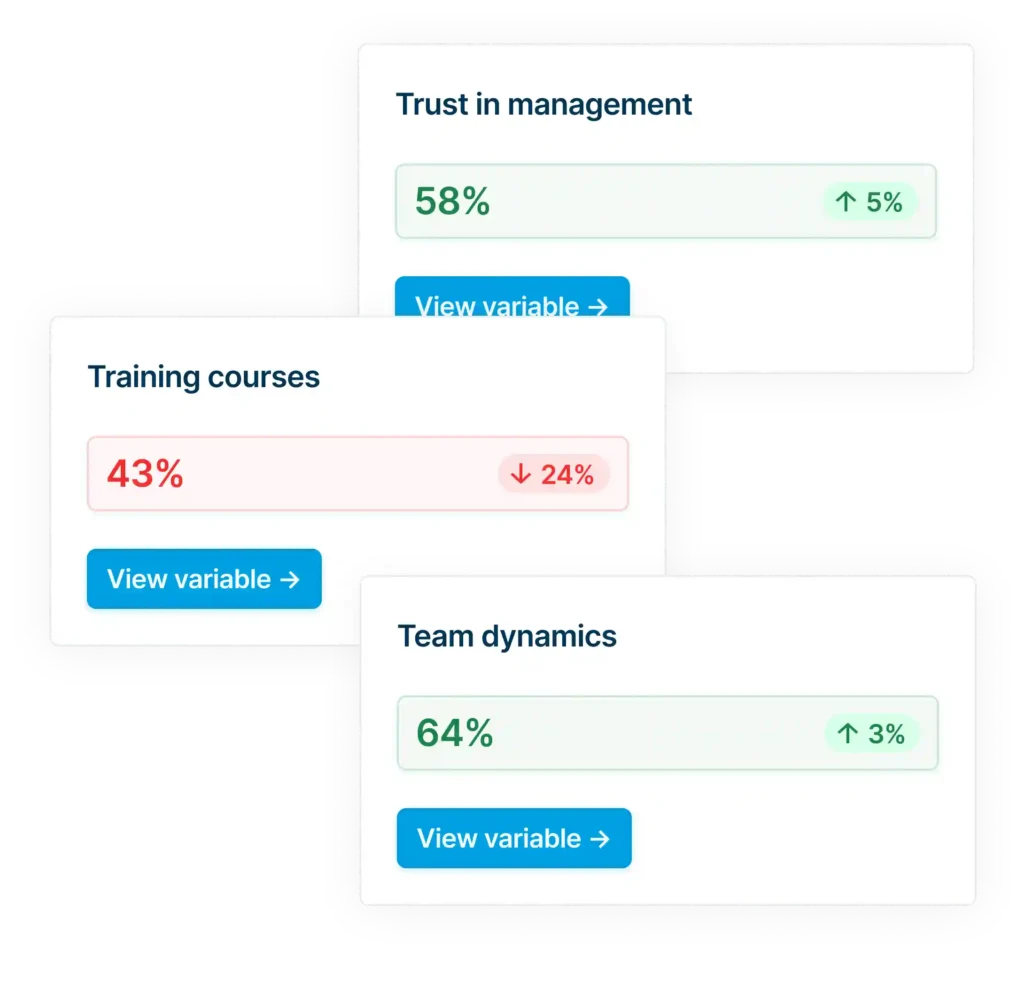
Drie dashboardkaarten met percentages voor vertrouwen in leidinggevende, opleidingen en teamdynamiek.

Make onboarding discussable with employee data

With Deepler, HR, managers and leadership see how new employees experience their start. The dashboard makes patterns visible in guidance, role clarity, information provision, collaboration and engagement.

This allows you to improve in a targeted way, without getting lost in loose comments or assumptions. The module helps to systematically monitor onboarding and make the process increasingly aligned with practice.

Organizational research without high costs

Stem je wensen af met ons Basic- of Plus-pakket. Wil je meerdere landen of organisaties vergelijken? Dan is het Enterprise-pakket de beste keuze.

Basic

€2.99

Per user/per month

The best for your team or smaller organizations that want to gain insights quickly.

  • Maximum of 1 module
  • Score segmentation
  • In-depth analysis for Managers
  • Unlimited number of languages
  • Personal dashboard for employees

Plus

€3.49

Per user/per month

The best option if you want to survey multiple teams and SMEs.

  • Everything from Basic
  • 2 additional research modules
  • Personal success manager
  • Non-desk employees
  • Custom questions

Most popular

Enterprise

On request

Per user/per month

The best for large organizations and custom modules.

  • Everything from Plus
  • Single Sign-On
  • Custom modules
  • Advanced Security
  • Personal onboarding

Basic

€36

Per user/per year

The best for your team or smaller organizations that want to gain insights quickly.

  • Maximum of 1 module
  • Score segmentation
  • In-depth analysis for Managers
  • Unlimited number of languages
  • Personal dashboard for employees
  • Suitable for employees company email address

Plus

€42

Per user/per year

The best option if you want to survey multiple teams and SMEs.

  • Basic
  • 2 additional research modules
  • Personal support from a Deepler expert
  • Suitable for all employees
  • Add your own questions
  • Option to conduct surveys using QR codes

Most popular

Enterprise

On request

Per user/per year

The best for large organizations and custom modules.

  • Plus
  • Unlimited research modules
  • Custom modules
  • Unlimited number of languages
  • Personal dashboard for employees
  • Suitable for employees company email address

Frequently asked questions

What is onboarding?

Onboarding is the process by which new employees are prepared, welcomed and guided in their new role. It covers practical matters, role clarity, culture, collaboration and trust in the organization.

The meaning of onboarding is helping new employees settle into the organization. The goal is for someone to understand what is expected, feel welcome, and gradually be able to contribute independently.

That depends on your hiring rate and goals. Many organizations measure at fixed intervals, for example after 30, 60 and 90 days. This shows how the experience changes from practical start to independence and commitment.

Yes, anonymity is strongly recommended. New employees may be hesitant to give critical feedback. Therefore, report carefully and avoid traceability in small groups or unique positions.

Examples include feeling welcome, preparation, role clarity, manager guidance, buddy support, access to information, team contact, culture, workload and confidence in choosing the organization.

Induction often focuses on practical explanation of tasks and systems. Onboarding is broader: it also covers culture, expectations, collaboration, connection and the feeling of becoming part of the organization.

Deepler is not an HRIS or task list for onboarding, but a survey and analysis platform. You use Deepler to measure how new employees experience onboarding and where the program can improve.

Completion can be quick, often just a few minutes per measurement point. The total duration depends on the setup, number of measurement points, segmentation and how results are discussed.

After the survey, you discuss patterns with HR, managers and teams. Then you choose concrete improvements, such as better preparation, clearer manager conversations, buddy agreements or adjusting training timing.

Costs vary by organization size, measurement frequency and package. During a demo, Deepler can show you which setup fits your onboarding process and how much guidance is needed.

Good questions focus on clarity, guidance and connection. For example: I know what is expected of me.

My manager helps me get started well. I feel welcome in my team. I have access to the information I need.

Briefly explain why feedback is important, keep the questionnaire compact and choose logical measurement moments. Also show which improvements from previous feedback have been implemented.

Reliable data comes from clear questions, sufficient response, safe reporting and repetition at fixed intervals. Combine scores with open explanation, so you not only see what’s happening, but also why.

Schedule a consultation

Klaar om stappen te zetten? Laat van je horen, dan kijken we samen naar de beste aanpak. Of je nu een vraag hebt of gewoon even wilt sparren, we zijn er voor je.

  • Een inkijkje in het dashboard van Deepler
  • Persoonlijk advies en start met eerlijk inzicht
  • Een vrijblijvend gesprek voor al jouw vragen
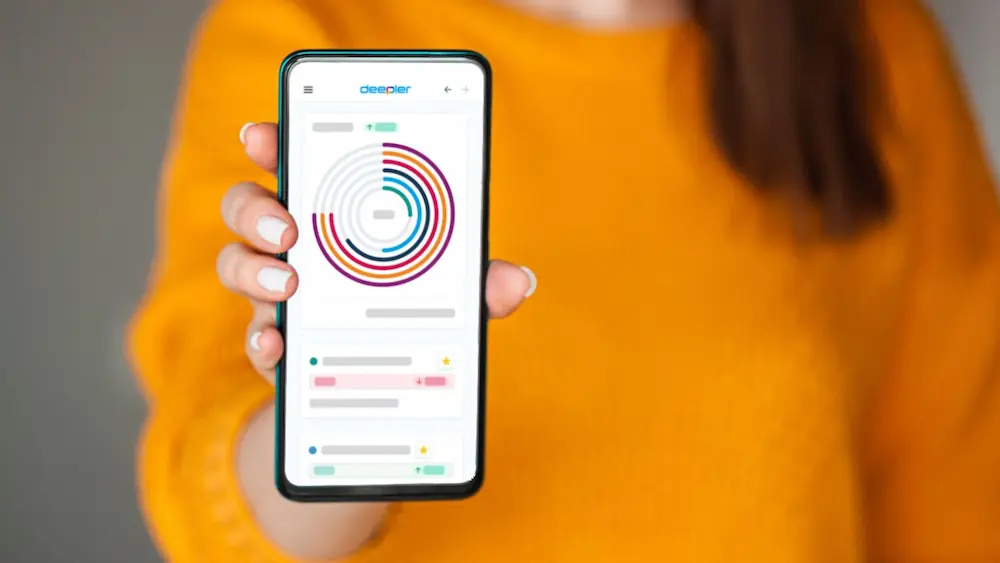
Persoon in gele trui houdt een smartphone vast met de Deeper-app en kleurrijke datavisualisatie op het scherm.
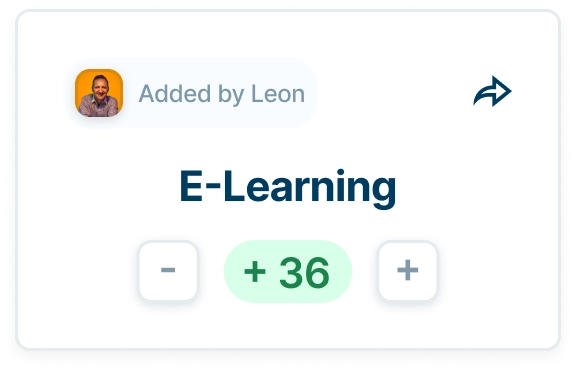
E-learning kaart toegevoegd door Leon met een score van 36 en plus- en minknoppen.
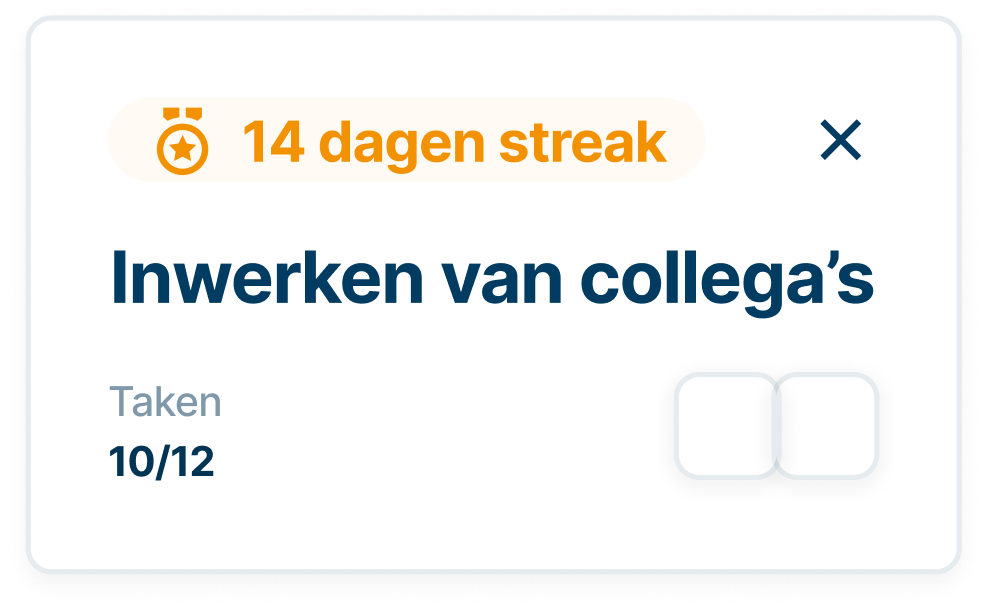
Kaart met de titel "Inwerken van collega's", waarop een streak van 14 dagen en 10 van de 12 voltooide taken worden getoond.
Background-circles-Deepler