Verbeter prestatiebeheer met real-time feedback en data
Verbeter prestatiebeheer met real-time feedback en data De jaarlijkse functioneringscyclus staat ond...

Productivity is not about working harder, but about working smarter. With Deepler’s Productivity module, you measure per team where work runs smoothly and where time, focus or energy is lost. You not only discover whether teams are productive, but especially which conditions help or hinder productivity. This way you don’t steer on output alone, but on the work processes and conditions that enable sustainable productivity.
Productivity describes the relationship between what is invested and what it yields. In an organization, it’s not just about how many hours employees work, but especially about the value that emerges from those hours.
A team can be busy without actually being productive. Many meetings, unclear priorities, rework or overlapping tasks consume time without delivering results. Productivity strengthens when employees have clear goals, know what is a priority and can do their work without unnecessary obstacles.
Measuring productivity doesn’t have to mean controlling individual performance. It’s about gaining insight into the conditions in which people work: can they work focused, do processes align with each other and is there sufficient room to deliver quality?
The module maps where productivity is slowed down: unclear priorities, too many meetings, poor handovers or lack of focus. Employees themselves indicate what helps and what hinders, so you see exactly where intervention is needed.
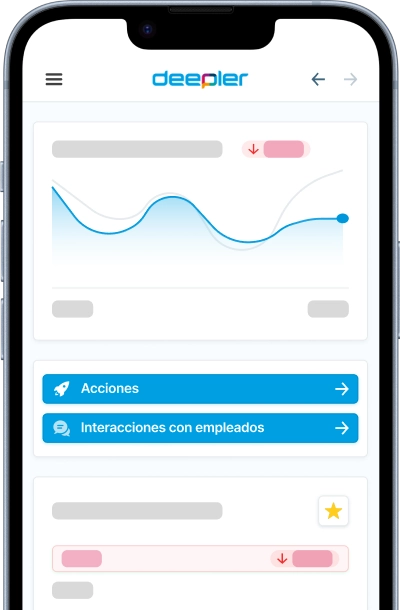
Productivity varies greatly per team and function. With concrete insights per department, you can steer with purpose: fewer disruptions for one team, clearer priorities for another. This way you work on solutions that truly fit.
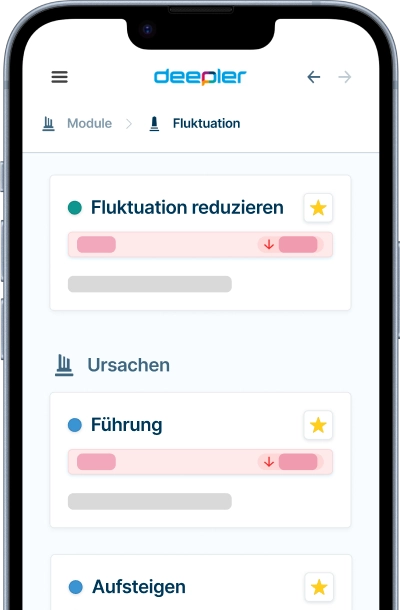
By measuring regularly, you see whether implemented measures are working. Work processes change constantly, so productivity requires ongoing attention. With repeated measurements, you drive sustainable improvement instead of one-time quick wins.
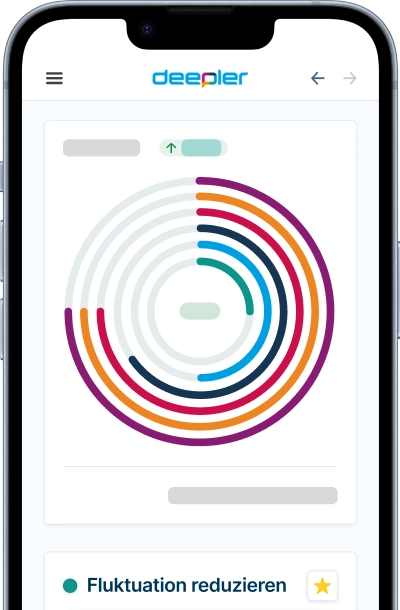
Productivity is the ratio between resources invested and the results that come from it. It’s not just about output, but especially about value creation: how much time, energy and focus actually deliver results? In teams, productivity emerges when employees have clear goals, can work focused and don’t get stuck in unclear processes or unnecessary blockers.
Low productivity means teams are busy without making progress. That leads to frustration, increased work pressure and burnout. Employees get tired of work that costs a lot of energy but yields little. When productivity remains structurally low, the organization’s impact decreases and costs and turnover rise. It is therefore crucial to see productivity not as a performance indicator, but as a signal of how well work is organized.
Increasing productivity starts with removing blockers. Ensure clear priorities, limit interruptions, improve handoffs between departments and give teams the resources they need. Small improvements in workflows, communication and planning often have more impact than large systems or tools. Involve employees in improvements: they know best what helps them work more effectively.
Yes, productivity is measurable without resorting to control or micromanagement. With Deepler’s module, you measure the conditions that influence productivity: focus, priorities, collaboration, work processes and available resources. This gives you insight into where work runs smoothly and where time or energy is wasted, and you can steer improvement in a targeted way without making employees feel constantly assessed.
Ensure everyone knows what's important and what's not. Unclear goals lead to wasted time and frustration.
Limit interruptions, unnecessary meetings and ad-hoc questions. Give employees space for deep work.
Improve handoffs, reduce duplicate work and ensure departments work well together.
Give teams the tools, knowledge and autonomy they need to do their work well without having to constantly ask for help.
This module maps which factors influence team productivity across four main themes. Click a theme to see the underlying subthemes: this is the depth with which we make each theme concrete.
The Productivity module measures environmental factors that effectively promote or hinder work, making bottlenecks visible. Across four themes, it maps how focus, resources, collaboration and motivation relate to productivity. The central focus is effective work: extracting as much value as possible from available time.

Discover in this video how organizations gain insight into productivity with Deepler’s module. From measurement to concrete team conversations, see how it works in practice and what improvements teams implement.
Productivity rarely stands alone. Topics such as work pressure, engagement, leadership and collaboration directly influence each other. Combine this module with other Deepler modules to get a more complete picture of what helps or hinders productivity, and to steer more effectively toward the factors that make the most difference.
Experiences of customers who make a difference with us.
Larren
Recruitment Lead,
De Selectie

“Recently, I used Deepler to arrive at an EVP. Great what they were able to achieve in a short time! In a period of two weeks, we collected information and were able to continue with our AMC plan. In any other situation, it takes weeks, if not months, to get this done. Contact is good, friendly and constructive. Very nice club to work with.”

Douwe
Recruiter,
Securitas
“Ideal tool and company to gain more and better insight into the organization and employees as an organization! And especially with speed! For us, it was also the need to get tools for the topics of retention, to prevent future absenteeism or turnover. I also have experience with other parties and I sincerely value the speed of switching, follow-up and personal contact with Deepler. Absolutely recommended.”

Jolanda
HR Business Partner,
Nedcargo
“Deepler is a great tool for continuously collecting feedback from our employees. This input is then centrally available for us as management, but also for managers who benefit from it.”

Jonathan
Manager,
UWV
“What makes Deepler special is that it doesn’t get stuck in numbers. It helps you immediately understand where it is and what teams need. For us, this ensured that employees themselves came up with areas for improvement and took responsibility for them. The insights were sharp and useful, but most importantly: the conversation that started afterwards made the difference. Thanks to Deepler, we didn’t get a paper plan, but change that was supported by the people themselves.”
Amadeus
COO,
OSRE
“The software has a positive impact on us as a rapidly growing organization. By better understanding what is going on in the workplace and what people offer as solutions for improvements, we can make more effective decisions. The platform helps us to gain real-time insight and to respond directly to it via the tool.”
Schedule a free demo and discover how Deepler helps your organization measure and increase productivity. Our advisors are happy to think along with you about an approach that fits your situation.
Efficiency is about doing things well: using as little time or resources as possible. Productivity is about doing the right things: creating value with the time invested. You can be efficient without being productive, for example when you quickly complete tasks that don’t contribute to the goal.
By focusing on circumstances rather than individual performance. Measure whether employees can work focused, whether priorities are clear and whether processes run smoothly. This gives you insight into what helps or hinders productivity, without it feeling like surveillance.
Start with a baseline measurement to get a starting point. Then measure periodically, for example every six months, to see if changes have an effect. With major changes such as a reorganization or new system, an additional pulse measurement helps to quickly identify bottlenecks.
Unclear priorities, too many interruptions, inefficient processes, poor collaboration between departments, lack of resources, excessive workload or insufficient autonomy. Often it’s a combination of factors that reinforce each other.
Among others, focus and concentration, clarity about priorities, quality of work processes, collaboration between teams, available resources, workload, autonomy and the extent to which employees feel supported in carrying out their tasks.
Use measurement results as a starting point for an open conversation. Ask employees what they’re struggling with and what would help them work more effectively. Together choose concrete improvement actions and later evaluate whether they had the desired effect.
First analyze the patterns: where are teams stuck and why? Discuss the results at team level and choose targeted actions, such as streamlining processes, reducing meeting load or clarifying priorities. Measure again later to monitor progress.
Only if you approach productivity the wrong way. Productivity isn’t about getting more work done, it’s about working smarter. By removing blockages and improving processes, you actually create more space and workload decreases. The goal is sustainable productivity, not exhaustion.
Experiences of customers who make a difference with us.