


Verbeter prestatiebeheer met real-time feedback en data
Verbeter prestatiebeheer met real-time feedback en data De jaarlijkse functioneringscyclus staat ond...
Absenteeism rarely starts on the day of the sick report. Often there are already earlier signals: increasing work pressure, reduced energy, unclear expectations or tensions in the team. With Deepler’s Absenteeism reduction module, you map those patterns before short absences become frequent or long-term absences develop. You not only measure absenteeism figures, but also the underlying causes such as workload, recovery, team dynamics and management support. This way you shift from reacting to preventing.
Absence reduction is about systematically reducing sick leave by understanding and addressing the causes behind absence. It’s not just about recording absence percentages, but about gaining insight into the circumstances that cause absence.
Think of work pressure that remains too high for too long, insufficient recovery opportunities, unclear expectations, lack of support from managers or team tensions that drain people’s energy. By systematically measuring these factors, you gain control over where risks arise and can intervene strategically before people fall ill.
Absence reduction is not a one-time trajectory, but a continuous process of measuring, understanding, acting and monitoring. It makes prevention discussable and helps organizations move from reactive to proactive.
The module measures the underlying causes of absence such as work pressure, recovery, support and team dynamics. This way you see not only where absence is high, but also why and in which teams prevention is most urgent.
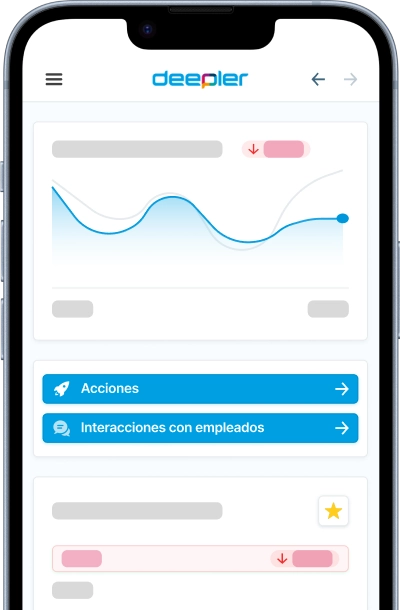
Based on the data, you set up targeted preventive actions per team or department. Think of work pressure discussions, support for managers or better agreements about recovery and expectations.
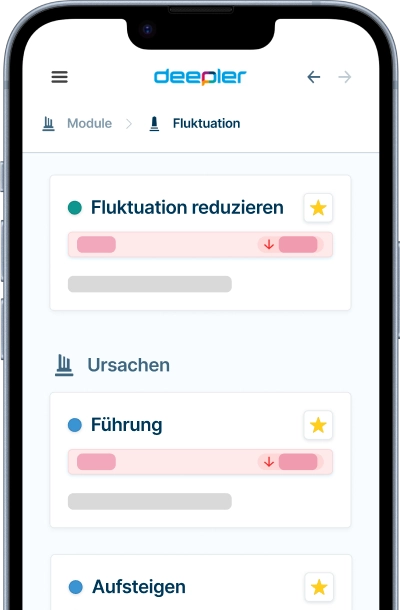
By measuring regularly you see whether taken measures have an effect on the experienced work pressure, energy and support. Absence reduction thus becomes a continuous improvement process instead of a one-time intervention.
Absenteeism means that an employee cannot work at times when this is expected according to the employment contract. Usually it involves sick leave due to physical or mental complaints. Absenteeism is often a signal that workload, capacity or support are not well aligned. It can range from short absences of a few days to prolonged absences that require intensive support.
Absenteeism has a major impact on employees, teams and the organization. For the employee, it means that health or work capacity is under pressure. Colleagues get extra work and scheduling becomes more complex. For the organization, costs increase and continuity comes under pressure. By reducing absenteeism you protect wellbeing, retain knowledge and prevent temporary absences from becoming structural. Prevention always pays off more than reacting afterwards.
Reducing absenteeism starts by recognizing signals before someone drops out. Measure workload, energy, recovery and support to see where risks arise. Have targeted conversations at team level, give managers tools to recognize signals and make clear agreements about expectations and support. More important than recording absenteeism figures is creating a culture where people dare to ask for help before they get stuck.
Yes, absenteeism risks can be measured well through targeted questionnaires that look at the causes behind absences. With the Deepler module you measure factors such as workload, energy, recovery, leadership support and team dynamics. You see not only where absenteeism is high, but also why and which teams need preventive attention. That provides concrete starting points for prevention and early warning.
Look beyond absenteeism percentages. Measure workload, energy, recovery and support to understand where risks arise.
Train managers to recognize signals in time and make them discussable before someone drops out.
Create space for open conversations about workload and recovery, so people can ask for help before they get stuck.
Don't steer organization-wide, but focus on teams where risks are highest with actions that fit their situation.
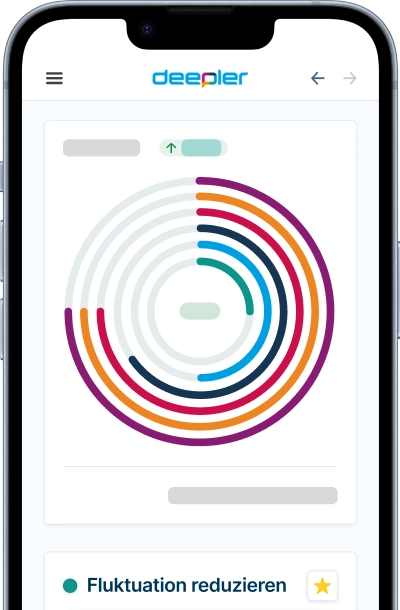
This module maps which factors in the work environment drive absenteeism, across four main themes. Click a theme to see the underlying subthemes: this is the depth with which we make each theme concrete.
The Absenteeism Reduction module measures environmental factors that drive absenteeism, making it clear where you can intervene. Across four themes, it maps how health, work pressure, team dynamics and engagement relate to absence. The focus is on reducing absenteeism by making the causes behind it visible.

Discover in this video how organizations reduce absence with Deepler’s module. From measuring causes to concrete preventive conversations, see how it works in practice.
Absenteeism rarely stems from a single cause. Topics such as work pressure, psychological safety, engagement, leadership, and energy continuously influence each other. Combine this module with other Deepler modules to get a more complete picture of what causes absenteeism and to steer more effectively toward prevention and sustainable employability.
Experiences of customers who make a difference with us.
Larren
Recruitment Lead,
De Selectie

“Recently, I used Deepler to arrive at an EVP. Great what they were able to achieve in a short time! In a period of two weeks, we collected information and were able to continue with our AMC plan. In any other situation, it takes weeks, if not months, to get this done. Contact is good, friendly and constructive. Very nice club to work with.”

Douwe
Recruiter,
Securitas
“Ideal tool and company to gain more and better insight into the organization and employees as an organization! And especially with speed! For us, it was also the need to get tools for the topics of retention, to prevent future absenteeism or turnover. I also have experience with other parties and I sincerely value the speed of switching, follow-up and personal contact with Deepler. Absolutely recommended.”

Jolanda
HR Business Partner,
Nedcargo
“Deepler is a great tool for continuously collecting feedback from our employees. This input is then centrally available for us as management, but also for managers who benefit from it.”

Jonathan
Manager,
UWV
“What makes Deepler special is that it doesn’t get stuck in numbers. It helps you immediately understand where it is and what teams need. For us, this ensured that employees themselves came up with areas for improvement and took responsibility for them. The insights were sharp and useful, but most importantly: the conversation that started afterwards made the difference. Thanks to Deepler, we didn’t get a paper plan, but change that was supported by the people themselves.”
Amadeus
COO,
OSRE
“The software has a positive impact on us as a rapidly growing organization. By better understanding what is going on in the workplace and what people offer as solutions for improvements, we can make more effective decisions. The platform helps us to gain real-time insight and to respond directly to it via the tool.”
Schedule a free demo and discover how Deepler helps your organization measure and prevent absenteeism. Our advisors are happy to think through an approach that fits your situation.
Measuring absenteeism focuses on recording absenteeism percentages and reports. Reducing absenteeism goes a step further: you measure the causes behind absences such as work pressure, energy, and support, so you can intervene preventively before people drop out.
With targeted questionnaires that look at factors contributing to absences: work pressure, recovery opportunities, management support, team dynamics, and the threshold for asking for help. By measuring these factors, you see where risks arise and can act preventively.
Start with a comprehensive baseline measurement to get a full picture. Then follow up periodically, for example every six months or annually, to see trends. When signals of increasing absenteeism arise or after reorganizations, an additional pulse measurement can provide insight into current risks.
Yes, anonymity is essential for honest answers. Deepler reports at group level and uses thresholds so individual responses cannot be traced back. This increases the likelihood that employees are open about work pressure and stress.
Including work pressure, time pressure, energy, recovery, work-life balance, management support, team support, signaling, the threshold for asking for help, and openness about stress.
By using measurement results as a starting point for targeted discussions at team level. Identify patterns without singling out individual employees, create room for recognition, and jointly choose concrete preventive actions that fit the situation.
Analyze the causes behind absenteeism and discuss results at the appropriate level. Choose preventive actions such as work pressure conversations, management support, or team interventions. Then monitor whether measures are effective by measuring again.
Managers are often the first to spot signals. Their role is to address issues promptly, provide support, and work with the employee to find solutions before absences occur. This requires attention, time, and training in early signaling.
Experiences of customers who make a difference with us.