Verbeter prestatiebeheer met real-time feedback en data
Verbeter prestatiebeheer met real-time feedback en data De jaarlijkse functioneringscyclus staat ond...
Employee satisfaction determines whether people enjoy their work, feel connected to the organization, and remain motivated to contribute. With Deepler’s Employee Satisfaction module, you measure per team and department how employees experience their work, manager, development, and work environment. This way, you don’t manage based on assumptions, but on concrete insights that show what’s going well and where improvements are needed.
Employee satisfaction in the workplace is the extent to which people are satisfied with their work, work environment, and the organization they work for. It involves factors such as work atmosphere, relationships with colleagues and managers, development opportunities, recognition, workload, and the balance between work and personal life.
Satisfied employees perform better, stay longer, and contribute positively to organizational culture. Dissatisfaction, on the other hand, often manifests itself in absenteeism, turnover, lower productivity, and reduced engagement.
Measuring employee satisfaction gives organizations concrete starting points to improve in a targeted way. It’s not about perfection, but about gaining insight into what works and where there is room for growth.
The module measures which aspects of work employees experience as positive or burdensome. You see per department or team where the biggest challenges lie, whether that's workload, leadership, or development opportunities.
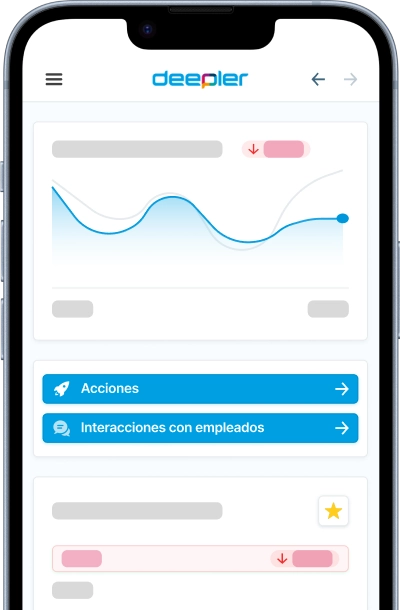
Results are made discussable at the right level. Teams choose targeted actions that fit their situation themselves, such as improved communication, clear expectations, or more guidance.
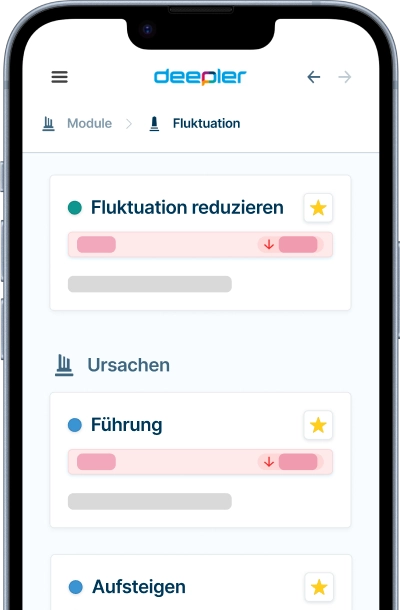
By measuring regularly, you see whether improvement actions have an effect and whether new signals emerge. This way, satisfaction is not a snapshot, but a continuous improvement point within the organization.
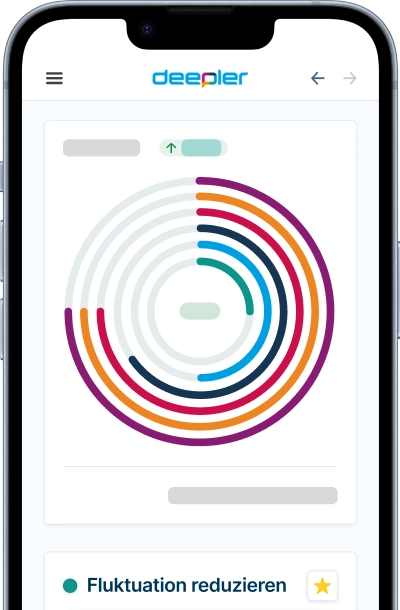
Employee satisfaction is the extent to which people are satisfied with their work, colleagues, manager and organization. It encompasses both daily work experience and broader themes such as development, appreciation and work-life balance. Satisfied employees feel valued, motivated and connected to the organization.
Dissatisfied employees perform less, are absent more often and leave faster. That costs time, money and energy. Organizations that systematically measure and improve see higher engagement, lower turnover and better results. Satisfaction is not a luxury, but a prerequisite for healthy growth and sustainable employability.
Employee satisfaction improves by listening, acting and providing feedback. Start with a thorough measurement, discuss the results at team level and choose concrete actions that align with the signals. Small improvements such as clearer communication, regular feedback or better coordination within teams often have a quick impact.
Yes, with validated questionnaires and data analysis you get a reliable picture of how employees experience their work. Deepler’s module measures not only overall satisfaction, but also maps per theme where problems exist and where things are going well. This way you can improve in a targeted manner instead of taking broad action.
Ask periodically about employee experience. This way you see trends, prevent surprises and can adjust in time.
Share results with teams and managers. Openness about what is happening increases trust and support for change.
Don't tackle everything at once. Choose per team or department the themes with the most impact and translate them into concrete actions.
Show what you do with the feedback. Employees who see that their input leads to change remain engaged and share their opinion honestly.
This module maps how satisfied employees are with their work and employer, across four main themes. Click on a theme to see the underlying subthemes: this is the depth with which we make each theme concrete.
The Employee Satisfaction module measures what makes employees satisfied or dissatisfied and where targeted improvements can be made. Across four themes, it maps how appreciation, development, balance and employment conditions are experienced. Central to this is employee satisfaction: how pleasantly people experience their work and employer.

Discover in this video how organizations structurally measure and improve employee satisfaction with Deepler’s module. From measurement to concrete team actions, see how it works in practice.
Employee satisfaction is closely linked to other aspects of work experience. Topics such as engagement, psychological safety, leadership, and work pressure continuously influence each other. Combine this module with other Deepler modules to get a more complete picture of what’s really going on and to focus more effectively on the topics that have the most impact.
Experiences of customers who make a difference with us.
Larren
Recruitment Lead,
De Selectie

“Recently, I used Deepler to arrive at an EVP. Great what they were able to achieve in a short time! In a period of two weeks, we collected information and were able to continue with our AMC plan. In any other situation, it takes weeks, if not months, to get this done. Contact is good, friendly and constructive. Very nice club to work with.”

Douwe
Recruiter,
Securitas
“Ideal tool and company to gain more and better insight into the organization and employees as an organization! And especially with speed! For us, it was also the need to get tools for the topics of retention, to prevent future absenteeism or turnover. I also have experience with other parties and I sincerely value the speed of switching, follow-up and personal contact with Deepler. Absolutely recommended.”

Jolanda
HR Business Partner,
Nedcargo
“Deepler is a great tool for continuously collecting feedback from our employees. This input is then centrally available for us as management, but also for managers who benefit from it.”

Jonathan
Manager,
UWV
“What makes Deepler special is that it doesn’t get stuck in numbers. It helps you immediately understand where it is and what teams need. For us, this ensured that employees themselves came up with areas for improvement and took responsibility for them. The insights were sharp and useful, but most importantly: the conversation that started afterwards made the difference. Thanks to Deepler, we didn’t get a paper plan, but change that was supported by the people themselves.”
Amadeus
COO,
OSRE
“The software has a positive impact on us as a rapidly growing organization. By better understanding what is going on in the workplace and what people offer as solutions for improvements, we can make more effective decisions. The platform helps us to gain real-time insight and to respond directly to it via the tool.”

Schedule a free demo and discover how Deepler helps your organization measure and improve employee satisfaction. Our advisors are happy to think along with you about an approach that fits your organization.
Employee satisfaction is about how satisfied someone is with aspects like work, atmosphere and management. Engagement goes further and measures the extent to which someone feels connected to the organization and is motivated to contribute to goals. Both strengthen each other.
With a structured questionnaire that contains concrete work themes such as work atmosphere, leadership, development, workload and communication. By measuring and analyzing regularly, you get a reliable picture of employees’ experience and can track trends.
That depends on the organization. An annual employee satisfaction survey provides a good baseline. Supplementing with shorter pulse surveys helps to respond faster to changes or specific events such as reorganizations or new management.
Yes. Anonymity is important to get honest feedback. Deepler reports at group level and works with thresholds, so individual responses are not traceable. This increases trust and willingness to answer openly.
Typical themes are work atmosphere, collaboration, leadership, communication, development opportunities, appreciation, workload, work-life balance and engagement. The exact themes can be tailored to the situation and priorities of the organization.
By sharing results at the right level and creating space for recognition and dialogue. Use the data as a starting point for team discussions, ask for concrete examples and feed back which actions are being taken. Openness increases trust and support.
Analyze the results, discuss patterns with teams and managers, and choose concrete actions per theme or department. Make sure employees see what happens with their feedback. Then measure again to see if the actions have an effect.
Good questions are concrete, understandable and focused on daily work experience. Don’t just ask about general satisfaction, but about aspects like ‘I receive sufficient support from my manager’ or ‘I have a good work-life balance’. This way you get useful information.
Experiences of customers who make a difference with us.