


What is Diversity and Inclusion?
Diversity and inclusion refer to promoting equality and respect for all individuals regardless of their background, gender, race, sexual orientation, religion, age, disability, or other characteristics. It’s about creating an environment where everyone feels welcome, valued and engaged, and where different perspectives and experiences are acknowledged and valued.
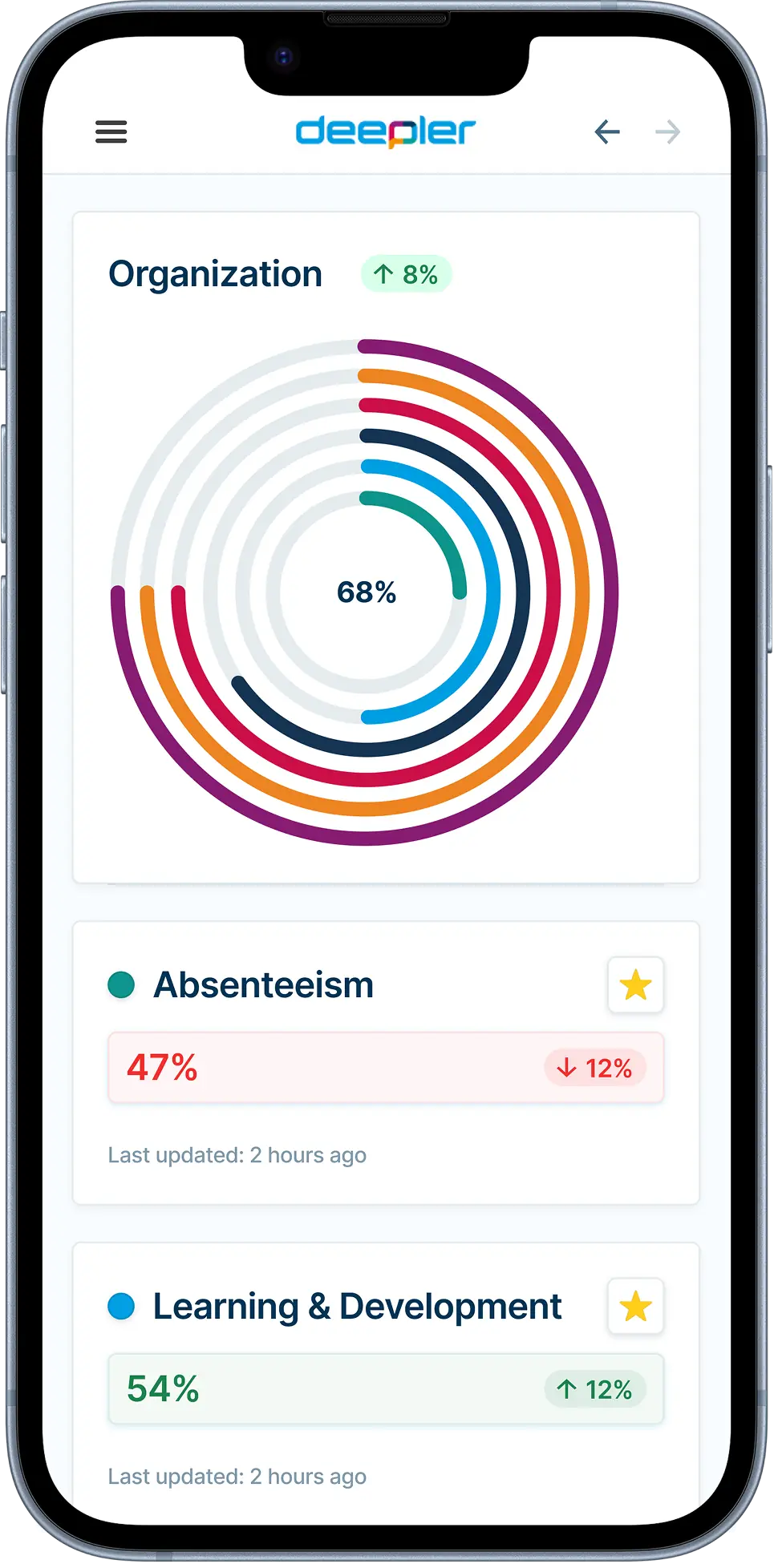
By knowing which themes within D&I score well, you know where specific improvement is needed. By using the Deepler research module “Data-driven DEI”, you will have the right conversation in 2 minutes.

Why is diversity and inclusion important?
Diversity and inclusion are important because it creates a wider and more representative society. It enables people to share their unique perspectives and experiences, leading to an enrichment of ideas and innovation. Nevertheless, diversity and inclusion increase productivity and reduce turnover and absenteeism.
In addition, diversity and inclusion promotes equality and justice because it gives everyone the opportunity to fully participate in society, regardless of their background or identity.

What's the difference between diversity and inclusion?
Diversity refers to the variety of people with different backgrounds, characteristics, and perspectives.
Inclusion, on the other hand, is about creating an environment where everyone feels welcome, valued, and engaged, regardless of their differences.
Both aspects are important for effective collaboration and growth of the organization.

Why diversity and inclusion in the workplace?
Workplace diversity and inclusion are key to creating a dynamic and innovative company culture that attracts and retains talent from diverse backgrounds.
Measuring the effectiveness of diversity and inclusion initiatives by means of short, scientifically validated questionnaires is helpful in this regard. This approach provides reliable and accurate data about how employees experience organizational inclusivity, which is essential for identifying areas that need improvement.
By regularly evaluating these aspects, companies can implement targeted strategies that not only improve the work environment, but also increase overall performance and employee satisfaction.