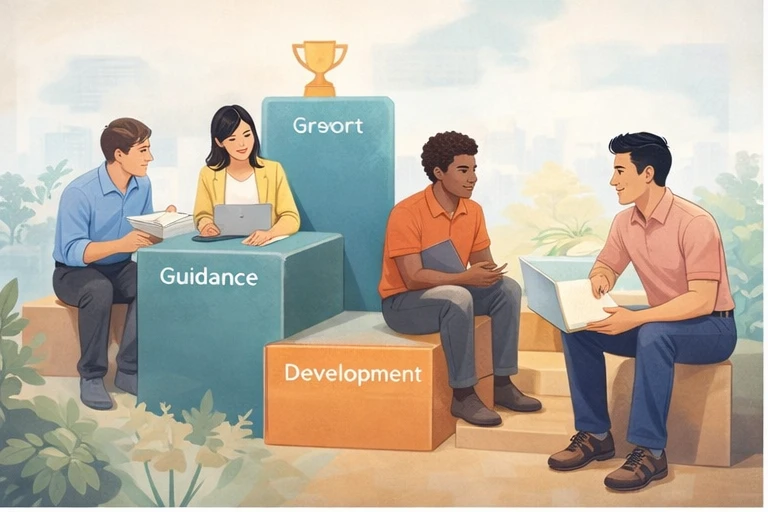
Cultivating leadership: development programs that work
The demand for strong leaders is greater than ever. Organizations are grappling with change processes, hybrid working, and a labor market that demands flexibility. At the same time, research shows that traditional leadership training often has little effect. The one-day workshop with PowerPoint presentations and theoretical models rarely leads to real behavioral change. So what does work? Effective leadership development in 2025 revolves around customization, practical application, and continuous development. It’s not about checking off a training course, but about a well-considered trajectory that aligns with both the organizational strategy and the personal development needs of your leaders.
Why traditional programs fail
Most leadership programs still follow a one-size-fits-all approach. All managers receive the same training, regardless of their experience, challenges, or development phase. The result is predictable: participants find it interesting, but barely apply what they’ve learned in their daily work. Another problem is the focus on theory without practical application. Managers learn models and frameworks, but don’t get the opportunity to try them out directly in their own context. As soon as they’re back at the office, what they’ve learned disappears in the hectic pace of everyday life. Timing also plays a role. Many organizations offer leadership training at fixed moments, for example when promoted to a management position. But development is not a one-time event. Leaders have different needs and challenges at different moments in their careers.
The building blocks of effective leadership development
Successful programs combine different elements into a coherent whole. The foundation lies in customization: each program starts with a thorough analysis of both organizational goals and individual development needs. What are the strategic challenges your leaders face? Which competencies are needed for this? And where is the gap between desired and current level? Blended learning forms the backbone of modern leadership development. This means a mix of group sessions, individual coaching, peer knowledge sharing, and self-study. Participants don’t just learn from trainers, but especially from each other and from their own practical experiences. They receive concrete assignments that they apply directly in their work, reflect on the outcomes, and adjust their approach. Emotional intelligence is receiving increasing attention in leadership programs. Rightly so, because the ability to recognize and manage your own emotions and those of others is crucial for effective leadership. This goes beyond theoretical understanding; it requires practice and feedback in safe environments.
From theory to behavioral change
The difference between a nice program and an effective program lies in the extent to which it actually changes behavior. This requires a number of critical elements that are often missing in standard programs. First: direct applicability. Every learning session must be linked to concrete situations that participants encounter in their daily work. Not abstract cases, but their own challenges. This means that trainers must know the organizational context well and be flexible enough to adapt the program accordingly. Second: continuous feedback and reflection. Behavioral change doesn’t arise from one-time insights, but through repeated cycles of trying out, receiving feedback, and adjusting. This requires coaching, feedback from colleagues, and time for reflection. Many organizations underestimate how much guidance is needed to anchor new behaviors. Third: organizational support. If a manager develops new leadership skills but their own supervisor or senior management models different behaviors, a double message emerges. Effective leadership development requires alignment at all levels of the organization.
Customization without custom prices
A frequently heard objection to customization is the cost. Fully customized programs can indeed be pricey. But customization doesn’t have to mean building everything from scratch. Smart programs work with a modular structure. There’s a solid foundation of proven effective elements, such as coaching skills, giving feedback, strategic thinking, and team development. These modules can be combined and adapted based on the specific needs of the organization and participants. The personalization lies mainly in the application. Participants work on their own issues, receive individual coaching on their specific development points, and learn from the unique context of their organization. This makes the program relevant and effective without having to reinvent every element.
The role of data in leadership development
Modern leadership programs increasingly use data to measure and adjust effectiveness. This starts at the intake: which leadership competencies are most important for your organization? How do your current leaders score on these competencies? Which development is a priority? Tools such as 360-degree feedback, measurements of psychological safety and employee engagement provide objective insight into the effect of leadership on teams and employees. This data helps not only to determine the right focus, but also to monitor progress during the program. The beauty of data-driven development is that it enables concrete conversations. Instead of vague goals like “better communication,” you work toward measurable improvements in team results, employee satisfaction, or psychological safety scores. This makes the program not only more effective, but also easier to justify to the organization.
Peer knowledge sharing as a catalyst
One of the most underestimated elements in leadership development is learning from colleagues. Many programs focus on expert input via trainers and coaches, but forget the power of peer knowledge sharing. When managers share their challenges with colleagues who experience similar situations, recognition and trust emerge. They learn not only from each other’s solutions, but also from each other’s mistakes. This creates a safe environment where experimentation and vulnerability are possible, essential conditions for real development. Knowledge sharing groups work best when they’re given structure. Not casual coffee drinking, but organized sessions with clear goals and agreements. Participants bring in concrete issues, receive feedback from the group, and commit to follow-up steps. This accountability makes peer knowledge sharing a powerful engine for behavioral change.
Implementation: from plan to practice
Setting up an effective leadership program requires a well-considered approach. Start with a clear analysis of your organizational goals and the role that leadership plays in them. What challenges are coming your way? Which leadership competencies are needed for this? Involve your current leaders in the design. They know better than anyone what challenges they encounter and what they need to become more effective. This input not only makes the program more relevant, but also increases commitment. Choose a program that extends over several months, with space between sessions for application and reflection. Six to nine months is a proven effective duration in which real behavioral change can take place without becoming too heavy alongside daily work. Ensure visible support from senior management. Show that leadership development is a priority by making time and budget available, but also by modeling the desired behavior as senior leaders themselves.
The impact of investing in leadership
Organizations that structurally invest in leadership development see measurable results. Teams with well-developed leaders score higher on employee engagement, have less absenteeism, and achieve better results. The investment pays for itself in productivity, retention, and organizational culture. But the impact goes beyond hard numbers. Strong leaders create psychological safety, allowing teams to dare to innovate and learn from mistakes. They develop talent, allowing your organization to grow from within. And they provide direction in times of change, which is crucial in today’s dynamic world. The question is not whether you should invest in leadership development, but how to do it effectively. Choose programs that go beyond one-time training courses. Invest in trajectories that offer customization, focus on practical application, and use data to measure effectiveness. This is how you cultivate leadership that truly makes a difference for your organization. Do you want to know where your organization stands in terms of leadership and which development is a priority? With the right measurements and analyses, you lay a solid foundation for a development program that works.