Improving the employee experience during a company transition
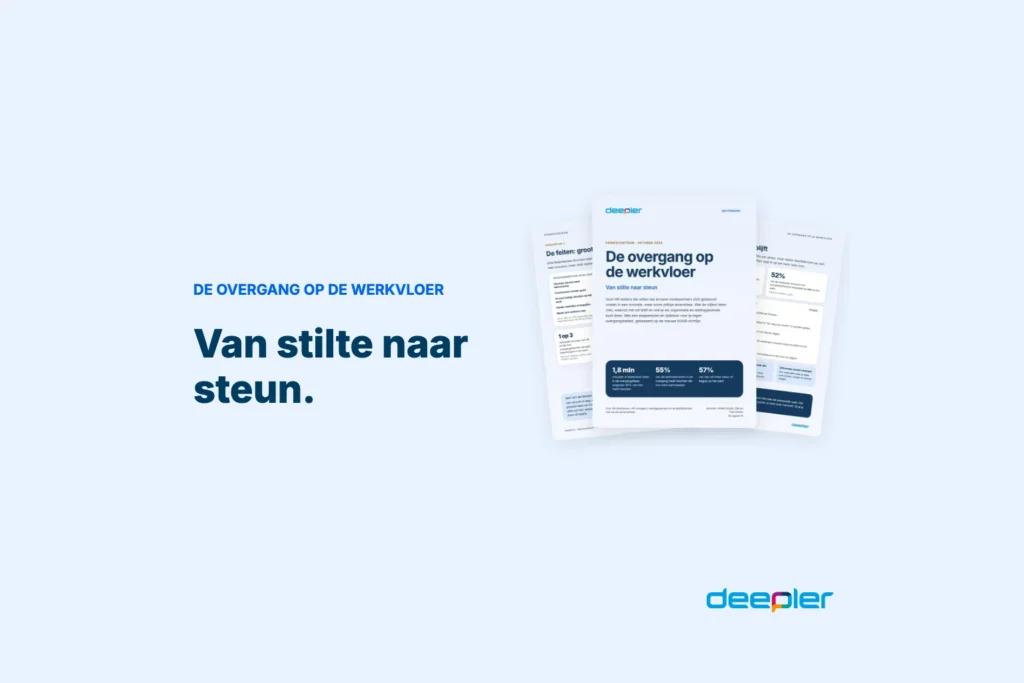
A merger, acquisition, or reorganization always brings uncertainty. Even with the best-prepared company takeovers, employees feel the impact of change. The way you as an organization handle this transition determines not only the success of the transition itself, but also your ability to retain talent and maintain productivity. Research shows that more than 60% of all mergers and acquisitions fail to deliver the intended value. The reason? Too little attention to the human side of change. While executives and management focus on systems, processes, and financial integration, employees meanwhile experience stress, uncertainty, and a lack of direction.
Why the employee experience is crucial during transition
The employee experience during a company transition directly determines the outcome of your change process. Employees who feel heard and supported remain more productive and show greater engagement. They become ambassadors of change instead of silent opponents. You also regularly see the opposite happen. Organizations that neglect the employee experience during a transition lose their best people. Top talent has choices and won’t stay long in an environment where ambiguity and chaos prevail. The costs of this turnover quickly add up: recruitment, onboarding, loss of knowledge, and declining team morale. Additionally, the employee experience during a transition has a direct impact on your customers. Uncertain employees deliver less quality service. They don’t always know what they can promise or what processes will look like in the future. This uncertainty seeps into customer interactions and can lead to revenue loss at the moment you can least afford it.
The psychology behind resistance to change
People aren’t inherently against change. They’re against the feeling of losing control. During a company transition, the familiar reality is turned upside down. Colleagues leave, managers change, systems change, and the future is uncertain. This uncertainty triggers a natural stress response. The brain interprets ambiguity as danger and switches to survival mode. In this mode, people are less creative, take less initiative, and focus primarily on self-protection. Exactly the opposite of what you need during a transition. Psychological safety plays a crucial role here. Employees must feel safe enough to ask questions, express concerns, and make mistakes during the learning process. Organizations that actively work on psychological safety during a transition see significantly better results in engagement and productivity.
Communication as the foundation of a successful transition
Transparent communication is the most important tool for improving the employee experience during a transition. Yet we regularly see organizations make mistakes here. They wait to communicate until all details are known, while employees meanwhile create their own narrative based on rumors and fear. Therefore, start communicating early, even if you don’t have all the answers yet. Share what you do know, what you don’t know yet, and when you expect more information. This honesty builds trust and prevents the rumor mill from taking over. Ensure multiple communication channels. Some employees are satisfied with an email, others want personal contact. Organize meetings for the big picture, but also make room for small-scale team conversations where people can ask questions freely. Leaders play a key role here as translators and points of contact. Repetition is essential. People process information less effectively in times of stress. What you as an HR professional or manager have already said ten times is still new to some employees. Communicate the same message through different channels and at different times.
During a transition, listening is at least as important as broadcasting. Employees have valuable insights about what’s happening on the work floor, what concerns exist, and where practical problems arise. This information is invaluable for your change strategy. Therefore, implement structured listening moments. Short, regular pulse surveys give you real-time insight into how employees experience the transition. You can quickly identify where problems arise and adjust before small frustrations grow into major resistance. Focus on actionable insights. There’s little point in asking employees for their opinion if you then do nothing with that input. Communicate transparently what you’re doing with the feedback and why some suggestions are or aren’t being implemented. This closes the feedback loop and shows that listening isn’t a symbolic gesture. One-on-one conversations between leaders and team members are also crucial. Not everyone feels comfortable sharing their real concerns in a group setting or survey. Personal contact provides space for deeper conversations and helps understand individual needs.
Clearly define roles and expectations
Ambiguity about roles is one of the biggest frustrations during a company transition. Employees no longer know exactly what’s expected of them, who they report to, or what decisions they can make independently. This ambiguity paralyzes and creates unnecessary tension. Therefore, invest early in clarifying roles and responsibilities. Make clear who is responsible for what in the new organization. Which decision-making authorities are changing? Which processes remain the same and which are being adjusted? Pay attention not only to job descriptions, but also to informal roles. Who were the knowledge carriers? Who held the team together? Who was the point of contact for specific questions? This informal structure is at least as important as the formal organization. Also give employees clarity about their personal future. Will their position continue to exist? Is their contract changing? What does the transition mean for their career path? The sooner people know where they stand, the faster they can focus on their work instead of their worries.
Investing in development and support
A company transition requires new skills from employees. Different systems, different processes, perhaps a different culture. Organizations that invest in development during the transition show that they believe in the future of their people. Therefore, offer targeted training that aligns with the new reality. Think of technical training for new systems, but also skills like dealing with change, collaborating in new teams, or communicating in a different culture. Learning from colleagues often works better than formal training. Pair employees from both organizations with each other so they can learn from one another. This not only accelerates knowledge transfer but also builds bridges between different groups. Don’t forget the leaders. They’re under enormous pressure during a transition. They must guide their team through the change while also struggling with uncertainty themselves. Invest in leadership development specifically focused on change management and creating psychological safety.
Culture integration as a continuous process
Merging two organizational cultures is perhaps the biggest challenge during a company transition. Culture is intangible but does determine how people collaborate, make decisions, and interact with each other. Start by making both cultures explicit. What are the core values? How is communication handled? What is acceptable behavior and what isn’t? Often these cultural aspects are so self-evident that people don’t even see them anymore, until they clash with another culture. Then consciously create moments where both cultures can meet. Joint projects, cross-functional teams, informal gatherings. The goal isn’t for one culture to win over the other, but to combine the best of both into a new, shared culture. Regularly measure how the culture integration is progressing. Do people feel at home in the new organization? Do they experience the values in daily work? Where do cultural frictions arise? These insights help you intervene in a targeted way where necessary.
From theory to practice
Improving the employee experience during a company transition requires a structured approach. Start with a baseline measurement to understand how employees currently experience the situation. What are their biggest concerns? What do they need? What information is missing? Based on these insights, develop a communication plan that goes beyond the standard newsletter. Think of meetings, team conversations, one-on-one check-ins, and digital platforms where employees can ask questions. Ensure that every employee is reached through at least two channels. Implement pulse surveys to continuously keep your finger on the pulse. Short questionnaires that you send out monthly or even weekly provide real-time insight into how the transition is being experienced. You can quickly adjust if it turns out that certain teams are struggling or specific concerns are widespread. Train your leaders in having good conversations about change. They are the crucial link between strategy and execution. If they aren’t able to guide their team through the transition, the entire change process fails.
The long-term impact
A well-managed company transition delivers more than just a successful integration. Employees who are guided positively through a transition develop resilience and trust in leadership. They learn that change isn’t scary and that the organization helps them through difficult times. This trust pays off in future changes. Organizations that invest in the employee experience during transitions build a culture where change is normal. Employees resist less, adapt faster, and remain more productive during change processes. Additionally, you strengthen your employer brand. Employees talk about how their organization handles change. Positive stories attract talent, negative stories deter it. In a tight labor market, this is a significant competitive advantage. Start improving your approach today. Measure how employees experience the current situation, identify the biggest pain points, and take concrete steps to improve the employee experience. The investment in time and attention pays back many times over in talent retention, productivity, and ultimately in the success of your company transition.